
Chronicles of Cultural Diversity in Pet Care Practices Worldwide: Tracing Ancestral Roots and Modern Innovations Across Cultures


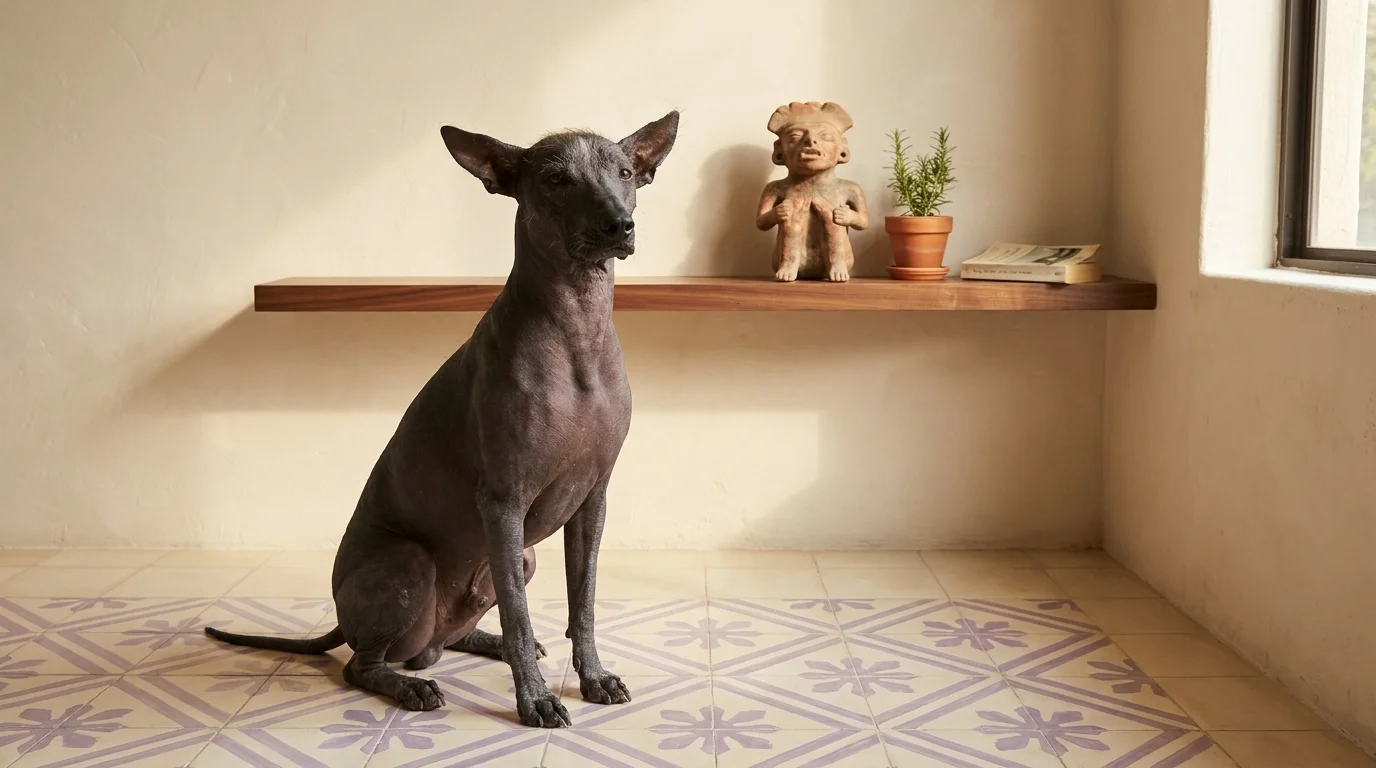
Pets around the world arrive in our households with longer inheritances than most of us realise. A friend of mine in Mexico City, a documentary editor named Marisol Carrillo, has a small smooth-coated Xoloitzcuintli named Tomás. He sleeps at the foot of her bed and follows her into the kitchen every morning to wait for the toaster. He is also, by the standards of pre-Columbian Mesoamerican religion, a guide of the dead — bred for the role of conducting human souls across the river to the underworld, valuable enough that Xolos were buried with their owners as a matter of course in the cultures that built Teotihuacán. Marisol knows this. Tomás knows the toaster.
This is the strange and useful thing about pet culture across the world: it almost always carries a long inheritance. Roughly 900 million dogs and 370 million cats now live alongside humans on Earth. About 66% of households globally own at least one pet, and Bloomberg Intelligence's Global Pet Economy 2024 report puts 2025 spending past $380 billion, trending toward more than $500 billion by 2030. None of those numbers come from nowhere. They come from millennia of accumulated decisions — religious, agricultural, urban, demographic — about which animals get a place in the room. This is a documentary tour of seven of those decisions: what an Egyptian temple, a Tokyo apartment, a Mexico City living room, a Mumbai street at Diwali, and a Russian dacha all have in common, and what they don't.
What 900 million dogs and 370 million cats tell us about us
Before any of the stories, a quick set of receipts. World Population Review's 2026 country rankings put the United States at 90 million dogs (the largest national dog population on Earth), Brazil at roughly 60 million, China at 58 million, the Philippines at 20.5 million, and Thailand at 18.5 million. By per-capita rate, the leaderboard is different: Portugal at 28,890 dogs per 100,000 people, Hungary at 28,778, Brazil at 28,194 (the only country in both top-fives), the United States at 25,916, and Thailand at 25,831. For cats, Russia leads the world by a wide margin — roughly 59% of the Russian population owns at least one cat — and the European pet population reached 299 million in 2025, not counting Russia. The American Pet Products Association projects US pet spending at roughly $157 billion in 2025, up from $152 billion in 2024.
Three things stand out in this data, and they are worth holding in mind as we walk through individual cultures. First, the per-capita and absolute leaderboards are mostly different countries — population size and ownership density are not the same story. Second, the global pet economy is now larger than the global recorded-music industry, the global film industry, and the global commercial fishing industry combined; "pet culture" is a serious economic force, not a sentimental sideline. Third, none of these numbers map evenly onto wealth. Some of the highest-density pet-owning countries are middle-income (Mexico, Brazil), and the lowest-density countries are not always the poorest.
Egypt: Bastet, cat mummies, and the temple-bred sacrifice economy
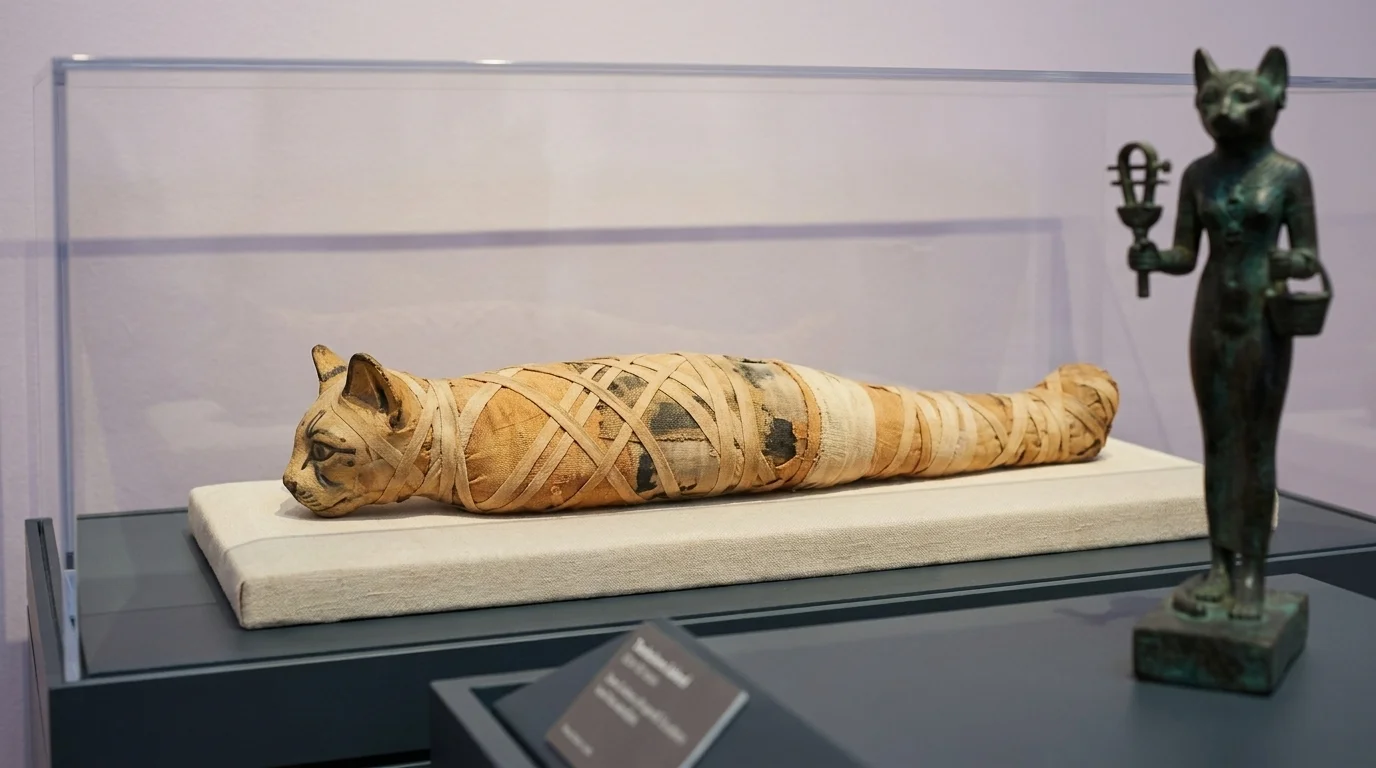
The earliest dense archaeological record of pet-keeping comes from the Nile valley. Bastet — the cat-headed goddess of home, fertility, and protection — had a temple complex at Bubastis (modern Tell Basta in the eastern Nile Delta) that drew, by Herodotus's account, up to 700,000 pilgrims annually at its peak. Within Pharaonic legal tradition, killing a cat was punishable by death — even accidentally. Mourning households shaved their eyebrows when a cat died, and embalmers prepared the bodies with the same care given to humans of moderate rank. The Egyptian cat is the foundational scene of the Western veneration of pets.
It is also the most-misrepresented one. A 2024 peer-reviewed CT-imaging study in MDPI's Applied Sciences of a single mummified cat — non-invasive, high-resolution — confirmed what scholars had begun to argue in the decade prior: many of the cats mummified in vast numbers and buried in temple complexes across Lower Egypt were not pets given a sacred death. They were young animals, often killed by deliberate neck-snapping, bred in temple precincts specifically for the votive-offering industry that the cult of Bastet had become by the Ptolemaic period. A January 2026 review article in Colombia One frames the reframing bluntly: cat veneration in Egypt and cat sacrifice in Egypt were the same economic system. Both were how the goddess was honored.
Egyptian cat mummies are still the single largest category of mummified animal in museum collections worldwide, and the contemporary descendants of those temple cats — the modern Egyptian Mau, recognized as a distinct breed — still walk the streets of Cairo. The veneration is real. The sacrifice is real. Honoring both is what honest documentary work does.
Cats in mythology: from Bastet to Freya to Durga
The Egyptian cult is the most-documented, but cats run through almost every old religious tradition with significant agricultural settlement. Norse mythology gave Freya — the goddess of love, sex, and battle-spoils — a chariot drawn by two giant cats. Marriage rites in Viking-era Scandinavia included offerings to Freya's cats; bridegrooms in some sagas are recorded as gifting brides with kittens as a Freya-blessing on the household. The lineage of Scandinavian indoor-cat affection — Norway and Sweden currently sit among Europe's highest cat-ownership countries — traces, partly, to that.
In ancient Greece, the goddess Ailuros (literally "cat") was an aspect of Artemis associated with the moon and night-hunting, and Athena's bird was the owl, not the cat — Greek mythology gives cats a slightly cooler reception than Egypt did, which is why Roman religion later imported Bastet wholesale via the cult of Isis rather than developing its own native cat-goddess. Celtic and Irish mythology placed cats as Otherworld guides, particularly the cat-king Cath Sídhe (anglicized "King Cat") and the green-eyed cat Big Ears, who in some folktales would judge a household's character by visiting and observing.
Hindu mythology offers two clear feline anchors. Durga — the warrior goddess — is conventionally depicted with a tiger or lion as her vahana (mount), and the household-cat reverence in Hindu observance traces, in part, to that big-cat lineage. Parvati, Durga's gentler aspect, is associated in some regional traditions with smaller household cats as the domestic-blessing form of the same divine principle. In Buddhism, the cat occupies an ambivalent symbolic role: in Japanese Buddhist traditions, Maneki-neko — the "beckoning cat" figure with one raised paw, visible in shop windows worldwide — entered the popular religious imagery in the Edo period and now functions as the most-exported piece of Japanese pet symbolism on Earth.
What links these traditions is not the specific deities. It is that almost every culture that has settled long enough to develop agriculture, granaries, and urban pest pressure has, independently, given the cat a divine job — and most of those cultures' modern pet-keeping practices still carry the residue. The Egyptian Mau on a Cairo wall and the Maneki-neko in a Yokohama ramen shop are doing related work.
Dog ownership by country: where the world's 900 million dogs actually live
The dog data is heavier than the cat data, and it tells a different story. Below is the 2026 leaderboard from World Population Review, with both absolute count and per-capita rate.
| Rank | Country | Total dog population (2025–26) | Dogs per 100,000 people |
|---|---|---|---|
| 1 | United States | ~90,000,000 | 25,916 |
| 2 | Brazil | ~60,000,000 | 28,194 |
| 3 | China | ~58,000,000 | 4,142 |
| 4 | Philippines | ~20,500,000 | (not in per-capita top 10) |
| 5 | Thailand | ~18,500,000 | 25,831 |
| — | Portugal | (not in absolute top 10) | 28,890 |
| — | Hungary | (not in absolute top 10) | 28,778 |
China's 58 million dogs are absolutely huge in count but per-capita modest — dog ownership remains an urban-middle-class behavior in a country whose absolute population is so large that even a low per-capita rate produces enormous numbers. Brazil is the only nation in both top-fives: dog ownership is genuinely democratized across class lines, partly because middle-class urban expansion through the 2000s and 2010s normalized indoor-dog keeping in a way it had not been before. Portugal and Hungary lead the per-capita rankings because both have small populations and dense rural-village dog-keeping traditions that persist into urban migration.
Two countries with strong cultural footprints that don't dominate the rankings are worth a quick note. Russia leads the world in cat ownership (the 59% population rate cited above) but is mid-pack on dogs, partly a reflection of the Soviet-era apartment-block housing stock that made cats more practical than dogs for most urban households — a legacy that has not unwound. Saudi Arabia and several other Gulf states sit at the bottom of the dog-ownership tables because dogs occupy an ambivalent position in classical Islamic jurisprudence, where the majority of Sunni schools (Maliki, Shafi'i, Hanbali) consider dog saliva ritually impure (najis) — though hunting and herding dogs are widely permitted, falconry remains a respected companion-animal tradition, and the Arabian Saluki sits firmly inside the same culture's animal-companionship norms. The number is small. The cultural relationship is not absent.
Related Article: Cultural Connotations: Exploring How Different Colors Hold Diverse Symbolism in Pet Care Around the World
Mexico: the Xoloitzcuintli and the 75% household
Mexico's per-household pet ownership rate is around 75% — one of the highest in the world. Three of every four Mexican households now share their living space with at least one animal, most of them dogs.
The cultural anchor for this density is the Xoloitzcuintli — the breed Marisol's dog Tomás belongs to. Xolos are one of the oldest continuously-bred dog populations on Earth, with archaeological remains dated to roughly 3,500 years before the present, and they were sacred to the pre-Columbian Mexica (Aztec) and earlier Mesoamerican cultures. In Mexica cosmology, Xolotl — the canine-headed god the breed is named for — guided the souls of the dead across the river to Mictlán, the underworld, and Xolos were buried with their owners to perform the same role in the afterlife. Frida Kahlo's later twentieth-century paintings of her own Xolos brought the breed back into international visibility after a long period of near-extinction.
The Xolo is a strong cultural icon and the Mexican household pet population is overwhelmingly mixed-breed criollo dogs — perros criollos, the local mongrels descended from a centuries-long mix of Spanish-imported dogs and indigenous lines. The 75% household rate is mostly carried by them, fed and housed in apartments and casas across class lines. The cultural through-line from Xolotl's underworld duty to a chihuahua on a Polanco balcony is not a stretch. It is the same long inheritance Marisol's Tomás is part of.
Japan: more pets than children, and what that changes
In 2025, Japan crossed a demographic threshold that almost no other major economy has crossed: 15.91 million registered pets versus 13.7 million children under fifteen. The pet economy is now valued at around $13 billion annually. Pet shrines, pet funerals, and pet-inclusive Higan-e (the equinoctial Buddhist ancestral-memorial weeks) are no longer cultural curiosities — they are part of how a substantial fraction of Japanese households now manage grief, family identity, and the small daily rituals of household life.
The cultural infrastructure for this was already in place. Shinto's animistic premise — that kami (spirits, deities) inhabit not just shrines and mountains but everyday objects, including animals — never created an Egyptian-style cat-cult, but it never put any meaningful religious barrier between humans and the spiritual personhood of their pets either. Maneki-neko, the beckoning-cat figurines in shop windows, are a casual modern survival of that. So is the Edo-period tradition of pet funerals at Buddhist temples, which originated in elite samurai households and is now mass-market: temples like Shitenno-ji in Osaka and Jindai-ji in western Tokyo perform several thousand pet memorial services a year between them.
The Washoku-style pet meals the original version of this article gestured at are also real — Japanese pet food has a higher proportion of fresh and prepared ingredients than almost any other national market, and pet-cafe culture (cat cafes especially) was invented in Japan in the 2000s and exported globally. None of this is sentimental excess. It is a demographic reality. When a country has more pets than children for the first time in its modern history, what we call "pet culture" becomes simply "culture."
India: feeding strays as religious duty in a $490 million market
India's pet population grew from 26 million in 2019 to 42 million in 2024, a 61% increase in five years that has produced one of the fastest-growing pet care markets on Earth. The Indian pet care industry now sits at roughly $490 million annually, concentrated in Mumbai, Bangalore, Delhi, and the Tamil Nadu corridor — urban-middle-class growth markets in every case.
The cultural substrate is older and more complex than the consumer market. Hindu tradition has, in different regions and different sects, given dogs deeply contradictory positions: Bhairava — the wrathful aspect of Shiva — is conventionally accompanied by a dog, and the dog is a sacred animal in his cult, fed and protected at his temples (especially in Nepal and Varanasi). Yet dogs are also considered ritually impure in many orthodox Brahminical practices, and the household-pet-dog tradition in India is much newer than the religious-companion-dog tradition. Cats sit in similar tension — Durga and Parvati's feline associations are real, but household cat-keeping became normalized in urban India only in recent decades.
The Diwali stray-feeding tradition is the most-photographed expression of the older religious-duty layer. Across observant Hindu households, the festival period includes feeding street dogs and cats — bhutas, in some readings — as one of the small religious acts that honor the goddess Lakshmi's arrival. The Indian urban-pet-care market is built on top of a much older religious-economic relationship in which animals were always part of the household's spiritual accounting, even when they did not sleep inside the house. The $490 million figure is not the start of the relationship. It is the part you can put on a balance sheet.
What the world has in common: care, ritual, ownership
The seven cultures named in this piece — Egyptian, Norse, Greek, Mesoamerican, Japanese, Hindu Indian, and contemporary American — do not agree on much about how pets should be cared for. They diverge on whether dogs are pure or impure, whether cats are sacred or sacrificial, whether burial is normal or excessive, whether a pet is family or worker or both, and whether the relationship is fundamentally religious, economic, or affectionate. They agree on one thing only, and it is the thing that lets a 900-million-dog and 370-million-cat global population exist at all: most human societies that have settled long enough to remember the dead have, sooner or later, given the animals a job in the remembering.
If there is a practice takeaway worth crossing cultures for, it is probably the Japanese one: the Higan-e tradition of explicitly including pets in the seasonal acts by which a household remembers its dead. It costs nothing and breaks nothing in any other religious tradition; it consists, in its smallest form, of saying the animal's name aloud at the same moment you say the names of the human relatives you are remembering. It is the same thing van Eyck did when he painted the Arnolfini dog and the same thing my friend Marisol does when she scratches Tomás's ears in the morning and the same thing — measurably, demographically, $380-billion-a-year — that 66% of households on the planet now do in some form. The cultures are different. The work is the same.
Frequently Asked Questions
By absolute count, the United States leads with about 90 million dogs in 2025-2026, followed by Brazil (~60 million), China (~58 million), the Philippines (~20.5 million), and Thailand (~18.5 million). By per-capita rate, the leaderboard is different: Portugal sits at 28,890 dogs per 100,000 people, Hungary at 28,778, Brazil at 28,194, the United States at 25,916, and Thailand at 25,831. Mexico has one of the highest household pet ownership rates in the world at roughly 75%, and Russia leads global cat ownership at about 59% of the population owning at least one cat.
Cats in Pharaonic Egypt were associated with Bastet, the cat-headed goddess of home, fertility, and protection, whose temple complex at Bubastis drew up to 700,000 pilgrims annually at its peak. Killing a cat was punishable by death, even accidentally. But 2024 peer-reviewed CT imaging of mummified cats and a 2026 review article have together documented that the cat-mummy industry in Lower Egypt was, by the Ptolemaic period, a mass sacrificial economy: many cats were bred in temple precincts specifically to be sacrificed and mummified as votive offerings to Bastet. Veneration and ritual sacrifice were the same economic system.
Egyptian Bastet (cat-headed goddess of home and fertility) is the foundational reference. Norse mythology gives Freya a chariot drawn by giant cats (Bygul and Trjegul in later sources), with wedding offerings to those cats persisting in Viking-era marriage rites. Greek mythology has Ailuros as an aspect of Artemis. Celtic Otherworld traditions feature cat-judges of household character. Hindu mythology associates Durga with tigers and lions and the smaller household cat with the goddess Parvati. Japanese Maneki-neko, the beckoning cat, is the most-exported piece of Japanese pet symbolism on Earth. Almost every agricultural civilization independently gave the cat a divine job.
The Xoloitzcuintli is one of the oldest continuously-bred dog populations on Earth — archaeological remains date to roughly 3,500 years before the present — and the breed is named for Xolotl, the canine-headed Mexica (Aztec) god who guides souls of the dead across the river to Mictlán, the underworld. Xolos were buried with their owners to perform the same role in the afterlife. Frida Kahlo's mid-twentieth-century paintings of her own Xolos brought the breed back into international visibility. Modern Mexico has roughly 75% household pet ownership, one of the world's highest rates; most of those dogs are mixed-breed criollos, but the Xolo remains the cultural icon.
In 2025, Japan registered approximately 15.91 million pets compared to 13.7 million children under 15. The pet economy is now valued at roughly $13 billion annually. The demographic shift reflects Japan's long-running low birth rate, but the cultural infrastructure for it — Shinto's animistic respect for the spiritual personhood of animals, the Edo-period tradition of Buddhist-temple pet funerals, the Higan-e equinoctial memorial weeks that increasingly include pets — was already in place. Cat cafes, pet shrines, and Washoku-style pet meals are the contemporary surface of a much older religious accommodation.
Indian household pet numbers grew from 26 million in 2019 to 42 million in 2024 — a 61% increase — with the pet care market now at roughly $490 million annually, concentrated in Mumbai, Bangalore, Delhi, and the Tamil Nadu corridor. The growth sits on top of a much older religious-economic relationship: Bhairava's sacred dog at Varanasi temples, Durga and Parvati's feline associations, and the Diwali tradition of feeding street dogs and cats as part of the festival's small religious acts. The $490 million market is the part you can put on a balance sheet; the underlying tradition is centuries older.