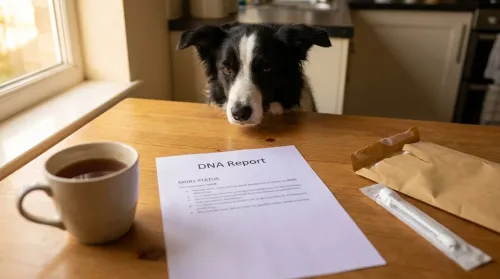


Most owners arrive in the exam room with the same sentence: "I think he's stressed, but I can't tell." That sentence used to end the conversation. With the current generation of biofeedback collars — PetPace being the most established example — it can now begin one. A wearable that continuously measures heart rate, heart rate variability, respiration, temperature, and activity gives you a second opinion on what your dog is actually feeling, all day, in your home, not just for the eight minutes she sits on my exam table.
The market is catching up to the idea. The pet calming products market was valued at $17.45 billion in 2025 and is projected to reach $29.88 billion by 2034 (Straits Research); the smart pet products segment specifically is on a similar curve, from about $6.43 billion in 2024 toward $25.8 billion by 2032 (Technowize, 2026). Calming devices for dogs are no longer fringe. The honest question is which of them do what they claim.
This is a guide to that question, written by a veterinarian who has spent twenty years recommending or declining to recommend pet products for owners. I will be specific about what the peer-reviewed evidence shows, where it doesn't yet exist, and which device fits which household. I do not prescribe individual treatments here — that conversation belongs in the exam room with your own vet — but I can tell you what a biofeedback collar is, whether the data behind it holds up, and how it compares to the ThunderShirt or calming collar most owners try first.
What stress looks like in dogs — and what a biofeedback collar catches first
The visible signs of canine stress are well-documented and largely uncontroversial: panting that isn't temperature-related, repeated yawning out of context, lip-licking with no food present, a tucked tail, shifting weight backward away from the trigger, increased shedding, hypervigilance, and avoidance behaviors (VCA Hospitals; Dogster vet panel). If you see two or three of those clustered around a specific stimulus — fireworks, the vacuum, a new person at the door — you have your diagnosis without a sensor.
The harder cases are the ones where the signs don't cluster, or they happen when nobody is watching. Separation-related distress, in particular, is invisible by definition: the dog is alone. The same is true of chronic low-grade stressors — a new dog next door, ongoing pain from undiagnosed osteoarthritis, a household routine change that hasn't fully settled.
This is where a biofeedback collar has a legitimate role. It measures three things that a human in the room cannot:
- Heart rate variability (HRV), which drops measurably under stress, pain, and chronic illness.
- Resting heart rate during apparent calm — a rate that should drop when the dog rests but doesn't is a strong physiological signal.
- Body temperature shifts that precede behavioral changes.
It is not magic, and I will get to the limits in a moment. But for owners who are working blind on a question their dog cannot answer for them, it is the first tool that produces something more durable than guesswork.
What HRV actually tells you about a stressed dog
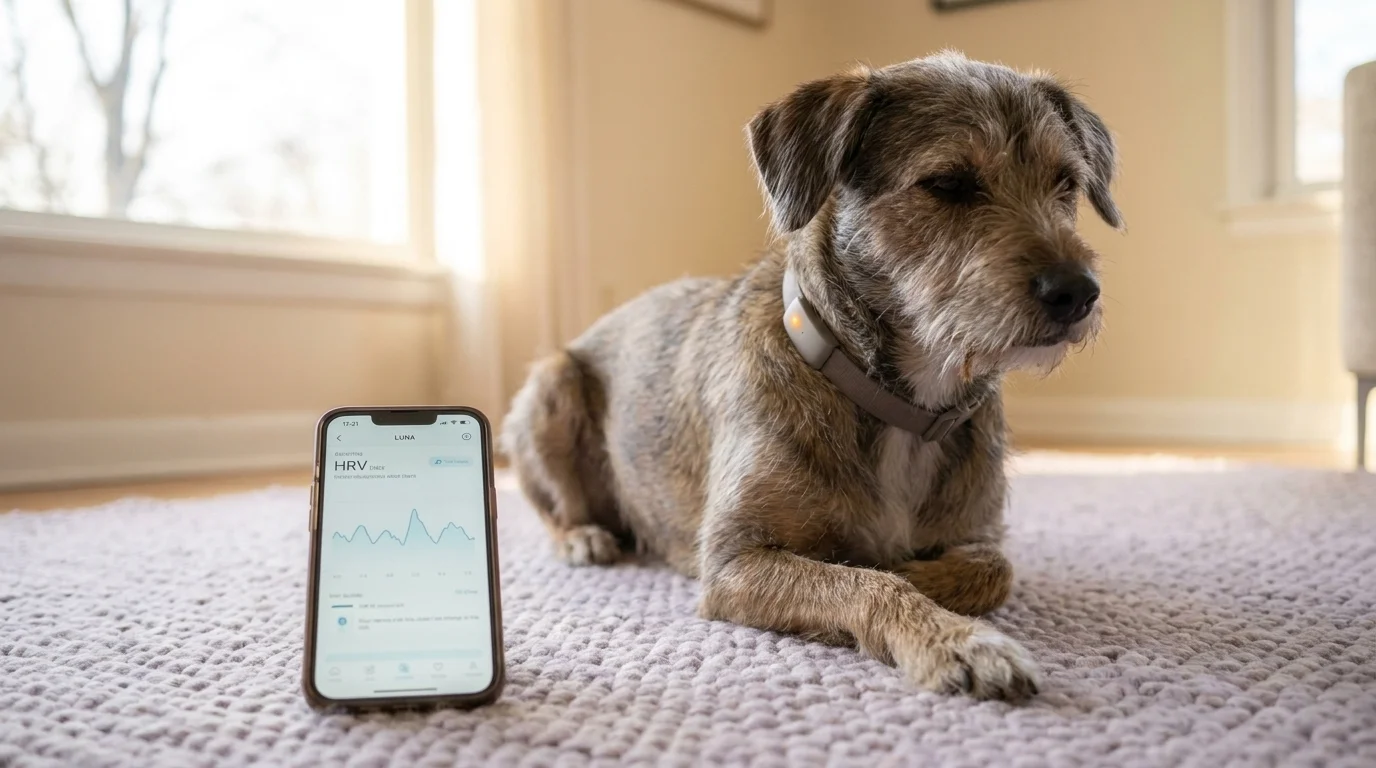
Heart rate variability is the most useful number on a biofeedback collar, and it is the one that confuses owners most often. The short version: HRV is the small variation in time between consecutive heartbeats, measured in milliseconds. A healthy dog's nervous system constantly micro-adjusts that timing — speeding up on the inhale, slowing on the exhale, responding to whatever is going on. That moment-to-moment variability is the hallmark of a well-regulated autonomic nervous system.
Counterintuitively, higher HRV is healthier; lower HRV is the warning sign. PetPace's own glossary frames it this way: high HRV reflects a flexible, well-functioning nervous system, while persistently low HRV is associated with pain, chronic stress, illness, and obesity (PetPace HRV glossary). The same physiology has been studied for decades in human cardiology; the cross-species applicability is well established in the veterinary literature, even where individual product validation is still maturing.
What this means in plain terms: if your dog's collar reports a consistently dropping HRV trend over weeks or a sustained drop tied to a specific event (the new household, the move, the daily 2 p.m. interval when you're at the office), the device is telling you something real about her nervous system, and it is worth a conversation with your veterinarian.
Related Article: Pet Care through Different Lenses: A Neurodiversity Discussion
Does the PetPace collar actually work?
This is the question I would ask first if a client brought one to an appointment, and it is the question almost no editorial coverage answers honestly. So let me be specific about the evidence.
The strongest published study so far is a 2022 paper in Frontiers in Pain Research examining the PetPace collar in dogs with osteoarthritis pain (PMC9485802). It was a small prospective study — 22 healthy dogs and 23 dogs with OA pain, monitored over 14 days. The results:
- Dogs in pain showed 22.1% lower mean hourly activity counts (228 ± 43) compared with healthy dogs (293 ± 76), p = 0.005.
- Three HRV parameters — VVTI (p = 0.0018), SDANN (p = 0.001), and SDNN (p = 0.0048) — were all significantly reduced in the pain group.
- Activity counts correlated moderately with a research-grade Actical monitor (R² = 0.56 linear, R² = 0.79 polynomial).
I will label this honestly. This is a small prospective study with statistically significant findings and consistent direction across HRV metrics. It is not yet a large multi-center trial, and the use case is osteoarthritis pain rather than acute behavioral stress specifically. It does, however, establish something the rest of this product category has not: that a consumer-grade biofeedback collar can objectively distinguish a stressed/painful physiological state from a healthy baseline. That is meaningful early validation — and it is more than most products in the calming-devices aisle have ever produced.
Two newer wrinkles matter. First, PetPace 3.0 is the first AI smart collar with built-in 24/7 veterinary telemedicine — licensed vets see the collar's data live during a chat or video visit (PetPace, April 2026 press release). The collar entered major-retail distribution (Macy's) in the same window. Second, the 2026 generation across the category (PetPace 3.0, PitPatPet, and others) has shifted from generic out-of-range alerts to AI pattern-recognition that learns each dog's individual baseline and flags anomalies relative to that personal pattern, which reduces the false-alarm problem that plagued earlier generations (Technowize, 2026).
Biofeedback collar vs ThunderShirt vs Adaptil vs calming collar
This is the comparison most owners need and the one no editorial source on the current SERP actually provides. The honest framing: these products are not substitutes for one another. They occupy different jobs in the workflow of managing a stressed dog.
| Product | Mechanism | What it tracks | Telemedicine | Approximate price | Best for |
|---|---|---|---|---|---|
| PetPace 3.0 | Biofeedback (HRV, heart rate, respiration, temperature, activity) | Continuous physiological signals, AI baseline | Yes (24/7 built-in) | $300+ collar plus subscription | Chronic stress, hidden pain, separation distress, multi-condition seniors |
| Whistle Health | Activity + behavior monitoring | Activity, scratching, licking, sleep | No | $130 device plus subscription | Activity decline, behavior change tracking |
| Fi Series 3 | GPS + activity tracker | Location, activity, sleep | No | $150 collar plus subscription | Escape-prone dogs, activity comparison; not a stress monitor |
| Invoxia Smart Dog Collar | GPS + vitals | Heart rate, respiration, activity, location | No | $100 collar plus subscription | Owners wanting basic vitals plus tracking |
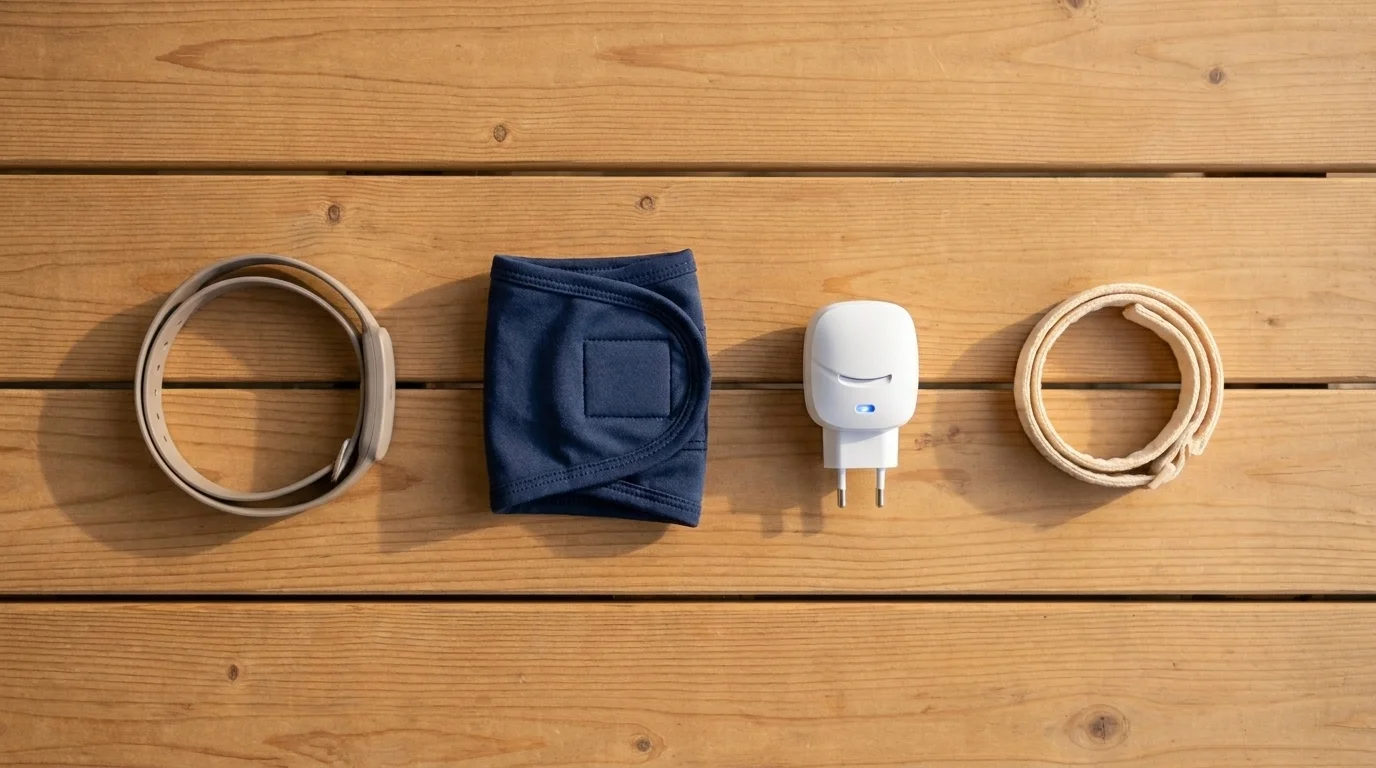
| ThunderShirt (anxiety wrap) | Gentle pressure | None — treatment only | No | $40–55 | Acute, predictable triggers (storms, fireworks, car rides) |
| Adaptil Calm Diffuser | Synthetic dog-appeasing pheromone | None — treatment only | No | $30–40 plus ~$20/month refills | Multi-dog households, general environmental calming |
| Calming collar (e.g., Adaptil collar) | Pheromone release | None — treatment only | No | $25–35 each, lasts ~30 days | Travel, social-stress contexts, ongoing wear |
The clean way to think about this is measurement-first vs treatment-first. A biofeedback collar like PetPace measures continuously; the ThunderShirt, Adaptil diffuser, and pheromone collar deliver a specific calming intervention but tell you nothing about whether it worked. The most defensible setup pairs both — the collar gathers the data, a behavioral intervention addresses what the data shows.
For owners on a tight budget who already know the trigger — a thunderstorm-anxious dog, a once-yearly fireworks problem — a ThunderShirt is reasonable. Independent buyer's-guide reporting credits anxiety wraps with measurable anxiety reduction in roughly 80% of dogs (AnxietyFreePups, 2026). For owners working with an undiagnosed pattern, a biofeedback collar is the better starting point.
Related Article: CBD for Pets: The Comprehensive Guide to Uses, Benefits, and Risks
What a biofeedback collar costs, and who it's for
The price ladder in calming devices for dogs is wider than most owners expect, and the ladder matters because dogs at different points in their stress story need different tools.
- Entry tier — $5 to $50. Calming chews (the category leader by revenue, at 34.7% market share in 2025; Straits Research), basic pheromone collars, anxiety wraps in the $40–55 ThunderShirt range.
- Mid tier — $50 to $150. Adaptil diffusers ($30–40 with $20/month refills), upper-end calming collars, single-purpose activity trackers without HRV.
- Premium tier — $150 to $300+. Biofeedback collars (PetPace, Invoxia, Whistle Health). Most also require a monthly subscription in the $10–25 range for the AI analysis layer; PetPace 3.0's subscription also includes the built-in vet telemedicine.
- Treatment-device tier — $300+. Calmer Canine and similar instrumented therapy devices (more on these in the next section).
A biofeedback collar is not the right answer for every dog. For a one-issue, one-trigger dog whose stress is loud and predictable, the simpler interventions usually do the job. The premium tier earns its place for the harder cases: dogs whose owners cannot identify the trigger, seniors whose stress is masking a developing medical issue, dogs with separation-related distress, and households where multiple stressors are stacked.
One note on Sileo (dexmedetomidine oromucosal gel) — currently the only FDA-approved pharmaceutical for noise-related anxiety in dogs (PetMD). Anything beyond Sileo in the prescription lane is off-label, which is a decision for your veterinarian, not for a buying guide. The non-drug device market — biofeedback collars, anxiety wraps, pheromones, instrumented therapy — exists precisely because the regulated drug lane is narrow.
Pairing measurement with treatment: the Calmer Canine option
The pairing that I find most clinically interesting is biofeedback collar plus Calmer Canine. Calmer Canine, made by Assisi/Zomedica, uses targeted pulsed electromagnetic field therapy delivered through a head-worn loop. A peer-reviewed pilot trial of the device reported that after four weeks of treatment, "almost two thirds of participating dogs had a 100% or greater improvement in anxiety symptoms when left home alone" (Assisi/Zomedica clinical summary).
That is a stronger evidence claim than the typical calming product makes — which is exactly why I take the pairing seriously. Calmer Canine delivers the intervention; a biofeedback collar measures whether the intervention is doing what it's supposed to do. For a dog with documented separation-related distress, that is a clean closed loop: a treatment with published efficacy data and an objective way to monitor the response.
I want to be precise about the limits. The Calmer Canine evidence is a pilot trial — useful, but not yet replicated across larger samples and varied populations. Owners should view both devices as instruments within a behavior-management plan that includes environmental management and, if your vet recommends it, behavioral medication. They are tools, not cures.
When the collar should send you to the vet, not just buzz your phone
This is the section nobody writes, so I am writing it. A biofeedback collar will generate alerts. Some are noise, some are real. The realistic threshold for an alert that should produce a same-week vet appointment, in my exam-room judgment:
- A sustained drop in HRV over multiple days with no obvious behavioral trigger.
- Resting heart rate consistently elevated 15–20% above the dog's established baseline during what should be calm rest periods.
- Activity counts persistently below baseline for more than a week, especially in a dog over seven years old (osteoarthritis, dental pain, and cardiac disease all present this way).
- Temperature outside the normal range for a dog (roughly 101–102.5°F / 38.3–39.2°C) on more than one reading.
A single anomalous reading is rarely meaningful. A trend over days is. The current AI-baseline approach in 2026 wearables (Technowize) is designed precisely to suppress one-off readings and surface multi-day patterns, which is the correct clinical instinct.
If you see one of those patterns in the app, bring the data to your veterinarian. Most clinics, mine included, will look at exported collar data the same way we look at owner-recorded blood-glucose logs from a diabetic cat. It is genuinely useful clinical information, especially for dogs who present normally in the exam room and only display the problem at home.

What I'd tell you in the exam room
If you came to my office tomorrow with a dog you suspect is stressed and asked which calming device to try, the honest answer would depend on three things. Do you already know the trigger? Is your dog over seven? And what is the budget?
A young dog with a known, one-issue trigger — fireworks, the vet visit, a single specific person at the door — usually does well with a ThunderShirt and, where appropriate, Adaptil in the relevant rooms. That is a modest amount of equipment that resolves a meaningful share of cases.
A dog whose stress is diffuse, hidden, or moving the needle on her overall behavior, or a senior whose change in mood could be early pain or illness rather than anxiety, is the dog who benefits most from a biofeedback collar. The data buys you the conversation we couldn't have before — what is actually happening to her physiology when nobody is in the room, on which days, in response to what. And it gives a working clinician something more rigorous than a memory of how she seemed last Tuesday.
There is also a category of question the collar cannot answer for you. Whether the underlying condition is behavioral, medical, or both. Whether a specific medication is appropriate. Whether a behavior consult or a workup is the next step. Those answers still belong in the exam room. The collar makes the exam-room conversation a better one.
If you take one thing from this guide: the measurement layer is finally here and worth taking seriously, especially for the dogs whose stress story has been hiding from us. Use it as a tool, not a verdict. And bring the data — actual exported numbers, not just a screenshot of an alert — to whoever knows your dog best.
Frequently Asked Questions
A biofeedback collar is a wearable that continuously measures a dog's physiological signals - typically heart rate, heart rate variability (HRV), respiration, temperature, and activity - and uses AI to flag changes that may indicate stress, pain, or illness. PetPace is the most established example; it correlates moderately well (R-squared 0.56-0.79) with research-grade activity monitors in peer-reviewed testing.
A 2022 peer-reviewed study published in Frontiers in Pain Research compared PetPace data across 22 healthy dogs and 23 dogs with osteoarthritis pain over 14 days. Dogs in pain showed 22.1% lower mean hourly activity (p=0.005) and statistically significant HRV reductions across multiple metrics. That is stronger published evidence than most calming products in the category have, though the sample is small and larger studies are still needed.
They solve different problems. A ThunderShirt treats acute anxiety via gentle pressure and has roughly 80% reported efficacy for many dogs; it costs $40-55 and works in 10-15 minutes. A biofeedback collar like PetPace measures stress continuously so you know when, where, and how often it is happening, plus catches health issues a wrap cannot. The two are complementary - measure with the collar, intervene with the wrap.
Biofeedback-class collars (PetPace, Whistle Health, Invoxia) typically run $150-$300 upfront plus an ongoing subscription ($10-25/month) for the AI analysis and, in PetPace 3.0's case, built-in 24/7 vet telemedicine. That puts them at the premium end of the calming-and-monitoring market - well above $30-55 ThunderShirts but justified if you also need health monitoring.
Visible signs you can spot - panting, yawning, lip-licking, tucked tail, weight shifting backward, shedding - are well documented by VCA and PetMD. What you cannot see without a sensor: a drop in heart rate variability (a strong physiological stress signal), an elevated resting heart rate during what looks like calm rest, and subtle temperature shifts. Biofeedback collars surface these hours to days before behavior changes get obvious.