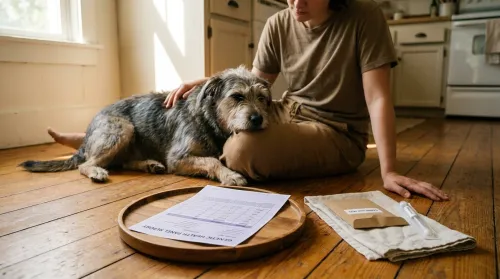
Tailoring Treatments: Personalized Medicines Leap into the Animal Kingdom


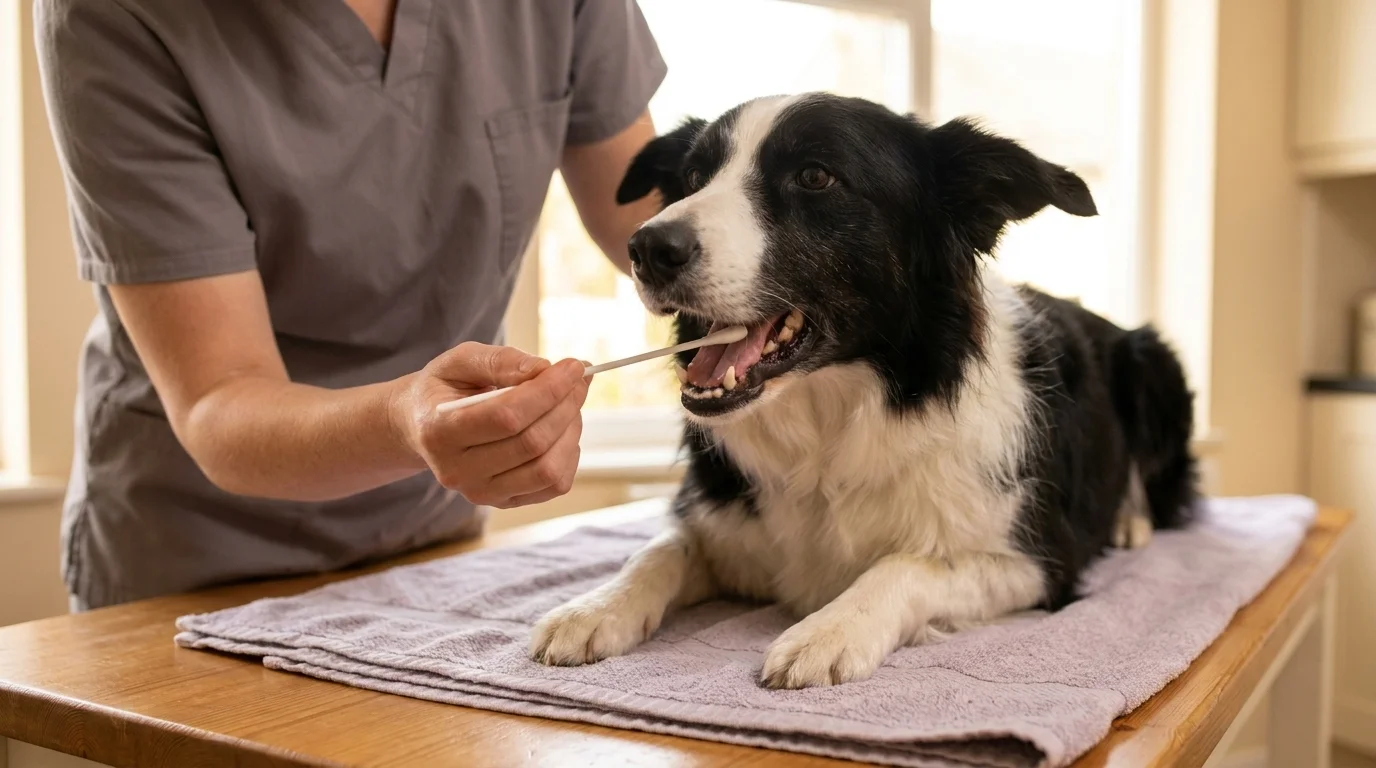
A Collie with the MDR1 mutation, given a standard dose of ivermectin, can develop tremors, ataxia, seizures, and in some cases coma. A cheek-swab dog DNA test that costs under $100 catches the mutation first. That gap — between the dose your vet would otherwise prescribe and the dose your dog's genetics can actually tolerate — is the cleanest example of what people mean when they say personalized pet medicine. It is also the most honest example, because outside that one mutation in a handful of herding breeds, the field is younger and narrower than the marketing copy suggests.
This is a guide to what is actually shipping in 2026 — the dog DNA tests on the consumer shelf, the compounding pharmacies your vet can prescribe through, the microbiome and personalized-diet services that have moved from concept to subscription product, the wearables that have edged from pedometer to vet-grade monitor, and the AI diagnostic tools your veterinarian's laboratory is already running on samples from your pet. It is also a guide to where the evidence is solid, where it is thin, and where the right move is still to call your vet and ask.
Nothing here is a prescription. Pricing changes, formulations change, and individual medical decisions belong with the veterinarian who has actually examined your animal.
The personalized-care workflow, in the order it usually happens
Personalized pet medicine is not a single technology — it is a sequence of decisions that build on each other, and the sequence matters more than any one product in it.
The path most pet owners walk, when their veterinarian is using these tools well, looks something like this. First, breed-and-history screening: the vet asks what your dog or cat is, what their littermates and parents had, and which conditions their breed is over-represented for. Second, where indicated, targeted genetic testing — usually a consumer DNA panel for mixed-breed identification and known health markers, plus, in the right breeds, a dedicated multidrug-sensitivity (MDR1) test. Third, drug-and-diet adjustments informed by that genetic and clinical picture, including, in some cases, a compounded version of a medication tailored to the animal's size, palate, or co-administered drugs. Fourth, when chronic GI or skin symptoms are part of the picture, microbiome testing as a diagnostic precursor to a personalized diet — not as a routine screen for healthy pets. Fifth, ongoing monitoring with a wearable or in-home sensor that flags activity, sleep, and vital-sign deviations earlier than the next annual exam would. And sixth, in the background, the AI-assisted laboratory and imaging tools your vet's clinic is already using on bloodwork and X-rays to surface patterns a human eye might miss.
You do not need every step. Most pets do not. The question worth asking at your next appointment is which of these is actually relevant to your pet — a question your vet is now in a position to answer with real data, rather than a category brochure.
Dog DNA tests: Embark vs. Wisdom Panel, and what they can and cannot tell you
The consumer DNA testing market for dogs is mature and competitive. Two products dominate: Embark and Wisdom Panel. Both are saliva or cheek-swab tests, both ship back results in roughly two to six weeks, and both claim approximately 99% accuracy for major breed identification. Where they diverge is on pricing, health screening depth, and what comes with the report.
As of 2026, Embark sells its Breed & Health kits in the $159–$349 range, with regular promotional pricing in the $110–$159 band. The Premium tier includes a veterinary genetics consultation — a brief call with someone trained to interpret the report rather than a written summary alone. Wisdom Panel Premium sits at roughly $99–$159 and screens for a similarly broad set of breed and genetic-condition markers.
A few things worth labeling honestly. The major-breed identification (large percentages of your dog's mix) is reliable across both tests. Minor breed percentages — anything under roughly 5–10% — are statistical estimates and should be read as such. The disease-risk markers screened on consumer panels are real, peer-reviewed mutations, but the presence of a risk variant is not a diagnosis; it is a flag worth discussing with your vet. And for the specific question of multidrug sensitivity in herding breeds — the MDR1 mutation — the consumer panels do screen for it, but academic diagnostic laboratories such as the UC Davis Veterinary Genetics Laboratory and Washington State University's PrIMe pharmacogenomics program are the references your veterinarian is most likely to send you to if a confirmatory result is needed before a high-risk drug is given.
Related Article: Pet Care through Different Lenses: A Neurodiversity Discussion
MDR1 in dogs: the one piece of pet pharmacogenomics that is genuinely mature
If there is one part of personalized pet medicine where the evidence is unambiguous and the action is concrete, this is it.
MDR1 — also written ABCB1 — is a gene that encodes P-glycoprotein, a transporter protein that, among other jobs, pumps certain drugs back out of the central nervous system. Dogs with two mutated copies of MDR1 (and to a lesser degree those with one copy) cannot clear those drugs from the brain at normal rates. A standard dose can become a toxic dose. The clinical signs are well-described and not subtle: tremors, ataxia, hypersalivation, blindness, seizures, and in severe cases coma.
The drugs of concern are also well-described. Cornell's Riney Canine Health Center lists, among others, high-dose ivermectin and other macrocyclic lactones, loperamide (the active ingredient in over-the-counter Imodium), acepromazine, butorphanol, vincristine, and doxorubicin. Importantly, the routine heartworm-preventive dose of ivermectin is generally safe for MDR1-mutated dogs; the problem is the much higher doses used for treating mange and certain other parasitic conditions.
The breed frequencies are where this stops being abstract. According to PetMD and the recent MDR1 drug-sensitivity guide, approximately 70% of Collies carry at least one copy of the mutation. The number is around 50% for Australian Shepherds (including Mini Aussies), 10–15% for Shetland Sheepdogs, and lower but non-trivial in Old English Sheepdogs, German Shepherds, Border Collies, Australian Cattle Dogs, and Chinooks. If your dog is in any of those breeds, or is a mix with significant herding-breed ancestry on a DNA test, MDR1 status is a worth-asking conversation before any of the listed drugs is given.
What about the rest of pet pharmacogenomics? Honesty matters here. A 2023 PubMed review on pharmacogenetics and pharmacogenomics in veterinary clinical practice was explicit that outside MDR1/ABCB1 in herding breeds, direct application of pharmacogenetics to clinical canine and feline prescribing remains limited. Expectations are rising as human pharmacogenomics normalizes, but the catalogue of mutations with established clinical relevance for everyday vet prescribing is short. That is a reason to test for MDR1 in the right breeds — not a reason to expect a full pharmacogenomic panel to change every prescription tomorrow.
When to ask your vet about a compounded medication
Veterinary compounding is the practice of having a pharmacist prepare a customized version of a medication — different strength, different form, different flavor — for an individual animal. It is older than personalized medicine as a buzzword, but it is also the part of the workflow where regulation and product availability have shifted most recently, and where most pet owners do not realize what is now possible.
The regulatory frame: in late 2022, the U.S. Food and Drug Administration's Center for Veterinary Medicine issued Guidance for Industry 256, which formalized when compounded animal drugs prepared from bulk drug substances are permitted — broadly, when there is a legitimate medical need and no FDA-approved alternative will work. Within that framework, oral compounding of substances including amantadine, clomipramine, and acetyl d-glucosamine is now explicitly supported, and the addressable patient population is large enough that the animal drug compounding market was estimated at roughly USD 1.82 billion in 2026, projected to reach USD 3.73 billion by 2035.
The market is dominated by a small number of pet-focused compounding pharmacies your veterinarian can prescribe through directly: Wedgewood Pharmacy, Stokes Pharmacy, and Valor Compounding among them. Common reasons to ask your vet whether compounding is appropriate include:
- The medication exists, but in a form your pet refuses. A flavored chew, a transdermal gel applied to the inner ear flap, or a tiny flavored tablet ("TinyTab"-style) can be the difference between a workable course of treatment and a daily wrestling match.
- The approved dosing does not fit your pet's size. A 4 lb cat or a 220 lb mastiff often falls outside the strengths of commercially available tablets, and pill-splitting beyond a certain point introduces real dosing error.
- Multiple drugs need to be combined into one administration to make compliance realistic for an anxious or fractious animal.
- The approved product is not available or has been discontinued — this is the gap GFI #256 was designed to address.
The most prominent recent illustration of compounding's role in personalized pet medicine is the treatment of feline infectious peritonitis (FIP). FIP was, until very recently, a death sentence in cats. The antiviral GS-441524 had been available informally for years, but in 2024 Stokes Pharmacy partnered with Bova Group to introduce regulated oral suspensions and tablets in the U.S., and in June 2025 Wedgewood launched a compounded oral antiviral for FIP. Cats that would not have survived five years ago now do, on a prescription that has to be tailored to weight and tolerated formulation. This is what personalized medicine looks like at its most consequential — and none of those decisions are made by the pet owner. They are made by the veterinarian and the compounding pharmacist together; the owner's job is to know enough to ask.
Related Article: CBD for Pets: The Comprehensive Guide to Uses, Benefits, and Risks
Personalized nutrition: microbiome tests, custom diets, and what the evidence supports
The personalized-diet category has grown faster than the evidence for routine use of microbiome testing in healthy pets, and it is worth keeping those two things separate.
The diet services themselves are real businesses with measurable nutritional rigor. Nom Nom formulates recipes under veterinary-nutritionist oversight and prices by dog weight. Spot & Tango fresh meal plans start at roughly $2 per day for a small dog and climb with size — around $1.06 per meal for a 5 lb dog up to around $3.08 per meal for a 65 lb dog as of 2026 pricing. JustFoodForDogs offers a custom prescriptive diet formulated to an individual dog's medical needs for a $250 one-time formulation fee plus roughly $6.45 and up per pack. None of these companies sell "AAFCO doesn't apply to us" — and pet owners reading nutritional adequacy statements on the back of any bag of food, fresh or otherwise, are doing the right thing.
Microbiome testing for pets is more genuinely new and worth more careful framing. AnimalBiome's DoggyBiome Gut Health Test sequences a stool sample to characterize the gut bacterial population — over 5,000 bacterial types identified, screening for 10 specific pathogens including Clostridium perfringens and Salmonella enterica, and 9 categories of beneficial bacteria. The kit costs $135, turnaround runs roughly two to three weeks, and the report includes a 15-minute consultation with a microbiome specialist.
Where microbiome testing earns its keep, clinically, is in dogs with chronic diarrhea, recurring digestive issues, or itchy-skin conditions where a gut-driven contributor is on the differential. It is much less clearly useful as a routine screen in an asymptomatic, otherwise-healthy pet — and the peer-reviewed evidence base for routinely prescribing dietary changes based on a single gut snapshot is still maturing. If your dog has chronic GI signs, this is a conversation worth having. If your dog is fine, the money is better spent on a wellness exam.
Wearables: from activity tracker to medical-grade monitor
The pet wearables market has consolidated and matured. The global pet wearables market was estimated at USD 7.1 billion in 2025 and is projected to reach USD 8.6 billion in 2026, with growth to USD 21.8 billion by 2035 at a roughly 10.9% CAGR. The top five players — Tractive, FitBark, Garmin, PetPace, and Petcube — together hold only around 12% of the market, which means this is a category with substantial fragmentation and rapid product change.
A few names worth recognizing because your vet is increasingly comfortable referring to data from them. PetPace 2.0, launched in March 2024, is the closest to a clinical-grade continuous monitor on the consumer market: temperature, pulse, respiration, activity, and posture, with optional subscription telemedicine. Tractive acquired Whistle from Mars Petcare in July 2025, consolidating two of the largest GPS-and-activity ecosystems. FitBark, a lighter activity-and-sleep tracker, remains broadly compatible with veterinary research platforms.
The honest framing: a wearable is a screening tool, not a diagnostic one. A drop in activity for a week, a sustained elevation in resting heart rate, or a sudden change in sleep pattern in a senior dog is information your vet would not otherwise have until your next visit. That is genuinely useful. It is not a substitute for an exam, and a single anomalous reading is more often a sensor artifact or a particularly enthusiastic afternoon than a clinical event.

AI in your vet's laboratory: what is actually shipping in 2026
This is the section that has changed most since the original version of this article was written, and where the gap between buzzword and product is now smallest.
Three named tools are worth knowing about, because they are running in clinics now and they affect the data your vet brings back into the exam room. Antech RenalTech, validated and reported through the American Veterinary Medical Association's coverage of laboratory diagnostics, predicts feline chronic kidney disease up to two years before conventional bloodwork would flag it — using patterns across routine panel data the eye does not reliably catch. RapidRead Dental, launched in May 2025 and covered in Mars's announcement of Antech innovations, interprets dental radiographs in roughly 10 minutes with reported accuracy near 98%, supporting the veterinarian rather than replacing the read. IDEXX DecisionIQ, now embedded in inVue Dx and integrated with ezyVet, flags subtle patterns across routine bloodwork as part of standard reporting.
What unifies these tools is that they are clinic-side, not consumer-side. They run on samples taken from your pet during a normal appointment. You will not download an app and get a probability of feline CKD; you will, increasingly, find that your vet has more confidence in a sub-clinical signal because an algorithm has surfaced it. That is what AI in personalized pet medicine actually looks like in 2026 — not a forecast on your phone, but a higher floor on what your vet's lab can see.
What personalized pet care costs in 2026
Ballparks, not quotes — pricing changes, and your vet's clinic and your geography matter. For the range of services discussed here, expect roughly:
- Consumer dog DNA test (Embark, Wisdom Panel): $99–$349, depending on tier and promotional pricing. Premium tiers ($150 and up) more often include a meaningful health-condition panel and, with Embark Premium, a veterinary genetics consult.
- MDR1 cheek-swab test through an academic laboratory (UC Davis VGL, WSU PrIMe): generally in the $50–$100 range; ask your vet, since some clinics bundle it with broader panels.
- Microbiome testing (AnimalBiome DoggyBiome): $135 with a specialist consult included.
- Personalized fresh dog food (Spot & Tango, Nom Nom, JustFoodForDogs custom): roughly $2 per day for the smallest dogs, climbing into the $5–$10+ per day range for medium-to-large dogs. JustFoodForDogs custom plans carry a $250 formulation fee.
- Wearables: roughly $50–$300 for the device, depending on category, plus $8–$15 per month for subscription tiers (PetPace's vet-grade subscription sits higher at around $14.95/month).
- Compounded medications: highly variable — depends on the drug, the strength, and the formulation. Your vet's prescription and the compounding pharmacy's quote are the two places to confirm before assuming the cost.

The honest limits of personalized pet medicine in 2026
The most useful posture toward this category, both as a pet owner and as a writer, is informed enthusiasm — not unhedged enthusiasm.
The MDR1 example is real. The FIP example is real. The shipping AI diagnostics are real. The compounding regulation has materially changed. And consumer DNA tests have become accurate enough for major-breed identification and broad health-marker screening that they are a reasonable spend for many owners.
At the same time: pharmacogenomics in pets, outside MDR1, remains a maturing field rather than a delivered one. Microbiome testing is most useful where there is already a clinical reason to test, not as a universal screen. Personalized diets are nutritious and convenient but not magic, and reading the AAFCO nutritional adequacy statement on the back of any bag is still the cheapest piece of due diligence in pet nutrition. Wearables are good early-warning systems and bad diagnostic instruments.
The 2024 American Animal Hospital Association Community Care Guidelines, and the broader emphasis from AAHA, WSAVA, and ACVIM on individualized, evidence-graded care, point in the same direction: more data on the table, more conversation in the exam room, more shared decision-making between vet and owner. The technologies in this article are the tools that make that conversation richer. They are not a replacement for it. Before any genetic test result, compounded medication, custom diet, or wearable alert leads to a change in your pet's care, the next call should still be to the veterinarian who knows your animal.
Frequently Asked Questions
As of 2026, Embark DNA tests run $159–$349 (often discounted to $110–$159) and include health-condition screening, with a veterinary genetics consultation included at the Premium tier. Wisdom Panel Premium retails around $99–$159. Both claim approximately 99% accuracy for major breed identification, though minor breed percentages (under 5–10%) are statistical estimates rather than hard calls.
MDR1 (also called ABCB1) encodes P-glycoprotein, a transporter protein that pumps certain drugs out of the brain. Dogs with the mutation can develop severe neurological signs — tremors, ataxia, seizures, even coma — from drugs including high-dose ivermectin, loperamide (Imodium), acepromazine, vincristine, and doxorubicin. Highest-risk breeds: Collies (~70% carry the mutation), Australian Shepherds (~50%), Shetland Sheepdogs (~10–15%), Old English Sheepdogs, German Shepherds, and Border Collies. A cheek-swab test through UC Davis VGL or Washington State University PrIMe identifies status before any of those drugs is given.
Veterinary compounding makes sense when the manufactured product is unavailable (the recent GS-441524 oral antiviral for feline infectious peritonitis, launched in 2024–2025 by Stokes and Wedgewood, is the prominent example), when your pet refuses pills and needs a flavored chew or transdermal gel, when standard dosing does not fit the pet's size, or when multiple drugs need to be combined for compliance. FDA Guidance for Industry 256 frames when compounding from bulk drug substances is permitted. Wedgewood, Stokes, and Valor are the major pet-focused compounding pharmacies your veterinarian can prescribe through.
AnimalBiome's DoggyBiome Gut Health Test ($135, two-to-three-week turnaround) sequences a stool sample to identify bacterial imbalances among over 5,000 types, screens for 10 specific pathogens including Clostridium perfringens and Salmonella enterica, and includes a 15-minute specialist consultation. It is most useful for dogs with chronic diarrhea, recurring digestive issues, or itchy-skin conditions with a suspected gut contributor — less useful as a routine screen for an otherwise healthy, asymptomatic pet.
AI tools used inside veterinary clinics are now product-grade rather than experimental. Antech RenalTech can predict feline chronic kidney disease up to two years before conventional bloodwork shows it. RapidRead Dental, launched in May 2025, interprets dental radiographs in roughly 10 minutes with reported accuracy near 98%. IDEXX DecisionIQ flags subtle patterns across routine bloodwork. These are clinic-side tools your vet uses on samples from your pet — not consumer apps, and not replacements for the veterinarian's read.