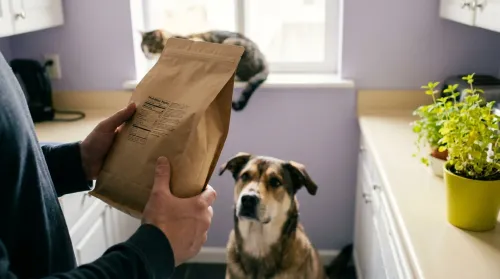


The word on the bag is doing a lot of work, and most of it is unpaid. "Eco-friendly." "Green." "Biodegradable." "Sustainably sourced." For years those phrases sat on pet shampoo, poop bags, and kibble with no one checking whether they meant anything. That window is closing. As of September 27, 2026, the EU's Empowering Consumers for the Green Transition Directive bans generic environmental claims — "environmentally friendly," "green," "biodegradable" — and offset-based "climate neutral" labels unless they are backed by certification (EcoClaim). The question for anyone shopping for eco friendly pet products in 2026 is no longer whether to care. It is how to read what the label is actually telling you, and where your money buys a real difference rather than a leaf-shaped logo.
The demand is real, not a marketing invention. Faunalytics' January 2026 review found that 62% of pet guardians had bought an environmentally friendly product in the past month, against 46% of people without pets, and that 84% of companion-animal guardians hold companies responsible for addressing climate change (Faunalytics). The Pet Sustainability Coalition's 2026 benchmark put it bluntly: environmental responsibility has "shifted from a niche marketing trend to a structural necessity" in the industry. When the people writing the checks reach that conclusion, the brands follow. So does the regulatory scrutiny.
What changed by 2026
If you read a pet blog two years ago that told you the EU's "Green Claims Directive" was about to police greenwashing, that blog was already out of date. The standalone Green Claims Directive proposal was withdrawn in June 2025 (Latham & Watkins). The binding law is the Empowering Consumers for the Green Transition Directive, applied from September 27, 2026 — the one that actually bans the vague claims you see on pet packaging (EcoClaim). In the United States the equivalent rulebook, the FTC's Green Guides, has not been meaningfully updated since 2012 and has been under a long-running revision. That gap matters: a North American brand can still print "eco-friendly" on a bag with far less legal exposure than a European one. The label tells you less here, so you have to read more.
The buyers shifted too. Roughly 67% of Millennial and Gen Z pet owners across North America and Western Europe now actively seek eco-certified or sustainably packaged pet products, up from 39% in 2020 (GMInsights). Estimates of the market's size vary by how you draw the boundary — somewhere from roughly $16.8 billion in 2025 (growing near 9.7% a year) to about $35.1 billion in 2024 (around 7.6% a year), depending on the definition (GMInsights; MetaTech Insights). The number to remember is not the market size. It is that the money is large enough to attract claims that outrun the substance behind them.
How to read the label (and spot the greenwashing)
Here is the part the marketplace pages and the nonprofit overviews skip: what each mark on the package actually certifies, and who is checking. A 2026 audit of the top search results for eco pet products found that even the leading nonprofit guide covers no third-party certifications at all — no Leaping Bunny, no B-Corp, no compostability standard — and offers only basic ingredient tips (Best Friends Animal Society). That is the gap. Treat the marks like this:
- Leaping Bunny — the cruelty-free standard with an actual audit behind it. A leaping-rabbit drawing that is not the Leaping Bunny logo certifies nothing.
- B-Corp — certifies the company's overall social and environmental performance, not the individual product. Useful as a signal about the parent company, not a substitute for product-level proof.
- USDA Organic — a regulated term for ingredients, common on food and some grooming products.
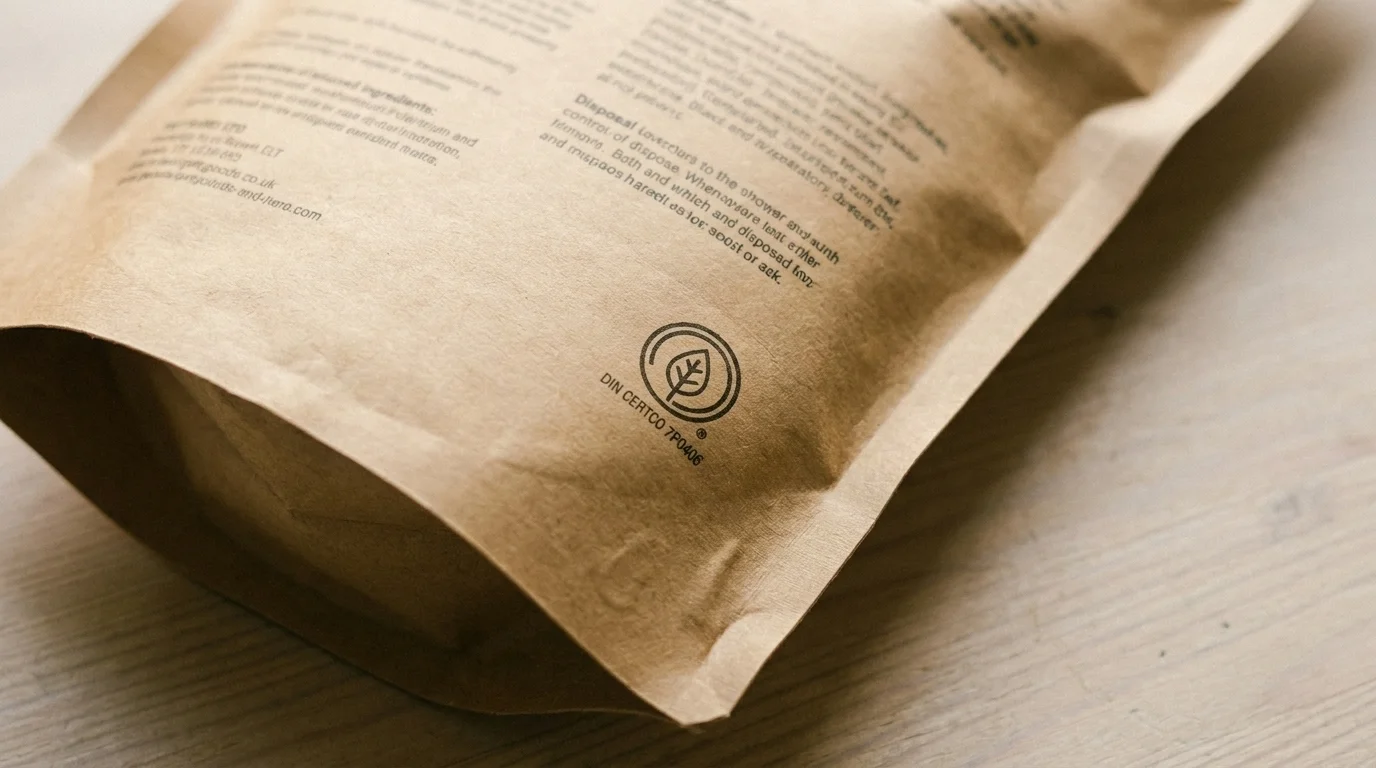
- BPI and TÜV "OK compost" — the marks that make "compostable" mean something. They specify whether the item breaks down in an industrial facility or in a home compost bin, and over what timeframe (Greenprint).
The single most abused word in this category is "biodegradable." Almost everything biodegrades eventually; the term on its own promises nothing about how long or under what conditions, and a "biodegradable" plastic that needs decades and an industrial digester is functionally landfill. Greenprint's verification guide treats "biodegradable" with no stated timeframe or condition as a red flag, alongside generic "eco"/"green" wording, leaf or checkmark logos not tied to a named certifier, and missing certification numbers (Greenprint). The fix is simple and unglamorous: look for the certifier's name and a registry number you can actually look up. If it isn't there, the claim is decoration.
Related Article: Green Paws: Embracing Renewable Energy in Veterinary Practices
Category by category: where to look and what to ask
Sustainability is not one purchase, it is six or seven, and they are not equally worth your attention. Sorted by where the volume — and the impact — actually is:
Cat litter
This is the largest sustainability decision most cat owners make and the one they think about least. Conventional clay litter is strip-mined and lands in the trash by the ton. The shift to plant-based litters — recycled paper, wood, walnut shell, grass seed, tofu — is where eco friendly cat litter and sustainable cat litter searches concentrate, by a wide margin over every other pet sustainability query. Ask two questions at the shelf: what is it made of, and is the packaging recyclable or compostable with a real mark on it. "Natural" on the front of a litter bag is not an answer to either.
Pet food
Food is the biggest carbon line item in owning a dog or cat, which is why plant-based and alternative-protein dog foods have moved from fringe to mainstream conversation. If you go that route, the regulatory tool that matters is not the word "sustainable" on the front — it is the AAFCO nutritional adequacy statement in small type on the back, which tells you whether the formula is complete and balanced for your pet's life stage. A sustainability claim and a nutritional-adequacy claim are different claims with different enforcement behind them. Read both, and weight the one with regulatory teeth.
Toys
The most concrete sustainability story in toys is not a material, it is a take-back program. West Paw runs "Join the Loop," which recycles worn-out toys back into new ones rather than sending them to landfill (Sierra Club). That is a verifiable circular claim — you can see the returned product become the next one — as opposed to a "made from recycled materials" line you cannot trace. Searches for non toxic dog toys and eco friendly cat toys (the latter rising fast year over year) reward brands that say what the toy is made of and what happens to it at the end.
Waste bags
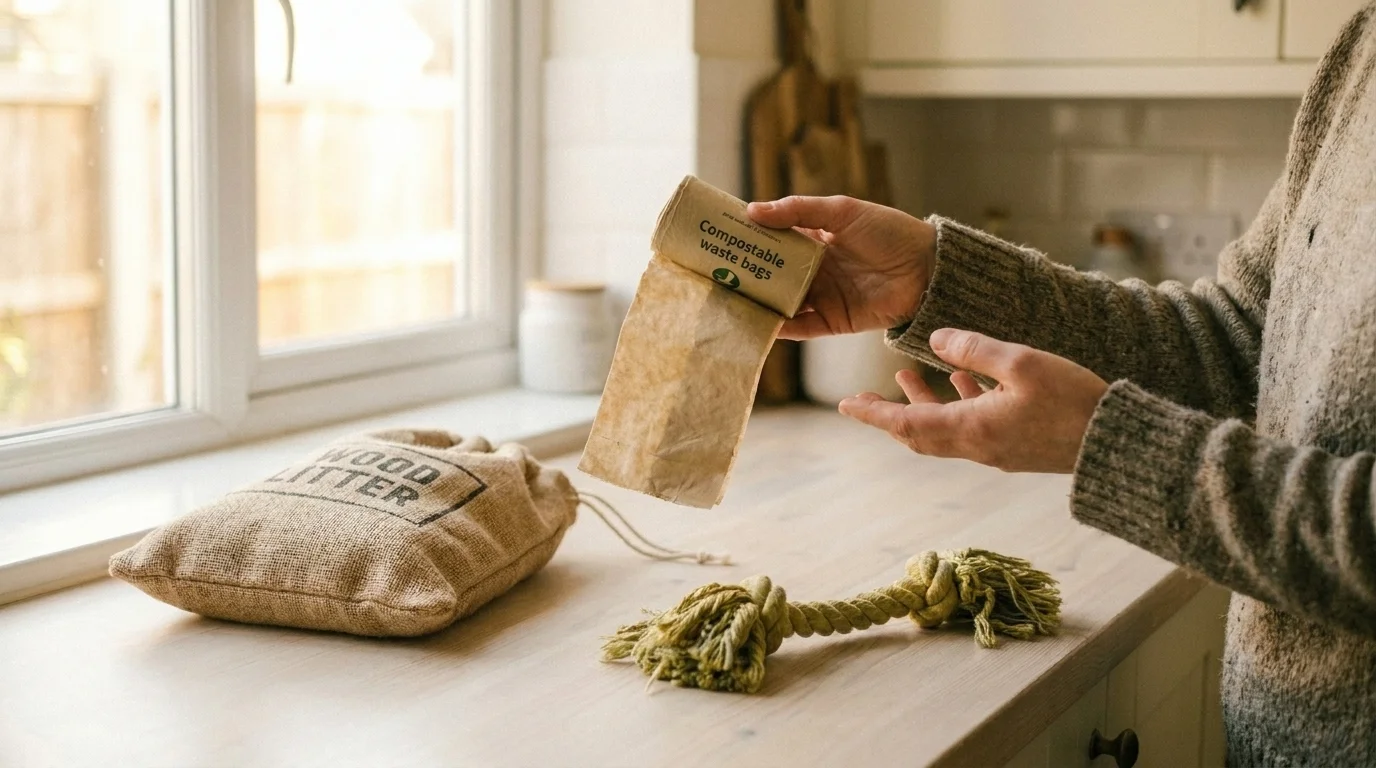
The poop-bag aisle is where "biodegradable" does the most damage, because a bag labeled biodegradable that needs an industrial composter — which most households cannot access — is a regular plastic bag with a better story. The bags worth paying for carry a BPI or TÜV "OK compost HOME" mark, which tells you it will actually break down in a home or municipal compost stream (Greenprint). Without that mark, "biodegradable" on a poop bag is exactly the claim the new EU rules were written to stop.
Where the eco premium is worth paying
Now the part the stores will never tell you, because it argues against a sale. Sustainable products usually cost more, and the honest data says most owners will only stretch so far: surveys of pet-food buyers find only about 12–16% will pay a premium for products labeled "environmentally friendly," "sustainably raised," "locally sourced," or "fair trade" (PetfoodIndustry). That is not a reason to skip sustainability. It is a reason to spend the premium where it returns the most.
Pay up for the durable and the verifiable: a toy with a real take-back program, a litter that genuinely diverts strip-mined clay from the landfill, a waste bag with a home-compostable certification. Don't pay up for a vague "green" version of a disposable product you'll replace next week with no certification to show for it. The same data shows the willingness scales with how many animals you have — households with one dog or cat are around 6% more likely than the average shopper to buy sustainable, and three-or-more-pet households up to 28% more likely (PetfoodIndustry). The more you buy, the more a smart sustainability choice compounds — and the more a greenwashed one costs you.
Transparency is the whole game
Strip away the marketing and a genuinely sustainable pet product has one thing in common: it tells you what it is made of, where the materials came from, and what happens to it when you're done. The brands worth your loyalty publish that — sourcing, materials, disposal, and a certification you can verify by number. Buyers now expect that proof rather than a slogan, and the brands that withhold it are telling you something by the omission. When a company won't say who certified the claim, treat the silence as the answer.
So the next time a pet product promises to be good for the planet, do what a reporter does with any press release: ask for the receipt. What's the certifying body? What's the number? Industrial or home compostable, and over what timeframe? If the package can answer, it has earned the premium. If it can only offer a leaf logo and the word "eco," you already have your answer — and you can keep your money for the choice that actually counts.
Frequently Asked Questions
Biodegradable only means a material eventually breaks down — possibly over decades, sometimes leaving microplastics — with no guaranteed timeframe. Compostable means it fully breaks down within a set period under defined conditions; look for a BPI or TUV "OK compost" mark, and check whether it needs an industrial facility or works in a home compost bin.
Watch for vague terms like "eco" or "green" with no specifics, generic leaf or checkmark logos that aren't tied to a named certifier, and missing certification numbers. Legitimate brands publish their materials, sourcing, and disposal details and use verifiable third-party certifications such as Leaping Bunny, B-Corp, USDA Organic, or BPI.
Sometimes. Surveys show only about 12 to 16% of pet owners will pay a premium, so spend where it counts most — durable items, products with real take-back programs, or genuinely certified goods — rather than paying extra for anything simply labeled "green."
In the EU, yes: the Empowering Consumers for the Green Transition Directive applies from September 27, 2026 and bans generic claims like "environmentally friendly" and "biodegradable" unless certified. The earlier standalone Green Claims Directive was withdrawn in June 2025. In the US, the FTC Green Guides haven't been updated since 2012 and are still under revision, so American labels carry less legal weight.
For cat owners, litter is usually the largest single sustainability decision — switching from strip-mined clay to a certified plant-based or recycled litter diverts the most waste. For dog owners, food carbon and durable, take-back toys are the highest-impact choices.