Embracing Feline Wellness: The Story of Dr. Priya Patels Journey into Feline Veterinary Medicine


Only 57.3% of cat owners took their cat to a vet in 2024, against 74.2% of dog owners (AVMA Pet Ownership and Demographics Sourcebook, 2024). That seventeen-point gap is the most honest thing anyone can say about feline veterinary care in the English-speaking world right now. Cats are not getting the same medicine that dogs are getting. They are getting less of it, later, and at a higher cost when they finally arrive.
I want to be careful here. This is not a piece about guilting people who love their cats into spending more money on them. It is a piece about what cats are, what they need, and why the standard "she seems fine" check from across the room is not the diagnostic tool we think it is.
Why cats hide illness, and what wellness exams catch
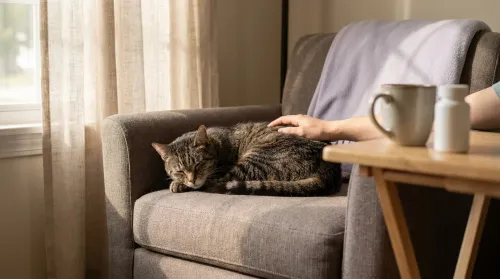
Cats are obligate carnivores and solitary hunters. In the wild, an animal that limps, slows down, or stops eating in front of a competitor or a predator is an animal that does not last long. The cat sleeping on your kitchen chair did not get the memo that the kitchen is safe. Her ancestors are still running her threat model.
That is not a metaphor. It is the practical reason cats mask pain and illness until the disease is well established. 38.6% of cat owners say they skip vet visits because their cat "isn't sick" (AVMA, 2024). Most of the time, this is a misread of hiding behavior, not an accurate clinical assessment.
The five conditions that most often hide in plain sight in indoor cats are chronic kidney disease, dental disease, diabetes, hyperthyroidism, and certain cancers (Pieper Veterinary, "5 Hidden Illnesses Indoor Cats Could Have"). None of them look dramatic at the start. A cat with early kidney disease drinks a little more water. A cat with dental disease eats slightly less of the dry food and avoids the cold side of the bowl. A cat with hyperthyroidism eats more and loses weight at the same time — and looks, for a while, like a cat in excellent condition.
A wellness exam catches what the owner cannot. Weight changes you would not notice across twelve months of daily life. Body condition scoring done by a hand that has felt thousands of cats. A dental score. A blood panel that flags kidney values before the cat starts vomiting. This is the work.
How often your cat actually needs feline veterinary care
The current standard is the 2021 AAHA–AAFP Feline Life Stage Guidelines, still in force in 2026 (AAFP · AAHA PDF). The guidelines collapse a cat's life into five stages and tell the vet, in plain language, what to do in each.
| Life stage | Age | Recommended exam frequency | What gets added |
|---|---|---|---|
| Kitten | 0–1 year | Every 3–4 weeks until ~16 weeks, then at 6 and 12 m | Vaccination series, parasite control, spay/neuter planning, behavior set-up |
| Young Adult | 1–6 years | Annual | Baseline bloodwork, dental check, weight tracking |
| Mature Adult | 7–10 years | Annual | Senior screening begins (CBC, chemistry, urinalysis) |
| Senior | 10+ years | Semiannual (every 6 months) | Senior panel: CBC, chemistry, UA, T4 (thyroid), blood pressure |
| End-of-Life | Any age | As needed | Hospice and palliative planning |
The semiannual recommendation for senior cats is the one that surprises most owners. A year in a ten-year-old cat is the equivalent of roughly four to five years in a human in middle age — a long time for hyperthyroidism, kidney disease, or hypertension to do quiet damage. Twice-yearly bloodwork is the cheapest insurance there is.
A note for kitten owners: those every-three-weeks visits are not optional padding. They line up with the vaccine schedule (the maternal antibodies waning, the kitten's own immune system coming online) and they are the only window you get to install good handling habits before the cat is large enough to vote with her teeth.
What happens during a feline wellness exam
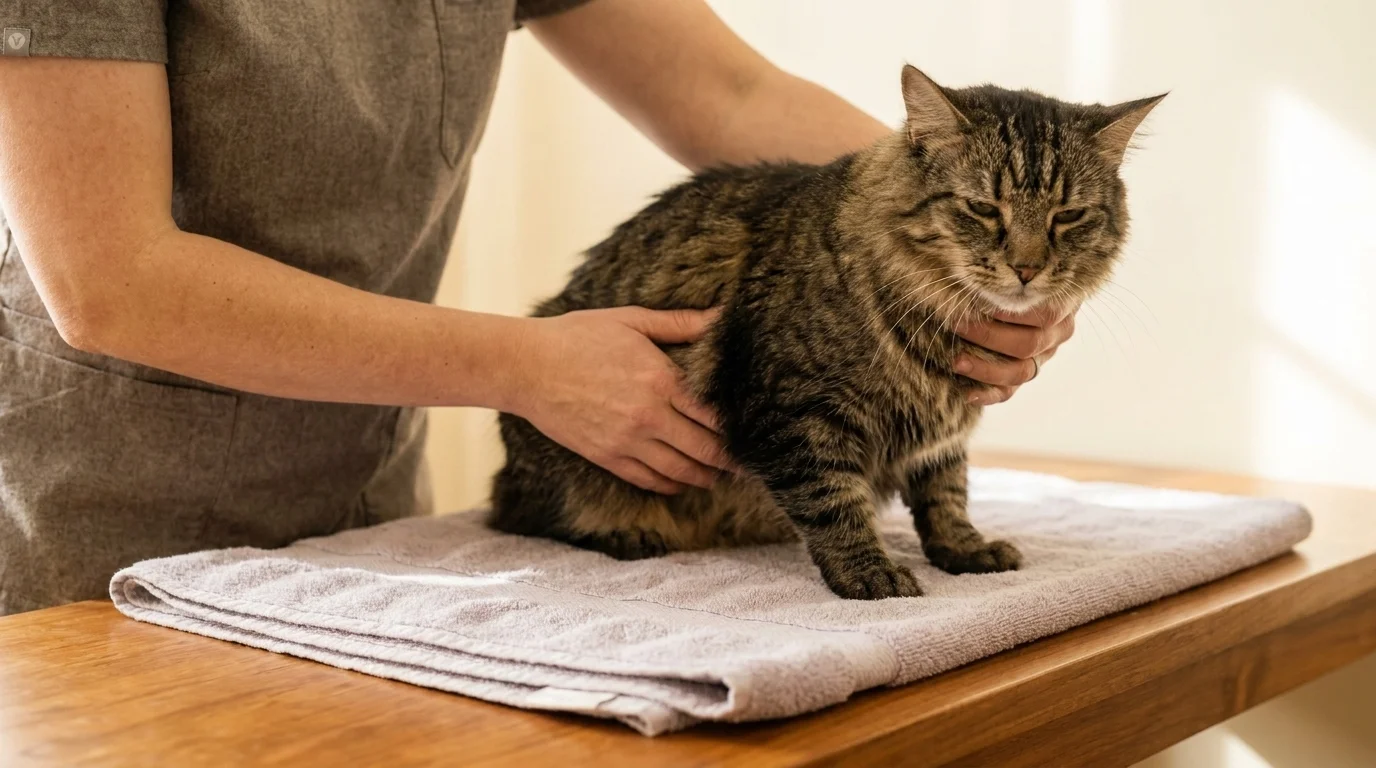
A standard cat wellness exam, performed properly, is more than the stethoscope-and-thermometer routine. The full version looks like this:
- Head-to-tail physical exam: coat, skin, ears, eyes, mouth, lymph nodes, thyroid gland, abdomen palpation, joints, tail and spine.
- Weight and body condition scoring (BCS) on a 1–9 scale. Two-tenths of a kilo lost over a year is invisible to the owner and obvious to the scale.
- Dental assessment: gum score, tartar, fractured teeth, resorptive lesions (which are quietly common and quietly painful).
- Parasite check: fecal exam, flea and tick assessment, heartworm where regionally appropriate.
- Vaccine review: core (FVRCP, rabies) and lifestyle-based (FeLV) updated against the current AAFP guidance.
- Diet, water, and behavior conversation: what the cat eats, how she drinks, whether the litter box situation is sane, whether anything has changed in the household.
- Bloodwork: a basic panel for healthy cats under ten; a senior panel (CBC, chemistry, urinalysis, T4) for cats ten and over, or earlier if anything in the exam warrants it.
If your vet is finishing a feline wellness exam in nine minutes and the only data point is body temperature, you do not have a wellness exam. You have a transaction.
What preventive care actually costs
This is the conversation most pet-health articles refuse to have. Cost is the second-most-cited reason cat owners skip vet visits — 16.4% of owners, per the same AVMA 2024 data, with 28.0% spending zero on vet care in the last year.
So let us put numbers on the table. In 2026 in the United States, the averages run roughly like this (Cats.com 2026 statistics):
- ~$182/year: routine preventive care for a single cat.
- ~$245: an average surgical visit.
- ~$154: an average emergency visit.
The arithmetic is unkind to the "I'll go if something happens" approach. A single emergency visit costs nearly what a year of preventive care does, and the conditions that produce emergency visits — diabetic ketoacidosis from undiagnosed diabetes, urinary blockage in a cat with chronic FIC, advanced kidney failure in a senior whose values were never tracked — are exactly the things annual wellness exams are designed to head off before they become emergencies.
Pet insurance is doing some of this math now too — the US pet insurance market is projected at $11.25 billion by 2026, with much of the growth driven by preventive care framing. (Cats.com)
Preventive care is not cheap. Reactive care is more expensive. Both of those things can be true.
Choosing a vet your cat can tolerate: Fear Free and AAFP Cat Friendly Practice
A cat that is terrified at the clinic is a cat whose exam will be incomplete. The cat will not let the vet palpate the abdomen properly. Her heart rate will be useless as a baseline. Her blood pressure reading will be inflated. The owner will say "we won't put her through that again" — and the cat will not see the inside of a clinic until something is seriously wrong.
A 2024 study on shelter cats found that hair cortisol — a long-term stress marker — was nearly halved in enriched environments compared with resource-poor ones (PMC11083262). Stress is not theatre. It is a measurable physiological state with consequences for diagnosis and for whether you ever come back.
Two formal certifications now address this directly, and a "cat only vet" practice often holds one or both:
- Fear Free Certified Practice (fearfree.com) trains staff in low-stress handling, retrofits waiting rooms and exam spaces to reduce sensory overload, and requires re-certification every three years. Pricing in the 2024–2026 cycle runs from about $850/year for a solo-DVM practice to $4,000/year for practices with fifteen or more DVMs — meaning a certified clinic has put real money into proving this is not a marketing label.
- AAFP Cat Friendly Practice (CFP) is the cat-specific equivalent run by the American Association of Feline Practitioners. It requires the clinic to complete ten training modules covering everything from carrier handling to feline-only waiting areas to species-appropriate restraint.
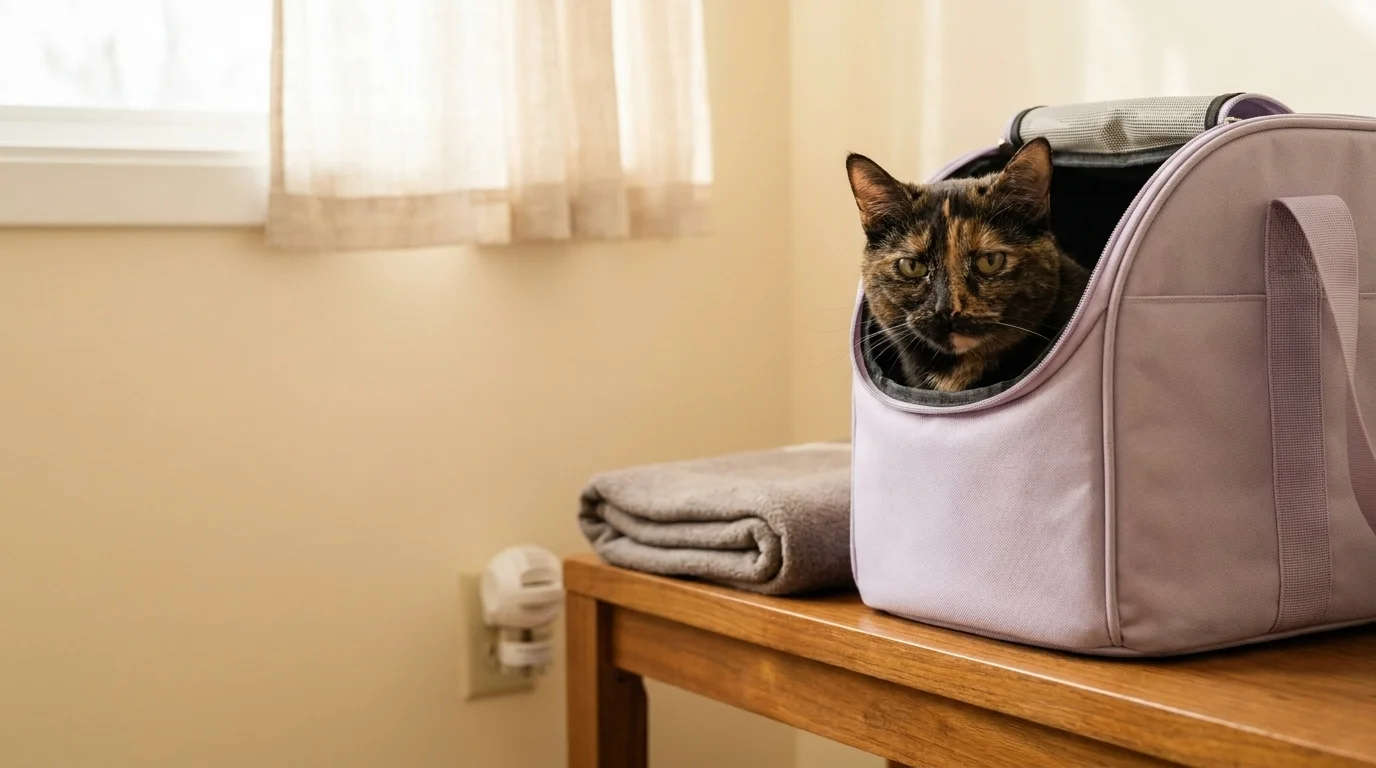
You can have a clinic with both designations, one of them, or neither. What you are looking for, regardless of the badge, is concrete evidence: cat-only waiting areas or separated entry times, towels and pheromones available without asking, staff who let the cat exit the carrier on her own, and exams that happen on the cat's chosen surface — the bottom half of the carrier, the floor, your lap — rather than the slick steel table.
The 5 Pillars of Feline Welfare
Behavioral wellness is not the soft sister of physical wellness. It is the upstream system that decides whether the physical wellness exam ever happens.
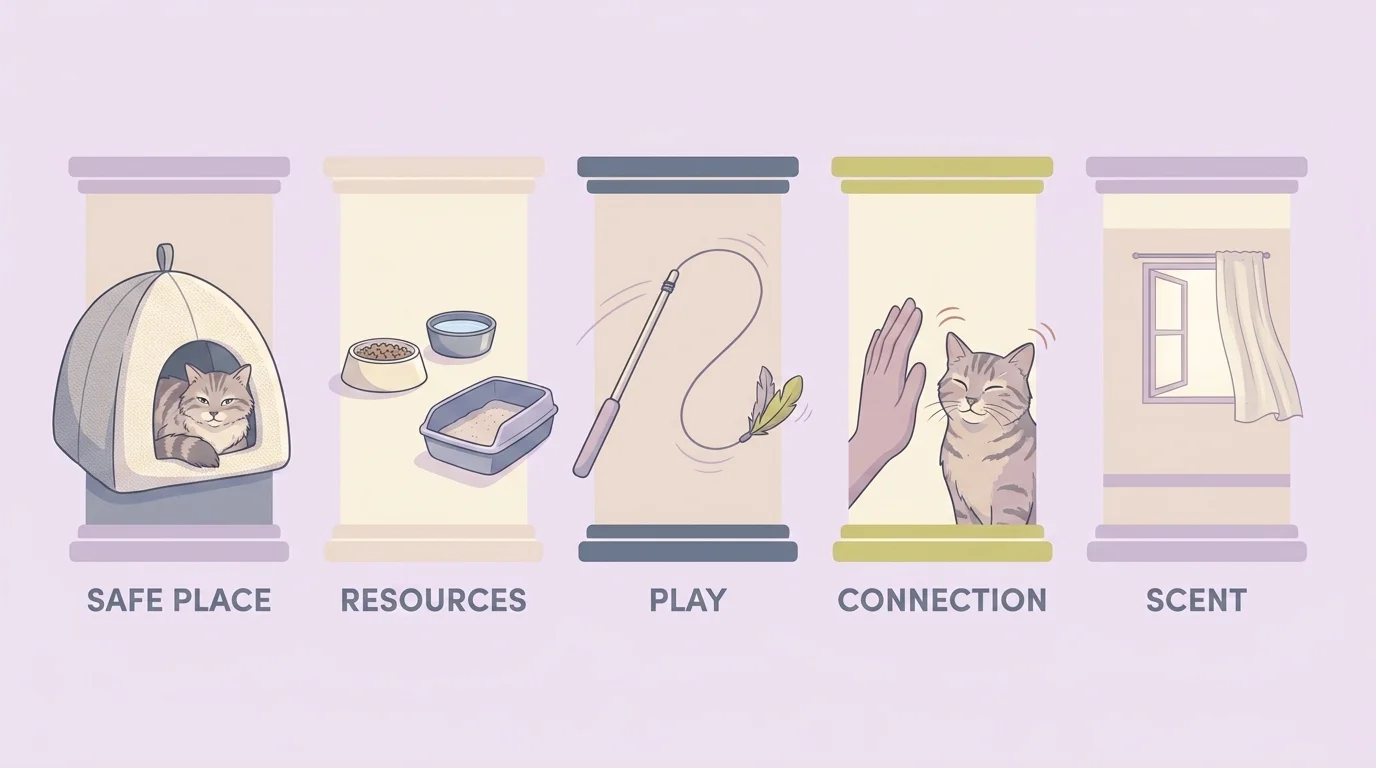
The canonical framework is the AAFP/ISFM 5 Pillars of Feline Environmental Needs, and any honest version of "holistic cat care" is built on it:
- A safe place — a cat must have somewhere to retreat to (a covered carrier, a high shelf, a quiet room) where no one will follow.
- Multiple, separated key resources — food, water, litter boxes, scratching surfaces, play areas, and resting spots, distributed so that no single cat controls access. In a multi-cat home, the "+1 rule" applies: one more of every resource than you have cats.
- Opportunity for play and predatory behaviour — the whole predatory sequence (stalk, pounce, kill bite, eat, groom, sleep) needs an outlet. Wand toys and food puzzles do the work indoors that hunting would do outside.
- Positive, consistent, predictable human–cat interaction — interaction the cat consents to, on the cat's terms. Slow blinks, gentle bunting, allowing the cat to initiate.
- An environment that respects the cat's sense of smell — minimal scent disturbance from cleaners, plug-ins, and other animals' smells; pheromones used deliberately rather than masked.
The same 2024 cortisol study cited above found that enriched home environments measurably reduce chronic stress in cats. This is feline preventive medicine that does not require a clinic, and any feline veterinary care worth the name will ask you about all five pillars during the diet-and-behavior portion of the wellness exam.
Smart-home monitoring is a complement, not a substitute
The 2024–2025 wave of consumer cat-health technology is real and, used carefully, useful. The honest summary:
- Smart litter boxes that weigh the cat on entry and track frequency and volume (Petivity, Whisker Litter-Robot Connect, Pretty Litter and similar urine-pH indicators) can catch early kidney disease, diabetes, and urinary obstruction days or weeks before a human notices. In a multi-cat home, the per-cat weighing is the killer feature — you cannot eyeball which cat has dropped 200 grams.
- Smart collars track activity and rest patterns. A senior cat whose play and grooming time has dropped meaningfully over a month is worth a vet conversation.
- AI-assisted behavior apps flag pattern changes the owner would otherwise dismiss — eating speed, vocalization, gait.
None of this replaces the wellness exam. Sensors generate data; vets generate diagnoses. What the technology does well is collapse the gap between "she seems fine" and "she went off her food three weeks ago and I didn't notice", which is exactly the gap a cat's hiding behavior is designed to widen.
If you use any of it, bring the data to the appointment. A graph of declining activity over six months is a better history than a memory of the last fortnight.
If you take one thing from this
Feline veterinary care is not a person, a brand, or a vibe. It is a small set of repeatable habits that respect what cats actually are: a separate species with a working evolutionary instinct to hide pain, a measurable stress response to the clinic environment, and a five-stage life trajectory with concrete checkpoints.
Annual exams for healthy adults. Semiannual exams for cats ten and over, with full senior bloodwork. A clinic that handles your cat in a way you would let someone handle you. Five pillars of welfare at home. And the next vet visit on the calendar before the current one is over.
If your cat has not been seen in the last twelve months and she is over a year old, you already know what to do.
Frequently Asked Questions
The American Association of Feline Practitioners recommends kittens visit every 3-4 weeks until about 16 weeks of age, healthy adult cats annually, and senior cats (10+) every six months. Cats with chronic conditions like diabetes, kidney disease, or hyperthyroidism may need more frequent monitoring. Source: AAFP-AAHA Feline Life Stage Guidelines, 2021.
A standard feline wellness exam includes a head-to-tail physical, weight and body condition scoring, dental assessment, parasite check, vaccine review, and a conversation about diet, behavior, and lifestyle. Cats under 10 typically get a basic blood panel; senior cats receive a senior panel that adds urinalysis and thyroid hormone (T4) testing.
Yes. Cats are evolutionarily wired to hide pain and illness, and the most common indoor-cat conditions - chronic kidney disease, dental disease, diabetes, hyperthyroidism, and certain cancers - often show no obvious symptoms until advanced. Annual exams catch what owners can't.
Fear Free certifies clinics that integrate stress-reduction methods across staff training, facility design, and patient handling. The AAFP Cat Friendly Practice (CFP) program is the cat-specific equivalent, requiring ten training modules. Cats from less stressful clinic environments have nearly half the cortisol levels of cats in standard settings, meaning more accurate exams and a higher likelihood owners actually bring their cats in.
The 2024 AVMA Pet Ownership and Demographics Sourcebook reports 57.3% of cat owners visited a vet in the past year vs 74.2% of dog owners. The two most-cited reasons for skipping visits are 'my cat isn't sick' (38.6%) - usually a misread of hidden-illness behavior - and cost (16.4%). Preventive care, averaging about $182/year, is consistently cheaper than treating the conditions it prevents.