

The phrase "holistic pet care" has done two kinds of work in the last decade. In the best version, it has expanded what veterinary medicine takes seriously — pain management, environmental enrichment, weight as a clinical condition, the fact that an anxious cat in a stressful exam room produces unreliable bloodwork. In the worst version, it has become a marketing word that lets practitioners and pet stores sell modalities that have no controlled evidence at the same price as ones that do. The honest answer is that integrative veterinary medicine is real, useful, and increasingly mainstream — and that not every practice sold under the "holistic" banner survives the same evidence standards we hold conventional medicine to. This guide walks through which ones do.
A note on framing. The American Veterinary Medical Association's policy on Complementary, Alternative, and Integrative Veterinary Medicine is straightforward: every modality is held to the same scientific standards, and every modality must be delivered within a valid veterinarian–client–patient relationship (VCPR). That is the spirit I'm writing in. Integrative is not unregulated. It is conventional medicine plus the modalities that have earned their seat at the table.
What "Holistic" Should Actually Mean — and What It Shouldn't
When veterinary educators talk about integrative medicine, they typically mean a defined set of five modalities that are now part of the curriculum at multiple veterinary schools: acupuncture, veterinary manipulative therapy (chiropractic), integrative nutrition, physical rehabilitation, and herbal therapy. A 2016 curriculum-consensus paper by Memon and colleagues — and the AVMA's revised 2025 House of Delegates policy — recognises this list as the working definition. Reiki, homeopathy, and other energy-based or non-pharmacologic-mechanism therapies are not in that curriculum.
That distinction is the most useful one I can offer at the start of this article. When you read "holistic," ask: is this a modality with a plausible biological mechanism, peer-reviewed evidence, and a recognised certification path for practitioners? If yes, it is integrative medicine and worth considering. If no, it is something else, and that something else may still be safe and comforting, but it is not interchangeable with the first category.
Before Anything Else: The Essential-Oil Safety Talk
I am leading with this because every "holistic pets" guide written before 2024 (including, regrettably, an earlier version of this one) recommended essential oils for "calming anxious pets" without species caveats. That is dangerous in cat households, and I want to fix it on the record.
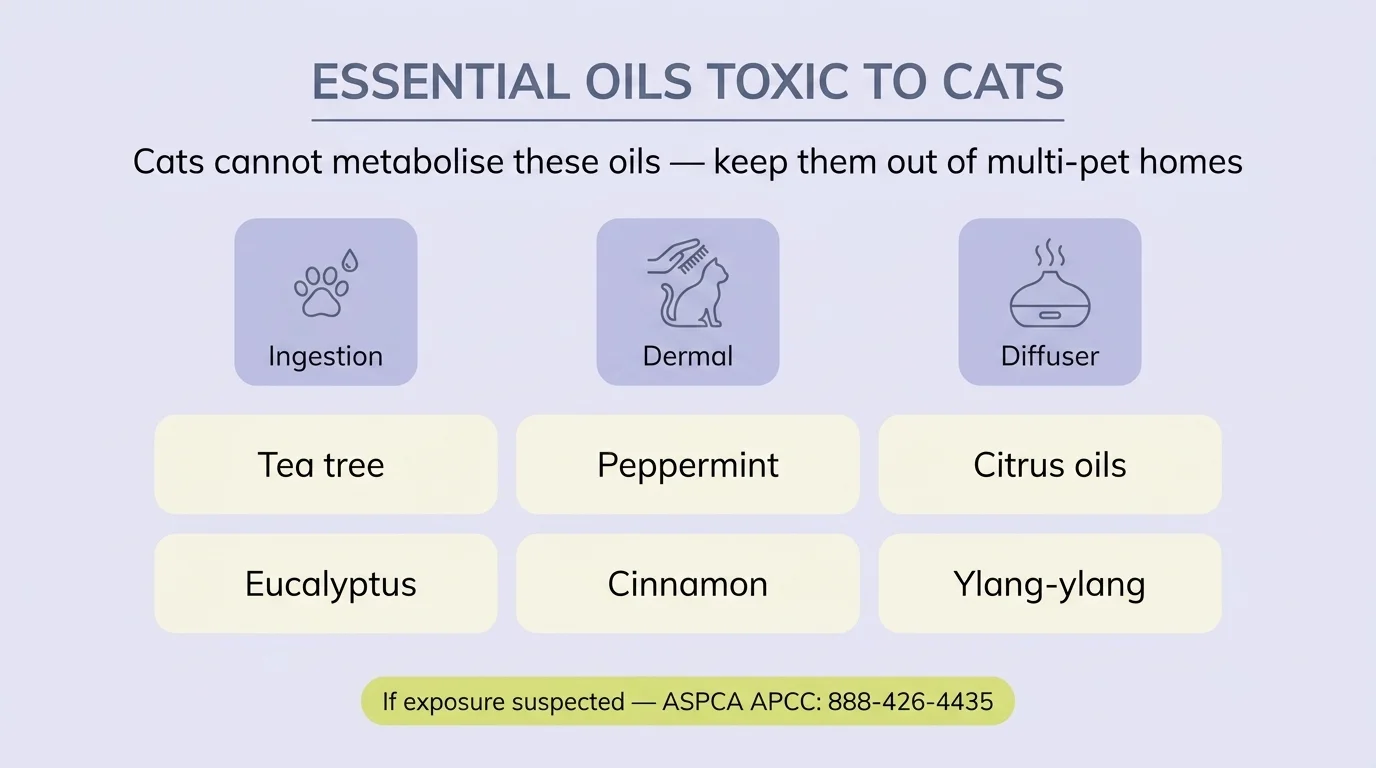
Cats lack the hepatic UDP-glucuronyl transferase enzyme system needed to metabolise phenols and many monoterpenes. What that means in practice: oils that are mild irritants in humans and dogs are hepatotoxic in cats. The Pet Poison Helpline and the ASPCA Animal Poison Control Center both maintain current toxic-oil lists. The ones to keep out of any home that contains a cat:
- Tea tree (melaleuca)
- Peppermint, wintergreen, pennyroyal
- Citrus oils (d-limonene) — including lemon, orange, grapefruit, bergamot
- Pine, eucalyptus, cinnamon, clove
- Ylang-ylang
Several of these (lavender at high concentrations, eucalyptus, tea tree) can also harm dogs at sufficient exposure. The exposure routes that catch owners by surprise are not always ingestion — passive diffuser use can cause respiratory distress in cats and small dogs, and concentrated oils dermally absorbed (oils added to bedding, applied as flea repellent, dropped on collars) cross the skin and reach the liver.
The rule I give clients: in a multi-pet household with any cat, no diffuser use, period. If you want to use essential oils for your own well-being, use them in a room the cat cannot enter, with the door closed and ventilation. If you are using oils for the dog, dilute to far-below-aromatherapy concentrations under your veterinarian's guidance and never on or near the cat.
If you suspect exposure: ASPCA Animal Poison Control Center: 888-426-4435 (24/7, $95 consultation fee) or Pet Poison Helpline: 855-764-7661. Bring the bottle. Save the label.
Related Article: Pet Care through Different Lenses: A Neurodiversity Discussion
An Honest Evidence Tier for Integrative Modalities
Most "holistic pets" guides give acupuncture, Reiki, and aromatherapy equivalent rhetorical weight. They are not equivalent. Below is how I read the literature as of April 2026:
| Tier | Definition | Modalities |
|---|---|---|
| Strong evidence | Multiple RCTs, AVMA/AAHA pain-guideline endorsement, clear mechanism | Weight management for osteoarthritis; physical rehabilitation and hydrotherapy for post-op recovery and OA; therapeutic exercise; environmental modification |
| Moderate evidence | Several RCTs with mixed objective outcomes but consistent owner-reported benefit, plausible mechanism, recognised IVM curriculum | Veterinary acupuncture (especially laser/electroacupuncture) for chronic pain, OA, IVDD-related neuropathic pain; CBD for canine osteoarthritis |
| Limited / emerging evidence | Small studies, single-trial signals, plausible mechanism | Veterinary chiropractic / VOM (with appropriate screening); Western and Chinese herbal medicine when prescribed by an AVCH-trained veterinarian; CBD for canine anxiety; integrative nutrition |
| Anecdotal only / not supported | No reproducible RCT support, no mechanistic plausibility, or established negative reviews | Homeopathy (negative AVMA Council on Research finding); Reiki and healing touch (negative systematic reviews; safe but unproven); generic "aromatherapy for pets" claims |
The framework above shapes the rest of this guide. I will spend the most words on the modalities at the top and the least on the modalities at the bottom — proportional to evidence, not to cultural visibility.
Strongest Evidence: Weight Management and Physical Rehabilitation
If a reader takes one thing from this article, let it be this: for canine osteoarthritis — the single most common condition driving owners toward integrative care — the most powerful intervention is not acupuncture, herbal medicine, or supplements. It is weight management combined with structured physical rehabilitation. The 2024 systematic review in Journal of Small Animal Practice by Pye and colleagues placed weight optimisation first, physiotherapy and hydrotherapy second, and acupuncture and nutraceuticals further down the evidence ranking.
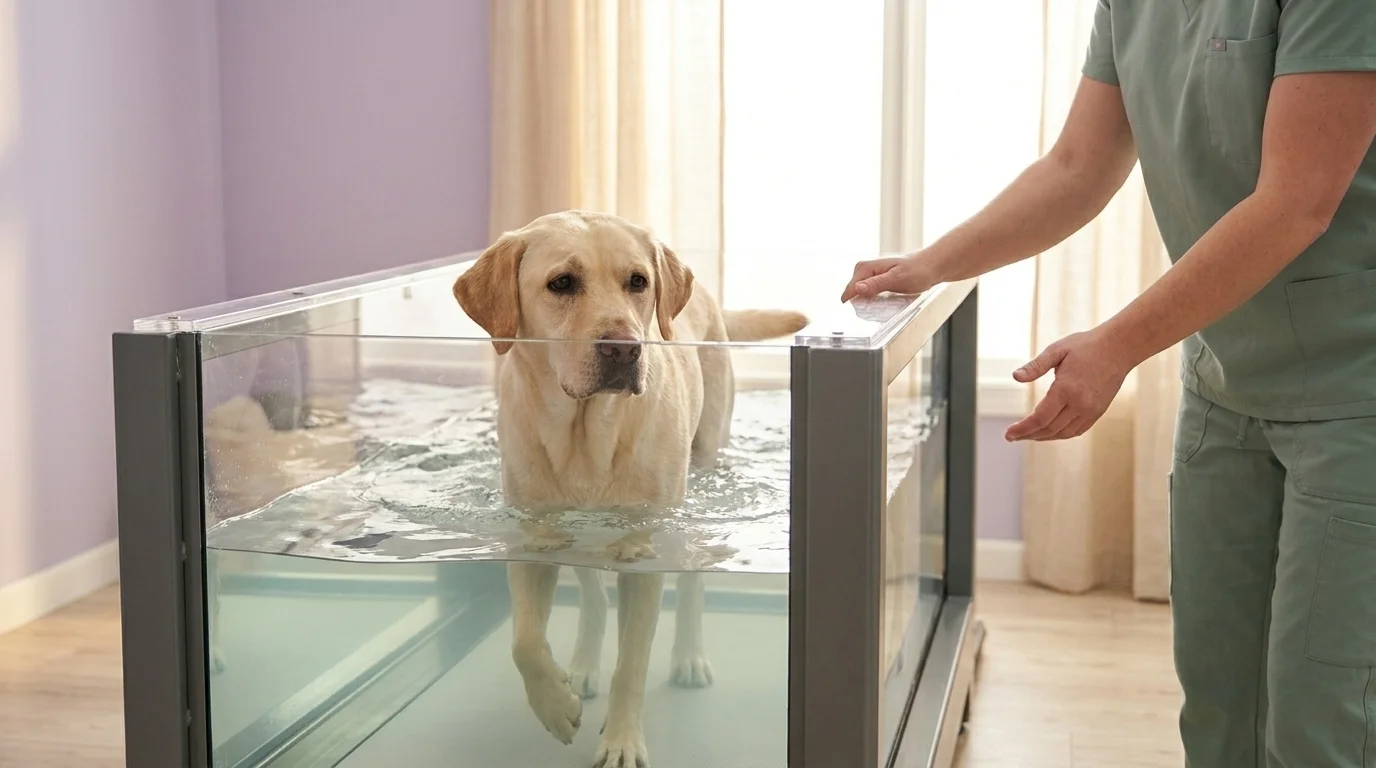
Physical rehabilitation in companion-animal medicine includes therapeutic exercise, manual therapy (joint mobilisation, soft-tissue work), modalities like therapeutic laser and pulsed electromagnetic field (PEMF), and hydrotherapy — generally an underwater treadmill that allows controlled non-weight-bearing or partial-weight-bearing exercise. The evidence base for hydrotherapy in post-operative recovery (cruciate repair, fracture repair) and chronic OA management is the strongest in the integrative toolkit. It is also conspicuously absent from most consumer "holistic pet care" articles, which is one of the reasons this section opens the substantive part of the guide.
Practitioners to look for: a Certified Canine Rehabilitation Therapist (CCRT) through the Canine Rehabilitation Institute, or a Certified Canine Rehabilitation Practitioner (CCRP) through the University of Tennessee. Many CCRT and CCRP practitioners are also veterinarians; some are licensed physical therapists who work under veterinary supervision. Either is acceptable; what you want is the structured exercise plan and the credentials behind it.
A note on weight. For an arthritic dog at body condition score 6 or above, the single highest-yield "holistic" intervention is a vet-supervised weight-loss program targeting BCS 4–5/9. The mechanism is not subtle — every kilogram of extra body mass loads a four-legged frame at every step. Acupuncture and supplements layered onto an overweight, sedentary patient produce a fraction of the benefit they produce on a lean, mobile one.
Related Article: CBD for Pets: The Comprehensive Guide to Uses, Benefits, and Risks
Veterinary Acupuncture: The Best-Supported of the Modality Therapies
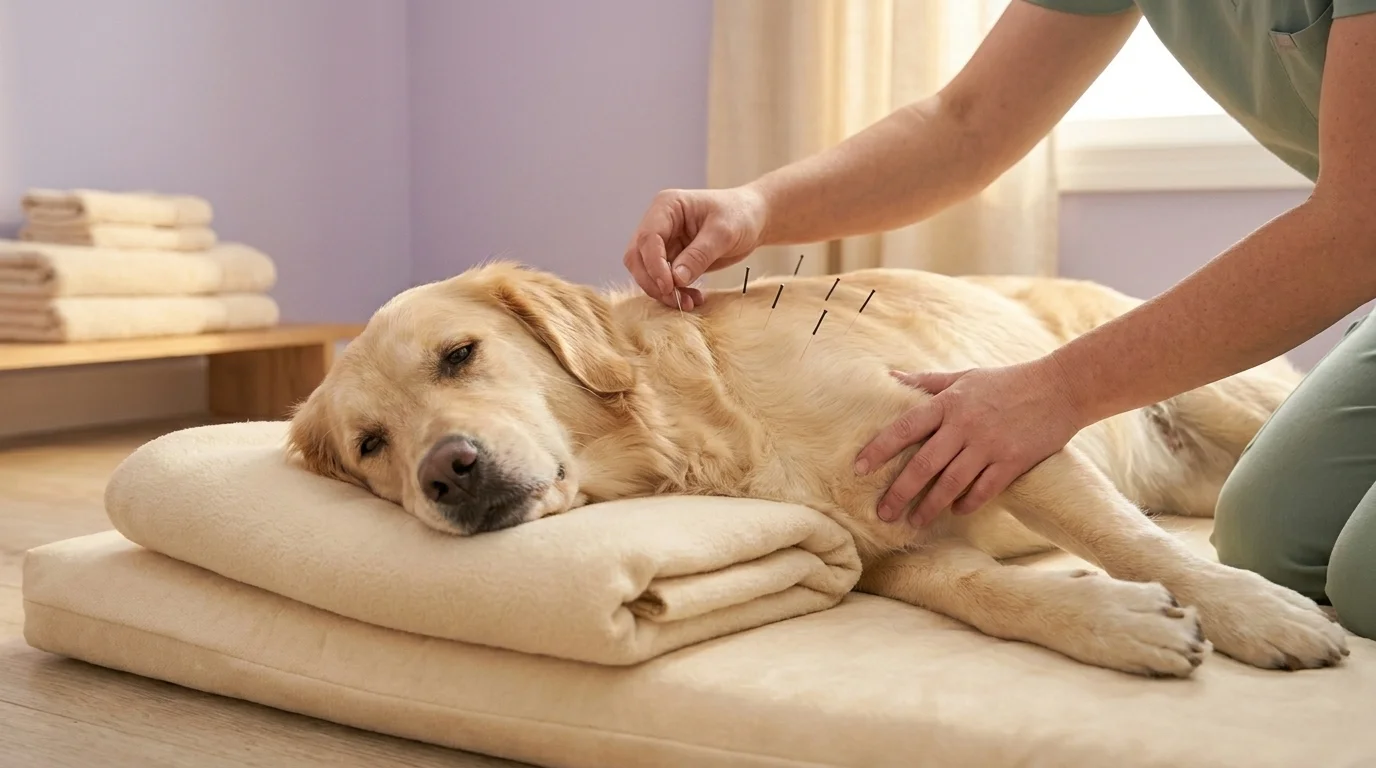
Acupuncture is the integrative modality where the evidence has matured the fastest. It is now offered in pain-management protocols at the major veterinary teaching hospitals, and the proposed mechanisms — beta-endorphin release, modulation of inflammatory cytokines, central effects on pain processing — are biologically plausible and increasingly studied.
The honest summary of the canine literature, conditions covered:
- Chronic musculoskeletal pain, including osteoarthritis — multiple trials. The 2020 Baker-Meuten RCT in BMC Veterinary Research (n=32, placebo-controlled, OA dogs) showed a significant improvement in owner-reported pain on the Canine Brief Pain Inventory; objective gait-analysis changes were less consistent. The 2025 Silva et al. trial in Animals (n=19, OA dogs) using laser acupuncture showed statistically significant reductions in chronic-pain markers, inflammatory cytokines, and oxidative stress — a smaller study but methodologically clean and pointing toward laser/electroacupuncture as the better-supported delivery method.
- Intervertebral disc disease (IVDD) — adjunct — used in many neurology programs alongside conventional anti-inflammatory and surgical care. Evidence is encouraging, particularly for chronic pain following acute IVDD events.
- Chronic pain syndromes in cats — feline literature is thinner than canine, but acupuncture is reasonably well tolerated in many cats and has a small positive evidence base for chronic OA pain.
Practical particulars: a typical veterinary acupuncture session runs $65–$120 in the US (PetMD), and chronic-pain protocols typically require 4–6 sessions to assess effect, with maintenance every two to six weeks once the initial protocol stabilises. Side effects are uncommon and typically mild (transient soreness, sleepiness after a session). The veterinarians I trust to deliver this work are certified through the International Veterinary Acupuncture Society (IVAS) or the Chi University program — both produce graduates with substantial supervised case experience.
What the evidence does not yet support: acupuncture as a sole therapy for cancer, infectious disease, or acute surgical conditions. It belongs in an integrative protocol stacked alongside conventional analgesia and rehabilitation, not as a replacement.
CBD for Dogs and Cats: Where the Evidence Is — and Isn't
CBD is the fastest-moving evidence area in integrative veterinary medicine in 2024–2026, and rather than reproduce the full picture here I'll point to my longer guide on CBD for dogs and cats and summarise where it sits on the integrative tier.
The strongest evidence: canine osteoarthritis pain, with multiple RCTs and dose-response data; the Annual Review of Animal Biosciences 2024 review by Mosley and colleagues places this at the top of the canine CBD evidence base. Cornell's anxiety work (83% of dogs showed reduced stress behaviours before predictable stressors) supports a role for situational anxiety, with the caveat that placebo effects in owner-reported behavioural studies are large.
The honest caveats: feline pharmacokinetic data lag dramatically behind canine; cats absorb CBD less efficiently and eliminate it slightly more slowly. No CBD product is FDA-approved for animal use in 2026, the only US state with full statutory authority for vets to formally recommend hemp-derived CBD products is Nevada, and product quality is the single biggest variable consumers cannot directly evaluate without a Certificate of Analysis.
If your veterinarian is comfortable discussing CBD and you decide to try it for an evidence-supported indication (canine OA, situational anxiety), the dose ranges from the published research — Cornell's 2 mg/kg twice daily for OA, NASC's 5 mg/kg/day long-term safety reference — are the published anchors. Individualisation belongs with your vet, not with the bottle's label.
Veterinary Chiropractic and VOM: What the Evidence Actually Says
Chiropractic care for animals — sometimes called Veterinary Orthopedic Manipulation (VOM) — has the most uneven evidence base of the modalities in the IVM curriculum. The honest summary: limited high-quality data. The most-cited piece of evidence in the canine literature is a single Boxer trial showing reduced incidence of cervical spondylosis after a chiropractic protocol (25.0% vs. 46.5% in controls, p=0.0478, single trial), and that is genuinely the strongest single piece of evidence we have. The supporting clinical literature on canine and equine spinal manipulation is mostly observational, with small case series and varying outcome measures.
What I am clearer about: contraindications matter and are non-negotiable. Chiropractic manipulation should not be performed without prior radiographs (or other imaging) on a dog or cat with known or suspected intervertebral disc disease, neoplasia (particularly spinal tumours), severe degenerative joint disease, fractures, or hyperadrenocorticism. The standard of care from the American Veterinary Chiropractic Association (AVCA) is that the practitioner is either a licensed veterinarian or a licensed human chiropractor working under direct veterinary supervision, with completed AVCA certification and current AVCA membership.
If you are considering chiropractic for your animal, the questions to ask: are you AVCA-certified, what imaging do you require before manipulating a patient with chronic pain, and how do you coordinate with my primary veterinarian? An honest chiropractor answers all three without defensiveness.
Herbal Medicine — Real Pharmacology, Real Risks
The phrase "natural is safe" is one of the more durable and inaccurate beliefs in pet health. Veterinary herbal medicine — both Western and Traditional Chinese Veterinary Medicine — is real pharmacology. Plants contain bioactive compounds that act on the same physiology that pharmaceutical drugs do, and that means they can interact with prescription medications, accumulate hepatotoxic metabolites, and produce dose-dependent harm.
The hepatotoxic Chinese herbs catalogued in the American Journal of Traditional Chinese Veterinary Medicine — Melia (Chuan Lian Zi), Pinellia (Ban Xia), Xanthium (Cang Er Zi), Dioscorea (Huang Yao Zi), Asarum (Xi Xin), Tripterygium (Lei Gong Teng) — are not exotica. They are commonly prescribed in TCVM and require a competent prescriber who knows when to use them, when to avoid them, and how to monitor.
The practitioners I trust to prescribe veterinary herbal medicine are certified through the American Veterinary Chiropractic Association of Veterinary Herbalists / Chi University TCVM Herbal program (AVCH) or equivalent post-graduate certifications. They take a full medication history before prescribing, screen for hepatic and renal contraindications, and coordinate with your primary vet's records — particularly for animals on chronic medications metabolised by the same hepatic enzymes the herbs may inhibit.
For owners using over-the-counter herbal products without veterinary involvement, a short list of "looks safe but isn't" cautions: comfrey is hepatotoxic; mistletoe is cardiotoxic; black walnut is GI-toxic; and many "calming herb" blends contain ingredients that are unsafe in cats specifically.
Lower-Evidence Modalities Worth Knowing About
Two modalities with cultural visibility but limited evidence belong here:
Reiki and energy-based work. A long-standing systematic review by Ernst (and several updates) in the human medical literature concluded "evidence is insufficient to suggest that Reiki is an effective treatment for any condition." Animal-specific evidence is weaker still. My honest assessment: the practice does no physical harm to a calm, willing pet. The effects observed are most plausibly attributable to a quiet handler, gentle handling, and the relaxation response — all of which are genuinely useful in palliative care and end-of-life support. Reiki should not substitute for medical care, but it does not need to be opposed for owners who find comfort in offering it during a stressful illness.
Aromatherapy as a generic "pet wellness" practice. The evidence base does not support the claims commonly made on consumer packaging, and the risks (see the safety callout at the top) substantially outweigh the marginal calming benefit reported in small studies. A specific exception: a calm, dilute, well-ventilated lavender environment for dogs only, in a cat-free space, has small supporting data for kennel anxiety. That is the narrowest possible reasonable use case; broader claims are not defensible.
Homeopathy: Why It's Not on This List
A reader will encounter homeopathy in some "holistic" practices, and the omission so far is not accidental. Homeopathy — the practice of administering substances diluted past the point where any molecule of the original substance remains, on the principle that "like cures like" — has been the subject of multiple high-quality systematic reviews and an AVMA Council on Research review that concluded "studies claiming benefit from homeopathic products are anecdotal or methodologically flawed; well-controlled trials fail to substantiate effect." The Merck Veterinary Manual describes it as "pseudoscientific…based on metaphysical energies and vital forces…waning in popularity."
I do not include it in an evidence-tiered guide because the evidence-tiered framing is incompatible with a modality that has been tested and not supported. A practitioner who recommends homeopathic remedies as their primary intervention for a serious condition is, in my view, declining to use the tools that work.
Related Article: The Rise of Exotic Pets: Care Tips for Unconventional Companions
Enrichment, Routine, and the Bond — What "Mindfulness" Should Actually Mean for Animals
The original version of this article had a "mindfulness for pets" section, which I want to gently rewrite. Animals do not meditate, and I am suspicious of any framing that anthropomorphises their inner experience to sell a product. What animals do need — and what the veterinary behavioural literature solidly supports — is environmental enrichment, predictable daily routine, and fear-free handling at home and at the veterinary clinic.
Concretely, for cats: vertical territory (cat trees, shelves), the resource-distribution rule (one more of every key resource — litter, water, food, perch — than you have cats, distributed across the home), prey-completion play (a wand toy session that ends with a "kill" the cat can carry), and predictable feeding schedules. For dogs: daily walks at consistent times, structured nose-work or scent enrichment, social walks with stable known dog companions, and rest periods that are honoured. For both: a Fear Free Certified veterinary practice where exam-room handling is structured to minimise distress.
These are not "holistic" interventions in the marketing sense. They are good husbandry, and they are evidence-supported. They also happen to be the foundation that any of the modality therapies above are built on; they are the part of integrative care that is least optional.
How to Find a Qualified Integrative Veterinarian
If you have read this far and want to pursue an integrative protocol for your pet, the practitioner-finding directories below are the credible starting points:
- General integrative: American Holistic Veterinary Medical Association (AHVMA) VetFinder — practitioners who include integrative modalities in their practice and are AVMA-eligible.
- Acupuncture: International Veterinary Acupuncture Society (IVAS) — the most established certification path; member directory.
- Chiropractic / VOM: American Veterinary Chiropractic Association (AVCA) — certified veterinarians and supervised human chiropractors.
- Rehabilitation: Canine Rehabilitation Institute (CCRT) and University of Tennessee (CCRP) — the two most-recognised certification pathways.
- Herbal medicine: AVCH and Chi University TCVM Herbal program graduates.
The questions to ask at the first appointment: what are your certifications, how do you coordinate with my primary veterinarian, what is your evidence base for the specific protocol you are recommending, and what monitoring plan (bloodwork, imaging, follow-ups) are you proposing? An honest practitioner answers all four directly.
Related Article: Exploring CBD for Pets: The Latest Research and Usage Guidelines
A Brief Closing Note
Holistic pet care, taken seriously, is not a different kind of medicine — it is conventional medicine with the integrative modalities that have earned their place added in. The evidence is genuinely good for weight management, physical rehabilitation, and acupuncture; cautiously promising for CBD in canine osteoarthritis; mixed for chiropractic; thin for some herbal protocols and essentially absent for energy-based work and homeopathy. The honest version of an integrative protocol stacks the modalities by evidence, monitors outcomes, and routes individual decisions back to the patient's own veterinarian, who knows the medication record, the lab trends, and the conditions you and I cannot see from a guide.
If you are reading this because your dog or cat has a chronic condition that conventional medicine has not fully addressed, integrative care is worth a conversation — with a veterinarian who holds the same evidence standards I have tried to hold here.
Last reviewed 2026-04-29 by Dr. Maren Holbrook, DVM.
Frequently Asked Questions
Integrative veterinary medicine combines conventional medicine with evidence-supported complementary modalities — typically acupuncture, veterinary manipulative therapy (chiropractic), integrative nutrition, physical rehabilitation, and herbal medicine. The American Veterinary Medical Association's policy is that all modalities must be held to the same scientific standards and delivered within a valid veterinarian–client–patient relationship (VCPR). Integrative is not unregulated — it is conventional care plus the modalities that have earned their seat at the table.
Cats lack the hepatic UDP-glucuronyl transferase enzymes needed to metabolise phenols and many monoterpenes, which makes a number of common oils — tea tree, peppermint, citrus, pine, eucalyptus, cinnamon, ylang-ylang, wintergreen, pennyroyal, and clove — directly hepatotoxic. Several can also harm dogs at sufficient exposure. In a multi-pet household with any cat, do not use diffusers; use oils only in spaces the cat cannot enter, with ventilation. If exposure is suspected, contact ASPCA APCC at 888-426-4435 or Pet Poison Helpline at 855-764-7661.
The evidence base for veterinary acupuncture is growing and reasonably consistent for chronic musculoskeletal pain — particularly osteoarthritis — and for IVDD-related neuropathic pain. The 2020 Baker-Meuten RCT showed significant improvement in owner-reported pain on the Canine Brief Pain Inventory; objective gait-analysis changes have been less consistent. The 2025 Silva et al. trial using laser acupuncture showed significant reductions in pain markers, inflammatory cytokines, and oxidative stress. It is best used as part of a multimodal protocol — alongside conventional analgesia, weight management, and rehabilitation — and delivered by an IVAS-certified veterinarian.
A typical veterinary acupuncture session in the US runs about $65–$120. Chronic-pain protocols generally require 4–6 sessions to assess effect, with maintenance sessions every two to six weeks once the initial protocol stabilises. Some pet insurance policies cover acupuncture when prescribed by a licensed veterinarian; check your specific policy.
CBD sits in the moderate-evidence tier for canine osteoarthritis and emerging-evidence tier for canine anxiety. The strongest data are from the Mosley 2024 Annual Review of Animal Biosciences and the Cornell anxiety chew study (83% of dogs showed reduced stress behaviours before predictable stressors). Feline pharmacokinetic data lag significantly behind canine, no CBD product is FDA-approved for animal use, and product quality varies — a Certificate of Analysis matters. Discuss with your veterinarian, especially for pets on chronic medications.
Homeopathy has been the subject of multiple high-quality systematic reviews and an AVMA Council on Research review that concluded studies claiming benefit are anecdotal or methodologically flawed and well-controlled trials fail to substantiate effect. The Merck Veterinary Manual describes it as pseudoscientific. An evidence-tiered guide is incompatible with a modality that has been tested and not supported. A practitioner who recommends homeopathic remedies as the primary intervention for a serious condition is declining to use the tools that work.
Start with your primary veterinarian — many will refer you to a trusted integrative colleague. Independent directories: AHVMA VetFinder for general integrative practitioners; IVAS for veterinary acupuncture; AVCA for animal chiropractic (veterinarians or supervised licensed human chiropractors); the Canine Rehabilitation Institute (CCRT) and University of Tennessee (CCRP) for rehabilitation; AVCH and Chi University TCVM Herbal program graduates for veterinary herbal medicine. At the first appointment, ask about certifications, how the practitioner coordinates with your primary vet, the evidence base for the proposed protocol, and the monitoring plan.