Revolutionizing Pet Communication: The Emergence of Language Processing Collars


In April 2025, researchers at the University of California San Diego published the first peer-reviewed analysis of dogs using soundboard buttons in Scientific Reports. One hundred and fifty-two dogs across the FluentPet platform. Twenty-one months of data. More than 260,000 button presses, of which roughly 195,000 were made by the dogs themselves. Two-word combinations like "outside" + "potty" occurred more often than chance.
That is the strongest piece of evidence the human-to-dog translator question has produced this decade. It came from buttons on a mat — not from a collar, not from an app, and not from any of the AI products marketed as "real-time dog translators". I write about cats for a living, so the dog-cognition side is not my usual desk, but the pattern in the keyword data and the product launches and the peer-reviewed paper is consistent enough that it is worth being honest about: in 2026, three different product categories are all calling themselves variations of "pet translator", and they are not the same thing. One has real evidence. One is closer to entertainment. One is health monitoring with translation marketing on top.
Here is what each one actually is.
The three categories at a glance
| Category | How it works | Real product example | Evidence quality | Best for | Price tier |
|---|---|---|---|---|---|
| Talking dog buttons | Recordable soundboard buttons (one human word each). Dog learns through repetition to press for what it wants. | FluentPet (popularised by Bunny the dog) | Peer-reviewed (UCSD/Rossano, Scientific Reports, 2025; 152 dogs, 260K+ presses) | Owners willing to teach over weeks; dogs that ask for "outside", "treat", "play", "potty" | Starter sets $80–$160; full HexTile mats higher |
| AI bark-translation apps | Phone microphone records bark; machine-learning model guesses an emotional category and renders it as "text". | Older "dog translator" apps; demo features in some pet apps | Vendor-published only; independent reviewers call them "more entertainment than translator" | Curiosity; novelty | Free–$5 one-time; ads |
| AI smart collars (with "translation" features) | Sensor-equipped collar fuses bark audio + heart rate + activity + GPS; app surfaces situational/health alerts. | SATELLAI Collar Go, PettiChat, Traini | Vendor-published lab numbers (e.g. PettiChat 92.3% dog / 94.6% cat); no independent replication yet | Activity, sleep, location, vet-adjacent health alerts | $80–$200+ hardware, often subscription on top |
A reader who is curious about whether a dog or cat can be "translated" is, almost always, asking about one of these three things without knowing which. Most editorial pieces I read while researching this one quietly conflate them. We can do better.
What the science actually says
The work to take seriously is the UCSD Comparative Cognition Lab study, led by Federico Rossano. Published in Scientific Reports (Springer Nature) in April 2025, the analysis covers 152 dogs over 21 months and more than 260,000 button presses, with roughly 195,000 of those presses initiated by the dogs themselves rather than prompted by humans. The most-pressed buttons across the cohort were "outside", "treat", "play", and "potty" — essential-needs vocabulary, not abstract concepts. Two-word combinations such as "outside" + "potty" occurred at rates above chance.
That is the part that matters. The dogs were not pressing buttons randomly. They were not simply mimicking. They were combining them in patterns that look, statistically, like requests.
It is the kind of finding I respect, because it is small and bounded and tested. The wider UCSD button study has grown to 10,000+ participating dogs across 47 countries — reportedly the largest longitudinal animal-communication study ever conducted. Purina has invested $200,000 into the project. Corporate validation is not the same thing as scientific validation, but it does say something about which end of this space serious people are betting on.
What the work does not say is that dogs are now speaking English. And this is where Rossano himself has been admirably careful. In a public piece titled FluentPet: Is That Dog Talking or Are We Fooling Ourselves?, the lead researcher of the leading study explicitly frames the work as purposeful button-pressing, not language. The dog has learned that a particular sound, made by a particular button, reliably produces a particular outcome from a human. That is communication. It is not translation in the human-linguistic sense.
Pull quote: "Outside + potty" — the kind of two-button combination dogs in the UCSD cohort produced above chance.
Science is catching up to what we ask of our companion animals. Slowly. Appropriately.
Related Article: Pet Tech Revolution: Gadgets Galore for Modern Pet Parents
Talking dog buttons: how the FluentPet system actually works
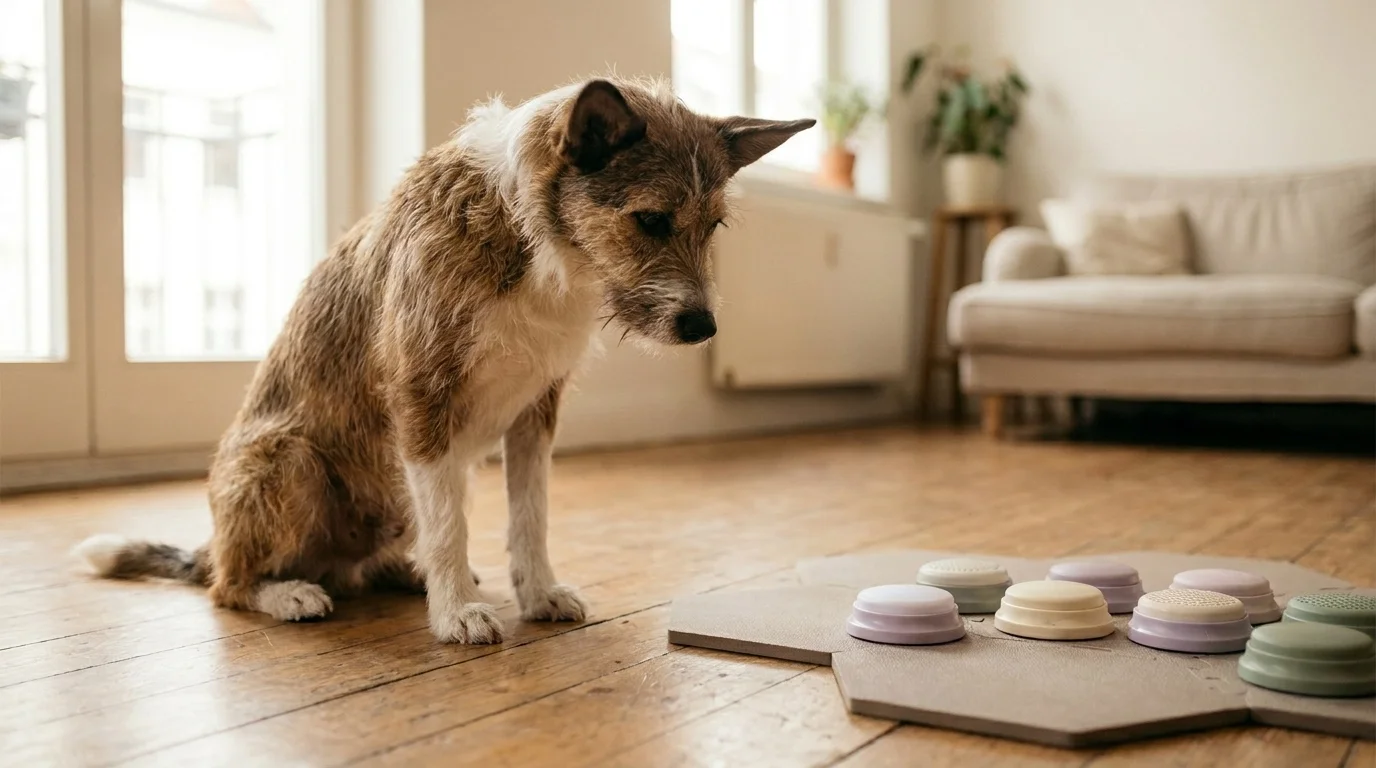
The category that produced the UCSD evidence is the simplest of the three. A FluentPet-style setup is a mat — usually a HexTile arrangement — covered in recordable buttons. Each button is programmed with one human word in the owner's voice: "outside", "water", "play", "walk", "love you". The dog is shaped over weeks and months to associate pressing a button with the outcome that word names. The famous early case is Bunny the dog, whose owner Alexis Devine documented an evolving vocabulary on social media; Bunny is the cultural touchstone that brought the entire category to mainstream attention.
What buttons are: an externally-shaped request language the dog learns. What buttons are not: bark translation. The bark itself is doing none of the work here. The dog is using a tool the human built. That distinction is the centre of every honest conversation about this product category.
For owners considering a starter set, the realistic frame is the one Rossano and his colleagues describe: dogs that take to the buttons reliably build a vocabulary of essential-needs words — "outside", "treat", "play", "potty" — and combine those at low but measurable rates. The two-word combos are the most interesting finding precisely because they are small. They are not sentences. They are pairs.
Dog translator apps: more entertainment than translation
The "dog translator app" category is where the search volume is — dog translator runs roughly 22,200 monthly searches on its own — and also where the honesty bar is lowest. Independent reviewers across the editorial space, from Dev.to explainers to WhiteLabelFox's 2026 review, reach the same conclusion: most of these apps are more entertainment than translator. They record a bark, run it against a model trained on generic data, and return one of a small set of emotional categories rendered as a sentence. There is no peer-reviewed evidence behind their accuracy claims, and the apps' own developers tend to acknowledge as much when pressed.
This is not a moral failing. It is a category status. A dog translator app on your phone is the same kind of thing a sleep-tracker app is — a probabilistic guess based on limited sensor input, occasionally useful as a conversation starter, never a clinical signal. If that is what you want, the free versions are fine and the paid versions are fine. If you want something that has been studied, the buttons are the only side of the room with a paper attached.
The surging long-tail query dog translator online free (480/mo, +556% MoM) is, almost by definition, people looking for novelty. Treat it as such. Reach for the toy box, not the toolbox.
Related Article: Technology's Role in Shaping Global Pet Care Practices: Innovations, Challenges, and Risks
AI dog collars: SATELLAI, PettiChat, Traini and what they actually do
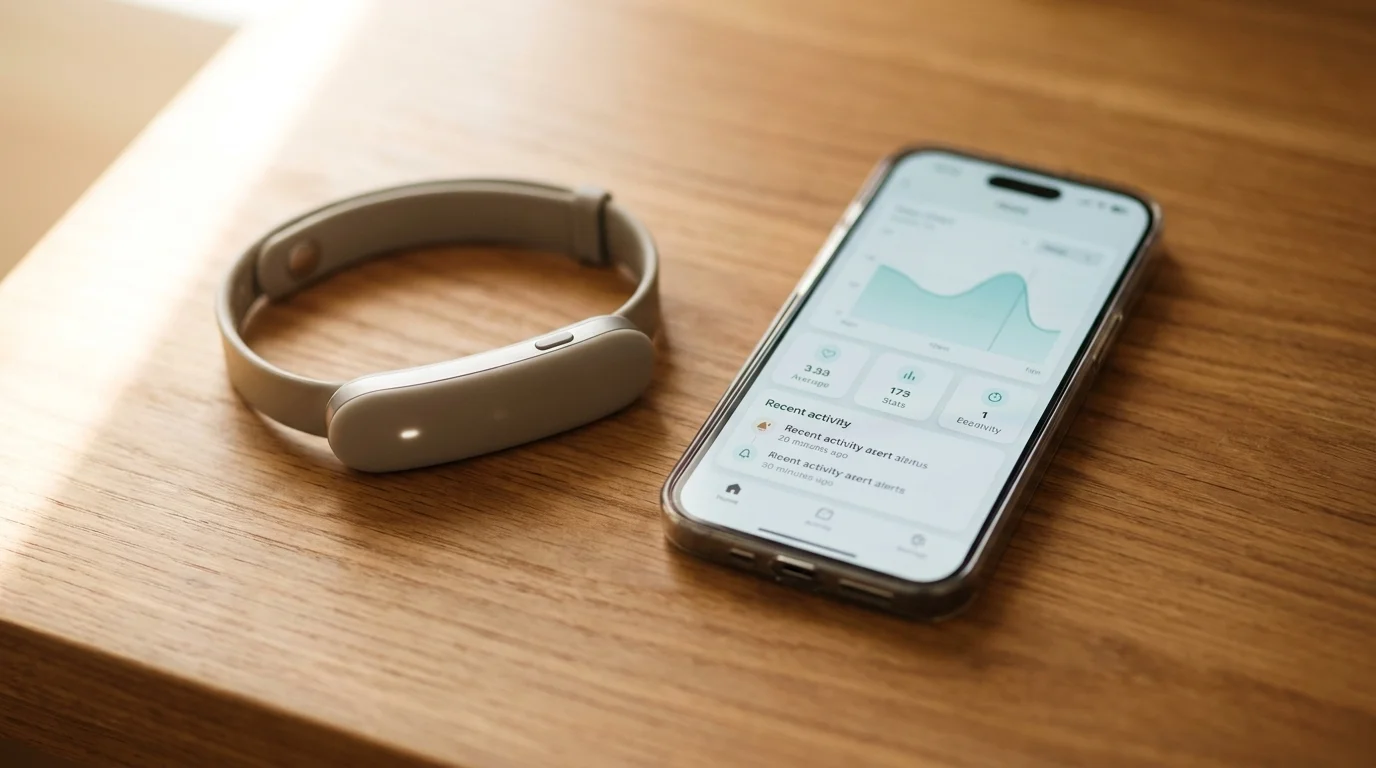
The third category is the one with the most marketing energy and the most diverse product reality. AI dog collars are sensor-equipped wearables that combine bark audio with heart-rate variability, accelerometer data, GPS, and sometimes thermal sensors. The software fuses those streams into health, activity, and behaviour alerts — and, in the newer generation, surfaces some of that as plain-language messages that look like translation.
SATELLAI unveiled its Petsense AI platform at CES 2026 in January — a multimodal model that fuses biometrics, behaviour, environment, and health metrics into what the company calls a "digital twin" for the pet, with a RAG-powered knowledge engine that lets owners query the app in plain English. The platform shipped as a free firmware update to all existing SATELLAI devices, including a new $79.99 SATELLAI Collar Go. That price point is genuinely new — AI pet collars have crossed below the $100 mass-market threshold for the first time.
PettiChat launched on Kickstarter in April 2026, claiming 92.3% situational accuracy for dogs and 94.6% for cats, with roughly 40ms activation and 1.2-second translation latency, packaged in a 27-gram clip-on, IP65-rated, bite-resistant ABS enclosure. The model is trained on, per the company, more than a million pet vocalisation and behaviour samples. These are vendor-published lab numbers. No independent benchmark has replicated them. That caveat is the part most product writeups omit and the part you want to hold on to.
Traini pairs an AI collar that fuses bark analysis with vital-sign tracking against a dog-training app that does both human-to-dog bark generation and body-language-to-English translation. The category is moving quickly. The honest framing is the one the SATELLAI shape implies more than the PettiChat shape: these devices are excellent at activity, sleep, location, and health-adjacent alerts, and the "translation" feature is a soft layer on top of sensor data, not a separate science.
Can cats be translated too?
This is my side of the room, and it is also where the honest answer is shortest.
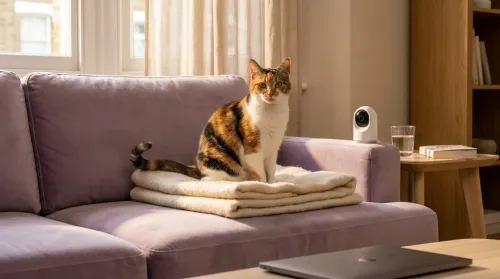
MeowTalk is the leading cat-side product, with what is effectively #1 SERP ownership for cat translator app. What it actually does — and the company is reasonably clear about this if you read past the marketing — is classify a recorded meow into one of a small number of situational categories: hungry, happy, hunting, in pain, attention. It is not parsing language. There is no feline language in the linguistic sense to parse. Adult cats vocalise primarily at humans, not at one another; intraspecies cat communication is overwhelmingly olfactory, postural, and tactile — bunting, allorubbing, slow-blinking, tail position, ear set. The meow is the channel cats invented for us.
So MeowTalk's situational categorisation is a reasonable thing for a product to attempt, and the model is genuinely useful as a learning aid for owners who are not yet fluent in their cat's individual vocal repertoire. It is the same kind of probabilistic guess the dog apps make, applied to a much narrower communication channel where the guess is, if anything, slightly more constrained and therefore slightly more workable. PettiChat's claimed 94.6% lab figure for cats sits in the same vendor-published-only category as its dog number — interesting, unreplicated.
A note that costs nothing: a cat changing the patterning of its meows — louder, more frequent, more insistent, particularly in an older cat — is first a medical question. Book the vet visit before you reach for the app.
The no-tech baseline: dog body language still does the heaviest lifting
The reason I keep coming back to the buttons rather than the bark side is that bark is one channel and body language is most of the conversation. The American Kennel Club's Understanding Dog Body Language is the long-standing best free starter on this, and there is no app or collar that replaces it. Tail set, ear position, eye softness, weight distribution, lip tension, whisker bed, the angle of the spine — every one of these is doing more communicative work than the vocalisation laid on top. Dogs, like cats, are an embodied species. Translation, if there is such a thing, starts with watching.
A FluentPet board does not replace this. Neither does a smart collar. The best use of any of the technologies covered above is as a supplement to an owner who has already learned to read their animal — not a substitute for that learning.

A short note on ethics
The original version of this article raised an ethics question, and it is worth keeping. The work in this space — particularly the buttons work — sits in a place that deserves a steady hand. Rossano himself raises the right concern publicly: are we genuinely listening, or are we projecting language onto an animal that is communicating in its own way and would communicate just as well without our scaffolding? The honest answer is that none of these tools should be deployed as a replacement for the relationship. A button mat in a home where the human is not also paying attention to body language and vocalisation is a button mat being misread. A collar that tells you your dog is "happy" while the dog itself is signalling otherwise to anyone in the room is a tool overriding the data right in front of you.
Consent is the other half of this. Pets did not opt in. A reasonable rule of thumb: if a translation reading makes you act in a way the animal itself appears uncomfortable with, trust the animal.
What 2026 and 2027 actually look like
The next twelve months in this space are not going to be defined by a new "talking dog" product. They are going to be defined by SATELLAI's RAG-powered plain-English health querying maturing on the collar side, by PettiChat's Kickstarter shipments producing real independent benchmarks (or not), and by the UCSD cohort continuing to grow and produce follow-up papers on the button work. The science end is where the next real news will come from. The hardware end is where the marketing will. Watch both, weight them honestly, and remember the verdict that holds for the whole space in 2026: buttons have evidence, collars have sensors, and bark-translation apps remain a fun way to start a conversation about what your dog might actually be telling you — most of which they are telling you with their body, in plain sight, already.
Frequently Asked Questions
Most current dog translator apps are closer to entertainment than translation — independent reviewers and the apps' own creators acknowledge their accuracy is limited and rooted in generalised data. The one exception with peer-reviewed evidence is the FluentPet button system, which is communication via human-trained word buttons rather than translation of barks. Treat bark-translation apps as fun; treat button systems and AI health collars as the real categories.
There is no independently verified accuracy leader. PettiChat's wearable (launched on Kickstarter in April 2026) claims 92.3% dog and 94.6% cat situational accuracy in lab testing, but those numbers are vendor-published and unreplicated. For evidence-grade results, the FluentPet button system is the only product backed by a peer-reviewed UCSD study (Rossano et al., Scientific Reports, 2025) of 152 dogs and 260,000+ button presses.
Talking dog buttons — popularised by Bunny the dog and the FluentPet product line — are recordable soundboards where each button plays a single human word like 'outside', 'treat', or 'play'. Dogs learn through repetition and association to press buttons to request things, and the 2025 UCSD study confirms they press them purposefully and combine them in non-random ways such as 'outside' + 'potty'. It is not bark translation; it is a button-mediated request language the dog learns.
It depends on what you want. AI dog collars like SATELLAI ($79.99 for the Collar Go) and Traini focus on health monitoring, behavioural analytics, and GPS — not literal bark-to-English translation. If you want activity, sleep, location, and health alerts, they deliver real value. If you want to know exactly what your dog is 'saying', current AI collars are not the answer — and neither is any app.
Cat-side translation tools exist — MeowTalk is the leading app, classifying meows into situational categories like 'hunting', 'happy', or 'hungry' rather than translating to full sentences. PettiChat's wearable also targets cats with vendor-published 94.6% lab accuracy. As with dogs, treat the results as probabilistic situational guesses based on context, not literal translations — and if your cat's vocalisations change suddenly, see a vet first.
Check Out These Related Articles

The Rise of AI-Powered Emotional Support: Tailored Companionship for Mental Health Enhancements in Pets

The Everlasting Innovation of Pet Microchipping: Tracing Its Historical Impact and Future Implications