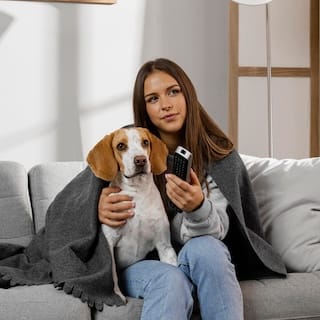
The U.S. pet industry reached $158 billion in 2024 and is projected at $165 billion in 2026, with 95 million American households (about 71.6 percent) owning at least one pet according to the American Pet Products Association's 2026 State of the Industry Report. Pet ownership by generation is not a single block of behaviour. The four cohorts that make up those households are buying different food, paying different prices, insuring at different rates, and arriving at the "pets are family" framing from genuinely different directions. The story this article was originally framed to tell — about ancestral wisdom and time-honoured practices — turns out to be a story about cohort behaviour and household economics. The data is current and the data is on the public record.
This piece walks through the 2026 numbers cohort by cohort, names the surveys behind each claim, and points out where each generation's habits help their pets and where the same habits create welfare or financial risk. It is reporting on what each generation actually does, not a folklore retrospective.
How the Four Generations Own Pets in 2026
The cohort share of U.S. pet ownership, drawn from APPA's 2024-2025 Generational Report as summarised by PetfoodIndustry: Millennials lead at roughly 30 to 31 percent of U.S. pet-owning households, Gen X and Boomers run neck-and-neck at 25 to 27 percent each, and Gen Z accounts for about 20 percent — for now. Gen Z is the fastest-growing cohort by a wide margin, up 43.5 percent year over year, and is on a trajectory that will close the gap with the older cohorts well before 2030 if the current rate holds.
The headline split that matters most for any pet-related decision: Millennials and Gen Z combined now account for roughly half of all U.S. pet households, and that half is the half driving the premium-food, pet-insurance, and pet-humanization trends that the older cohorts are increasingly following rather than leading.
Gen Z Is the Fastest-Growing Pet-Owning Generation
Gen Z went from approximately 13 million pet-owning households in 2023 to 18.8 million by the 2024-2025 APPA survey cycle — a 43.5 percent year-over-year increase, the largest single-cohort jump on record. Seventy percent of Gen Z pet owners report having two or more pets, the highest multi-pet rate of any generation. The cohort also skews younger toward cats and smaller dogs than older cohorts do, partly a function of rental-housing constraints and partly a preference signal that pet brands have been slower to update than the Millennial-as-default model from a decade ago.
The behavioural pattern worth flagging: Gen Z relies heavily on social platforms — TikTok and Instagram especially — for pet-care information. That delivers useful peer-validated content and also delivers a substantial volume of viral advice with no veterinary backing, ranging from harmless to dangerous. Any pet-care content read on a 15-second video clip belongs in a "verify before applying" bucket; the practical implication for Gen Z pet households is to pair the social-feed inspiration with at least one routine annual veterinary visit for source-correction. Most veterinary practices report that Gen Z clients are the cohort most likely to arrive with a TikTok-derived question and the cohort most willing to update when the vet provides counter-evidence.
Related Article: Cultural Connotations: Exploring How Different Colors Hold Diverse Symbolism in Pet Care Around the World
Millennials and the Pets-Instead-of-Kids Shift
The "pets are the new kids" framing has crossed from internet joke to measurable demographic signal. Rover's 2026 generational study found that Millennial pet parents are 17 times more likely than Boomers and roughly 6 times more likely than Gen X to report delaying children to get a pet first. Twenty-six percent of Millennials cite rent or mortgage pressure as a direct reason for that delay. The Institute for Family Studies covered the same shift from the demographics-research side and found the multiplier holding across multiple datasets.
The lifetime-cost arithmetic underneath the shift is striking. Kinship summarises Rover's 2025 estimate of lifetime dog care at $34,550 and lifetime cat care at $32,170 — against the USDA's inflation-adjusted figure of approximately $322,000 to raise a child to age 18. A 10x cost gap, before college tuition. The framing that Millennials are "choosing" pets over kids overstates a financial reality that for many households is closer to "the math worked one way and not the other."
The practical implication for Millennial pet households: the emotional substitution is real, and so is the spending pattern that follows. Sixty-nine percent of Millennials and Gen Z consider their pets family, and that family framing has implications for premium food spending, pet-insurance adoption, vet-visit frequency, and end-of-life-decision economics that the rest of this article walks through.
Cohort Spending and Why Gen Z Now Spends Most
The single most counterintuitive finding in the 2025-2026 cohort data is that Gen Z now spends the most per year on pets. Promodo's 2026 synthesis of APPA-derived data puts annual cohort pet spending at $1,885 for Gen Z, $1,195 for Millennials, $1,100 for Gen X, and $926 for Boomers — a reversal of the long-held assumption that older, wealthier cohorts drive premium pet spending. The reasons that the data support: Gen Z's higher multi-pet rate (more pets to spend on), their tilt toward premium and specialised food categories, and their willingness to insure pets earlier in the pet's lifetime.
The honest caveat: Gen Z is also the cohort most likely to report financial stress related to pet spending. Multiple surveys show Gen Z pet owners simultaneously spending more and reporting they cannot comfortably afford the spend. That is a welfare risk worth naming directly — under-budgeted premium pet ownership produces delayed vet visits when the credit card hits the limit, and delayed vet visits in turn produce worse health outcomes that cost more to address downstream. The receipt-style guidance: insure early, build a separate small pet-emergency reserve before adopting a second pet, and treat the headline annual-spend number as a planning baseline rather than as a marketing aspiration.
What Each Generation Gets Right (and Wrong) About Pet Care
The data turns useful when it translates to actual care implications. The honest summary by cohort:
- Boomers — Strong on preventive veterinary visits, structured feeding routines, and long-relationship continuity with a single trusted veterinary clinic. Underweight on mental enrichment (dog walks tend to be physical rather than scent-and-novelty-rich), and conservative on dental care for pets aged 10+.
- Gen X — The most balanced cohort: regular vet visits, moderate spending, more receptive than Boomers to pet insurance, less anxious than Millennials about premium-food marketing. The risk is under-spending versus actual veterinary need, particularly for older pets and chronic-disease cases where waiting on a diagnostic produces measurably worse outcomes.
- Millennials — Lead on pet insurance adoption, premium food, and "consider the pet family" framing. The under-discussed risk is anthropomorphism producing overfeeding (treats as love), under-exercise (interpreting a dog's couch behaviour as preference rather than energy deficit), and emotional-decision veterinary spending that does not always map to the pet's clinical need. The pet's quality-of-life trajectory and the household's emotional needs do not always point to the same intervention.
- Gen Z — Lead on multi-pet households and on willingness to seek information actively, with the social-feed quality-control problem named above. Their adoption of premium and raw food categories is in the data; their veterinary verification rate is not always keeping pace with the marketing-driven food choices.
The general welfare frame: every cohort has a strength that the others should adopt, and every cohort has a blind spot that costs the pet or the household in measurable terms. Pet-care decisions made on cohort-aspiration rather than the specific pet's clinical profile are the recurring failure mode across all four generations.
Premium, Pâté, or Raw: Cohort Feeding Preferences
The feeding-format split between Millennials and Gen Z is real and is published. Pet Food Processing's cohort coverage reports that among cat owners, 21 percent of Gen Z and 32 percent of Millennials prefer pâté, meatloaf, and mousse formats; 24 percent of Gen Z and 22 percent of Millennial cat owners prefer raw as the primary diet. Older cohorts skew dry-kibble.
The practical translation for any pet household reading this: format preferences are not, by themselves, nutritional adequacy claims. The AAFCO nutritional adequacy statement on the can or bag — required for any complete-and-balanced product sold in the U.S. — is the actual regulatory marker, regardless of format. A pâté product with an AAFCO statement and a raw product with an AAFCO statement are both complete-and-balanced by the same legal standard; a pâté product without one is not, and neither is the raw product without one. The cohort feeding-preference data is interesting demographically; the AAFCO statement is interesting for the cat's clinical needs.
The raw-food caveat that belongs in any 2026 article on cohort feeding: raw diets carry food-safety risks (Salmonella, E. coli, parasite transmission) that the FDA and AVMA have consistently flagged, and the human-household risk is meaningful for households with immunocompromised members or young children. The Millennial and Gen Z cat-owner cohorts trending raw are at the front of that risk distribution, and the receipt-style note is to research the food-safety practices required for raw feeding before adopting the format on a viral-content recommendation.
Related Article: Chronicles of Cultural Diversity in Pet Care Practices Worldwide: Tracing Ancestral Roots and Modern Innovations Across Cultures
Why Millennials and Gen Z Drove Pet Insurance Past $5.2 Billion
The U.S. pet insurance market crossed $5.2 billion in written premium in April 2025, with 6.4 million U.S. pets insured — a roughly 20.7 percent year-over-year increase. Wikipedia's Pet Humanization entry, citing NAPHIA data, tracks the growth back to Millennial and Gen Z adoption behaviour: younger cohorts insure earlier in the pet's lifetime, which means longer policy duration and (counterintuitively) lower premiums than the same product sold to a Boomer with a 9-year-old dog.
The insurance product is not a warranty and not a prepayment plan. A standard accident-and-illness policy is a reimbursement product, which means the household pays the clinic in full and waits for the check. "Pre-existing condition" is the phrase that matters most on the policy fine print; most policyholder complaints trace back to one underlined clause the household did not read when the puppy was eight weeks old. The 6.4 million insured pets in 2024 is a real growth number; the next question worth asking before adopting the product is whether the specific policy's pre-existing exclusion language, lifetime limit, and reimbursement percentage actually fit the household's risk profile.
Gen X Is Quietly Diversifying the Species Mix
Gen X is the cohort least discussed in pet-trend coverage and the cohort doing the most species diversification. APPA's 2024-2025 data shows Gen X dog ownership up 12 percent year over year and cat ownership up 8 percent — both healthy increases — but the more interesting numbers are the non-dog-and-cat increases: bird ownership up 25 percent year over year, reptile ownership up 20 percent, freshwater fish up 17 percent.
The pattern reads as cohort-specific maturity in the pet-keeping decision: Gen X households often have grown or near-grown children, more disposable household space, and the experience to take on species that require specific environmental setups (proper enclosure size for reptiles, water-quality management for fish, social-and-noise tolerance for birds). The welfare implication: bird, reptile, and fish ownership require species-specific knowledge that Boomer and Millennial pet content rarely covers in depth. Gen X is the cohort most likely to consult specialist exotic-animal veterinarians; the cohort least likely to be served by mainstream pet content that defaults to dog-and-cat assumptions.

The Multigenerational Pet Household
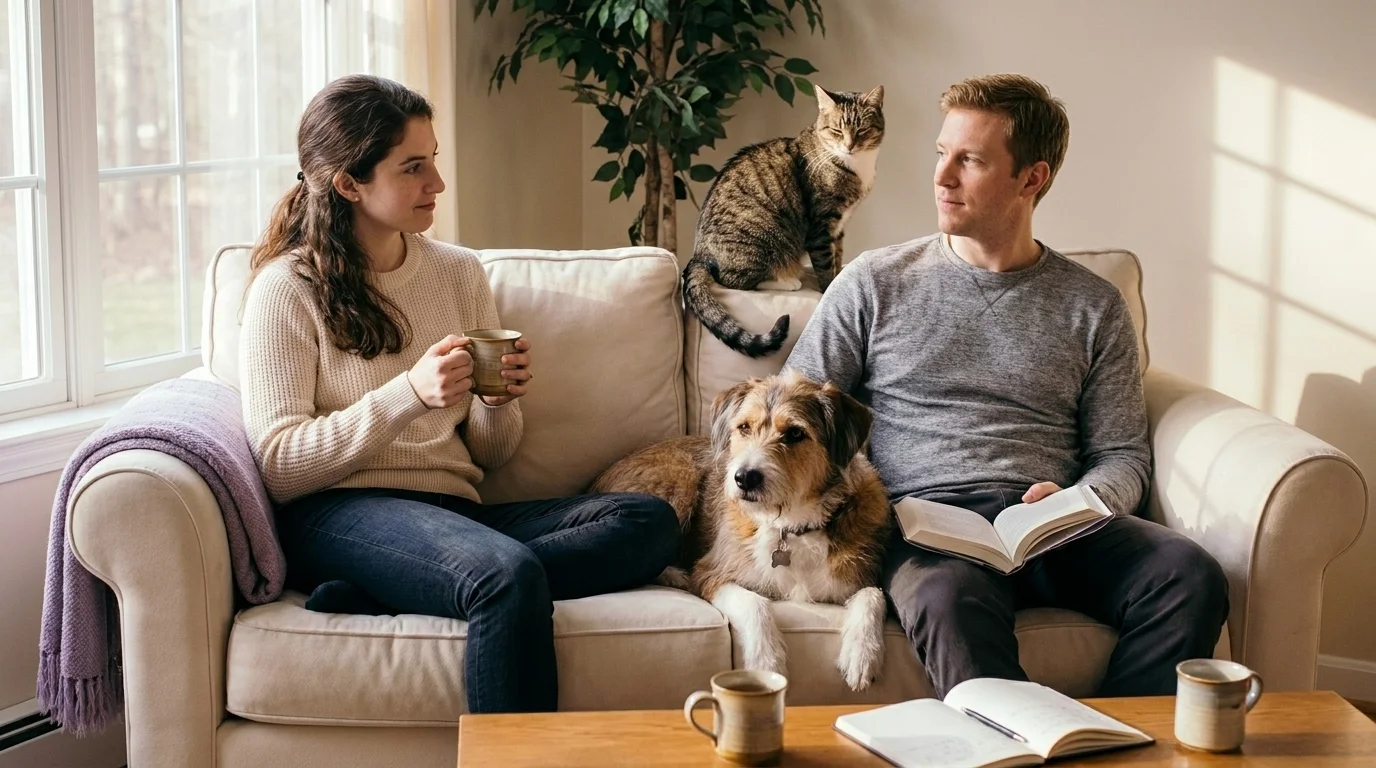
A meaningful and under-discussed share of U.S. households contain two or more generations sharing a single pet — Boomer grandparents, Millennial parents, Gen X aunts and uncles, Gen Z teens, sometimes all four in the same kitchen feeding the same dog. The cohort-data analysis above is useful precisely because it surfaces the disagreement that tends to play out in those households: the Boomer wants the dog on a structured twice-daily kibble routine, the Millennial wants to add a freeze-dried topper, the Gen Z teen has a TikTok-sourced raw-feeding plan, and the Gen X uncle is quietly pricing pet insurance on a phone.
The practical guidance is to name one decision-maker for each domain — typically the household member with the closest day-to-day relationship to the pet — and to route the cohort-shaped opinions through that decision-maker rather than letting four cohort preferences compete at the food bowl. The receipt-driven framing: write down what the pet is currently eating, what insurance (if any) is in place, who the regular veterinarian is, when the last dental cleaning was, and what each household member's recurring concern is. Most multigenerational pet-care disputes resolve when the four-generation household discovers it has been reasoning about the same pet from four different information sources, and a single agreed-upon plan plus a veterinary check-in puts everyone on the same page.
The 2026 picture, drawn from the receipts: pet ownership is a cohort behaviour, but pet care is an individual decision made for a specific animal in a specific household. The cohort data is useful for understanding why everyone in the kitchen has a different opinion; the AAFCO statement on the food, the insurance policy's fine print, and the vet's clinical assessment of the actual pet are what the decision turns on.
Frequently Asked Questions
Millennials lead the share of U.S. pet ownership at roughly 30 to 31 percent, followed by Gen X and Boomers at about 25 to 27 percent each, and Gen Z at around 20 percent — though Gen Z is the fastest-growing cohort, with pet-owning households up 43.5 percent year over year in APPA's 2024-2025 survey, reaching approximately 18.8 million households.
Gen Z now leads annual pet spending at approximately $1,885, followed by Millennials at $1,195, Gen X at $1,100, and Boomers at $926, according to APPA-derived 2025 data summarised by Promodo. This is a reversal of the longer-running assumption that older, wealthier cohorts drive premium pet spending — Gen Z's higher multi-pet rate and tilt toward premium food categories now lead the cohort spend ladder.
Survey data finds that 69 percent of Millennials and Gen Z consider their pets family. Rover's 2026 generational study reports Millennial pet parents are 17 times more likely than Boomers and roughly 6 times more likely than Gen X to report delaying children to get a pet first, and 26 percent of Millennials cite rent or mortgage pressure as a direct reason for that delay. The lifetime cost of pet ownership (about $34,550 for a dog, $32,170 for a cat) compared to roughly $322,000 to raise a child to age 18 is part of the math behind the shift.
Gen Z pet-owning households are growing 43.5 percent year over year, 70 percent of Gen Z pet owners have two or more pets, and they tilt toward cats and smaller dogs more than older cohorts, partly because of rental-housing constraints. Gen Z also relies heavily on TikTok and Instagram for pet-care information — which delivers useful peer content alongside a substantial volume of viral advice with no veterinary backing, making routine annual vet visits a meaningful source-correction step.