Building a Greener Future: Sustainable Architecture in Pet-Friendly Spaces


"Eco-friendly" and "pet-safe" are two of the most reassuring phrases a landscaping product can print, and neither one is regulated. A bag of mulch can call itself natural while containing a compound that poisons dogs; a roll of artificial turf can be sold as a green, water-saving upgrade while baking hot enough to burn paws. If you are looking for dog-friendly backyard ideas — especially on a budget — the useful skill is not picking the prettiest design. It is reading past the marketing to what a material actually does to your dog, your water bill, and the ground underneath.
The good news is that the genuinely sustainable choices and the genuinely dog-safe ones overlap more than the home-and-garden listicles let on. Water-wise planting tends to mean fewer chemicals. Durable, reclaimed materials tend to outlast the cheap stuff you replace every two summers. The trick is to organize the yard around how your dog actually uses it, then choose each material for both jobs at once.
The three-zone sustainable dog yard
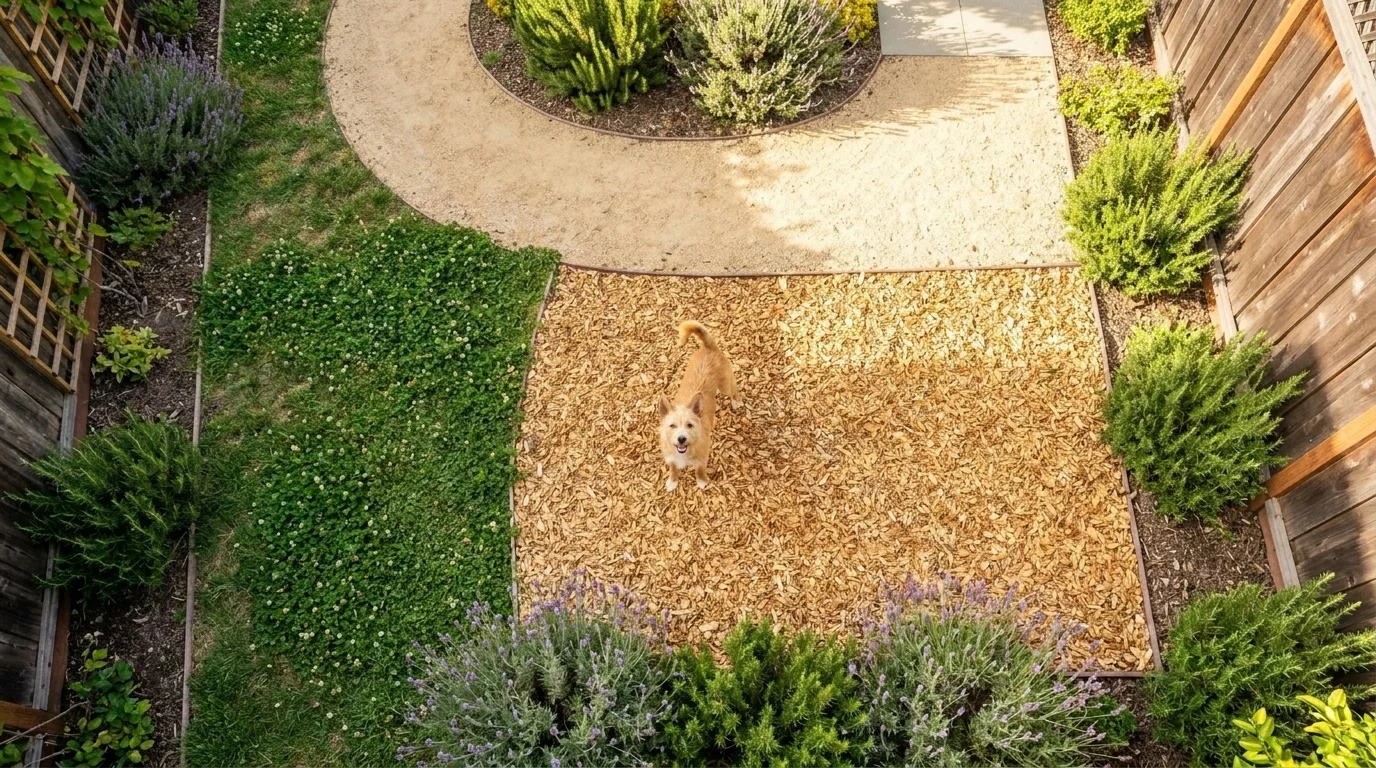
Current landscaping guidance has quietly moved away from "pick one grass alternative" toward dividing the yard into functional zones — a model the ground-cover specialists at Install-It-Direct formalize as three. It is the cleanest spine for a yard that has to serve both a dog and the watershed:
- A hardscape zone near the house — paths and patio. Choose permeable pavers or decomposed granite so rainwater drains into the ground instead of sheeting off into the storm drain. This is where sustainability and dog mess management happen to agree: a permeable surface handles runoff and hoses clean.
- A play and bathroom zone — the high-traffic strip your dog actually runs and relieves itself on. This takes the abuse, so it gets the most durable surface: cedar chips, decomposed granite, or, if you go synthetic, a high-drainage pet turf (with the caveats below).
- Water-wise planting beds at the perimeter — protected from paws, where the pet-safe, drought-tolerant plants live.
Be realistic about the play zone before you spend. As Install-It-Direct puts it plainly, "no grass is immune to urine burn, digging, and heavy traffic." No surface is. The zoned approach works because it stops asking one material to be soft, drainable, chew-proof, and pee-proof all at once.
Which plants are safe — and which to pull
This is the part where a checklist beats a paragraph. The ASPCA's Animal Poison Control maintains a database of more than 1,000 plant entries and runs a 24-hour hotline at (888) 426-4435 (ASPCA). Before any plant goes in a bed a dog can reach, it is worth thirty seconds against that list. As a starting map:
| Pet-safe and water-wise | Pull or fence off (toxic to dogs) |
|---|---|
| Creeping/elfin thyme | Sago palm |
| Silver carpet (dymondia) | Azalea / rhododendron |
| Rosemary | Aloe |
| Camellia | Oleander |
| Coreopsis, coneflower, bee balm | Tulip, hyacinth |
| Nasturtium | Hydrangea |
The pet-safe column does double duty: creeping thyme and silver carpet are low-water, walkable ground covers; coneflower and bee balm are native pollinator plants that feed bees while staying off the toxic list. That is the eco-and-safe overlap working in your favor — a planting bed that needs little water, no pesticide, and won't send you to the emergency vet.
Related Article: Sustainable Practices in Pet Grooming Services: Eco-Friendly Innovations for Fur Salon Operations
Grass alternatives, ranked honestly
The biggest live conversation in dog yards right now is going grassless — the AKC's guide on it was updated in February 2026 and frames the case around three things: lower maintenance, relief for the surprising number of dogs allergic to grass, and the environmental cost of turfgrass itself (AKC). Veterinarian Dr. Amy Attas is blunt about that last point: grass "requires a lot of water to look its best, and environmentally, it's a very poor choice."
Here is where each common alternative actually lands:
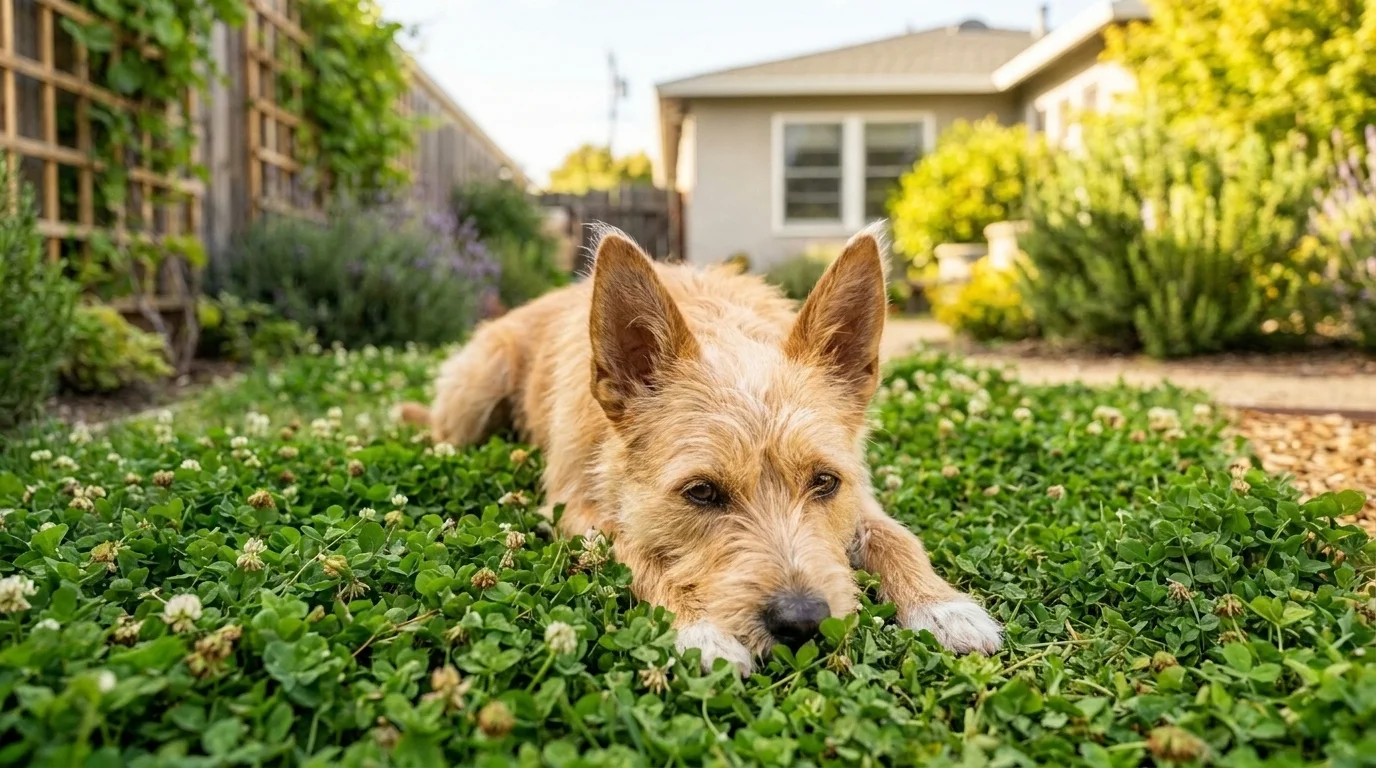
- Clover — soft, nitrogen-fixing (it feeds itself, so no fertilizer), drought-tolerant, and cheap. The strongest all-around pick for sustainability and budget.
- Creeping thyme / silver carpet — walkable, low-water living covers for lighter-traffic areas; slower to establish.
- Cedar wood chips — durable and natural for play zones. Buy plain cedar, not dyed or "cocoa" mulch (see the warning below).
- Decomposed granite / pea gravel — near-indestructible, permeable, zero water; harder underfoot.
- Artificial turf — the honest trade-off. Landscape architect Ed Ball notes synthetic turf "cuts down on water usage and can drastically reduce your water bill" (AKC). But it is not a free win: Penn State research cited by LawnStarter measured turf reaching as hot as 200°F on a 98°F day, and it needs regular rinsing to clear urine. If you install it, choose a high-drainage pet-grade product and provide shade.
A safety callout worth the box it deserves. Cocoa mulch is marketed as a natural, sweet-smelling ground cover. Dr. Attas warns it can act as "a toxin like chocolate" if a dog eats it — it contains theobromine, the same compound that makes chocolate dangerous (AKC). Skip cocoa mulch entirely in a dog yard, and avoid dyed or chemically treated wood chips for the same reason: the label says natural; the chemistry says otherwise.
A residential green wall, not a municipal green roof
You do not need a commercial green roof to borrow the idea behind one. On a small dog run, a living green wall — climbing pet-safe plants on a trellis along one side — adds shade and privacy, cools the space in summer, and softens a hard boundary, all at a backyard scale and budget. It is the one piece of "green building" worth keeping from the architectural version of this topic, rescaled to the yard you actually own.
Sustainable doesn't mean expensive
The persistent myth in this category is that the green choice is the premium choice. The receipts say otherwise. Clover seed runs roughly $4 per 4,000 square feet (LawnStarter) — a fraction of sod or turf. Going chemical-free deletes a recurring line item: no fertilizer, no pesticide, no weed-and-feed. Reclaimed materials — salvaged pavers, leftover lumber for a run border, a neighbor's torn-out flagstone — cost time rather than money and keep usable material out of the landfill. The water-wise planting beds drink less every month they exist.
Sustainable, in a dog yard, usually means less: less water, fewer chemicals, fewer replacements. Less is cheaper.
The question to ask before you dig
A dog-friendly backyard is not a design philosophy you buy into; it is a sequence of material choices, each one either safe and sustainable or merely marketed that way. Before the next purchase, run the plain test the marketing hopes you'll skip: Is this plant on the ASPCA list, does this surface drain, and does "eco-friendly" on the bag describe the product — or just the packaging? Three checks, thirty seconds, and a yard your dog can actually live in.
Frequently Asked Questions
Clover, creeping thyme, silver carpet (dymondia), plain cedar wood chips, and decomposed granite are durable, non-toxic, low-water grass alternatives. Avoid cocoa mulch — it contains theobromine and is toxic to dogs.
Avoid sago palm, azalea and rhododendron, aloe, oleander, tulip, hyacinth, and hydrangea. Check the ASPCA's plant database before planting; their 24-hour poison hotline is (888) 426-4435.
It's durable and saves water, but Penn State found turf can reach 200°F on a hot day, and it needs frequent rinsing to clear urine. Choose a high-drainage pet-grade turf and provide shade if you install it.
Use clover (about $4 per 4,000 sq ft), plain cedar chips, and reclaimed materials; skip fertilizers and pesticides; and group plants into water-wise zones to cut both water and chemical costs.