The Pet-Inspired Fashion Revolution: Trends, Innovations, and Influences


There is a photograph my friend Élise sent me last December from her parents' kitchen in the Eastern Townships: her mother, Hélène, in a heavy cream cable-knit, and a thirteen-year-old standard poodle named Argos in a cream knit jumper a size too small around the chest — one of those matching dog and owner outfits the Q4 photo cluster sells by the million. Argos is not smiling, because dogs do not smile in the way the captions insist. He is doing what older standard poodles do in cable-knits in overheated kitchens: standing very still, mouth slightly open, eyes flicking to the back door. The composition is bad. The exposure is worse. It is the photograph Élise still has of Argos's last Christmas, and she will tell you, if you ask, that she does not care about any of the technical measures.
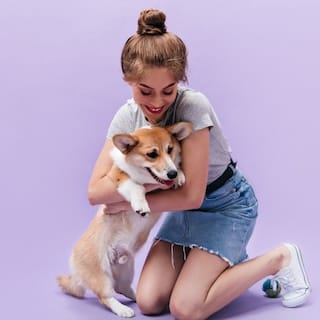
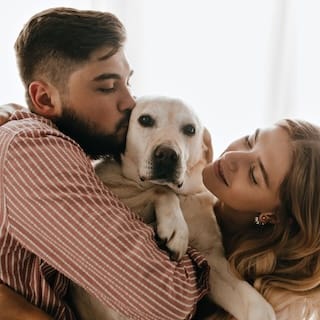
I keep coming back to it because it is the whole story of where pet fashion is in 2026 in one frame: a real animal, a real human, a real ritual of belonging, and — visible if you are looking — a jumper that is not quite right for the dog who is wearing it. The matching outfits cluster has grown into a market the global pet clothing industry now values at USD 2.09 billion in 2025, with forecasts of USD 4.30 billion by 2030 at a 4.10% CAGR. Most articles you will read about it skip the part with the panting dog. This one will not.
Where matching dog and owner outfits actually came from
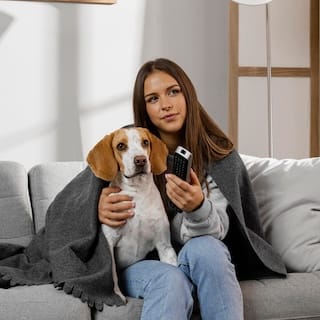
The matching outfit is not a 2026 invention, but the version most people picture — owner and dog in identical knitwear, photographed against a tasteful seasonal backdrop — is roughly five years old. It was assembled, mostly, by three things happening at once between 2020 and 2022: a pet-adoption boom during the early pandemic, a sudden cultural premium on indoor domestic rituals, and Instagram's pivot to Reels, which rewarded short, captionable, repeatable visual formats. A matching pajama set photographed in front of a Christmas tree was that format made literal.
By 2026 the cultural data has caught up. More than 74% of pet owners now consider their pet family, and an estimated 61 million owners globally buy seasonal pet clothing each year. Search demand confirms the cluster has matured rather than collapsed: "matching dog and owner outfits" runs at roughly 2,900 monthly searches in the US, with a sharp Q4 spike toward 6,600 in November and December. This piece is most useful, honestly, from August through January.
What has shifted is the register. The 2020–2022 era was about identical costumes and visible twinning. The 2026 era is quieter.

Matching dog and owner outfits in 2026: the subtle coordination pivot
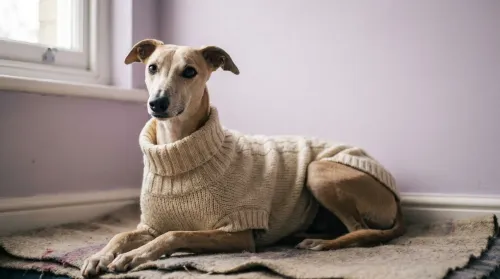
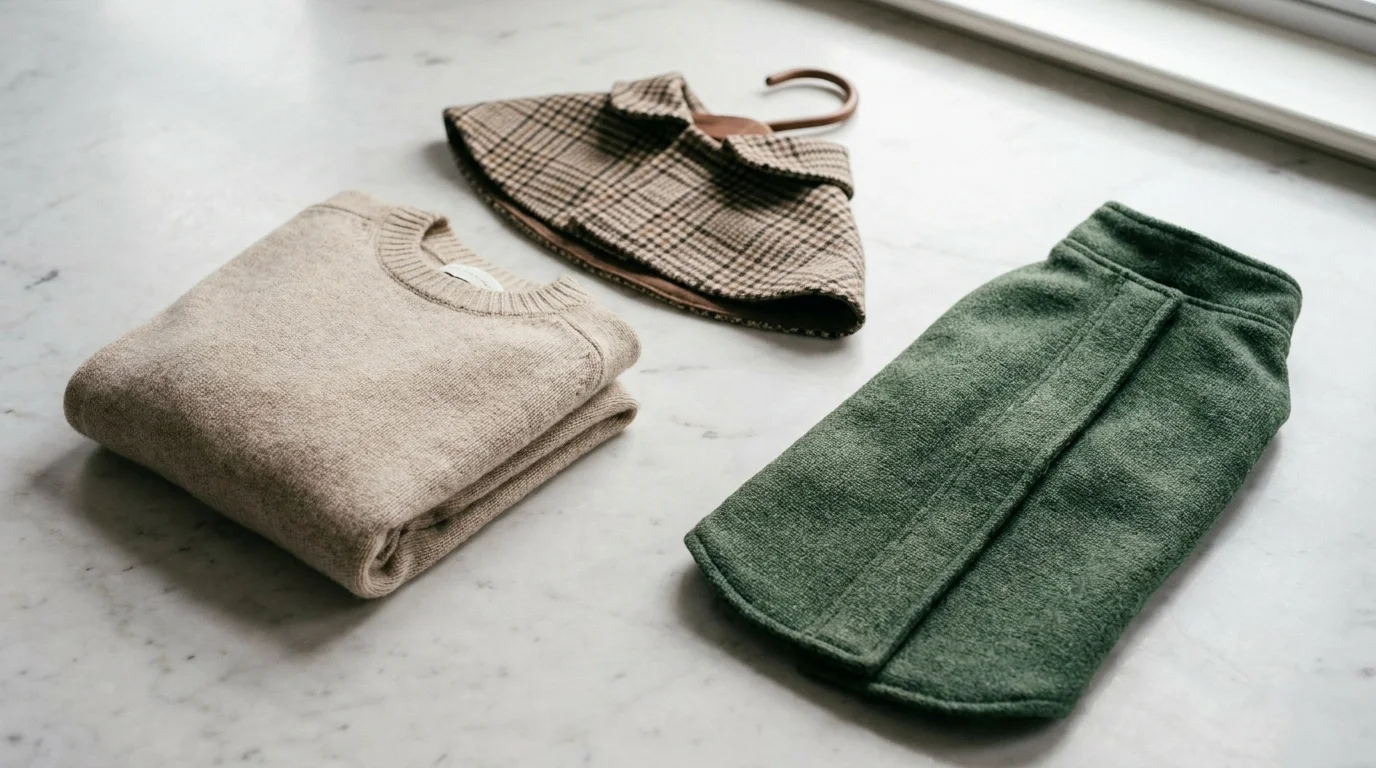
The freshest piece of pet-fashion news this year is not a product. It is a shift in taste. Style guides aimed at the matching-outfits cluster now openly recommend, as one 2026 boutique put it, that owners "coordinate colors rather than patterns — matching shades of blue or gray can look effortlessly stylish". The twinned reindeer sweater has not died; it has been politely set aside in favour of two pieces in the same colour family that read as intentional rather than coordinated.
This is the same move the broader 2026 dog-apparel register has made. The current vocabulary is, in the words of one trend round-up, "minimalist streetwear hoodies with clean cuts, neutral tones, and subtle logos, designed with breathable fabrics for everyday wear". Rhinestones are out. Oatmeal is in.
Within the matching cluster, the subtypes have separated by search volume into a small but stable hierarchy you can use to think about what to buy:
- Sweaters (~720 monthly searches for "matching sweaters with dog"): the Q4 anchor. Knit, soft-handle, mid-weight; the safest bet for a temperate indoor afternoon.
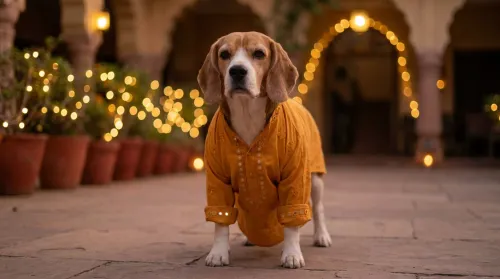
- Loungewear and pyjama sets: 2026 is the year soft fleece onesies, stretchy knit jumpers, and pyjama-style suits have separated from outerwear as their own fashion segment. This is the segment Instagram likes best and welfare-wise the segment most likely to overheat.
- Hoodies (~390/mo): the streetwear-inflected daytime version of the matching idea. Neutral, breathable, ideally with no print.
- Shirts (~320/mo for "dog and owner matching shirts"): the lightest and, depending on cut, the safest in warm weather.
- Halloween costumes (~90/mo, Q4-only): a separate beast, with a separate intent — and, as the costume cluster spikes to roughly 18,100 searches in October, separate welfare considerations.
A note about which dogs should wear what
Before any of this is style advice, it is animal-handling advice. Brachycephalic — flat-faced — breeds have approximately twice the odds of heatstroke compared with average-muzzle dogs. That includes pugs, French bulldogs, English bulldogs, Boston terriers, boxers, and, on the cat side, Persians and exotic shorthairs. The implication for matching outfits is direct: a full-body fleece onesie on a French bulldog at a Christmas dinner with the heating on and twenty bodies in the room is not a styling decision. It is a heat-stress event waiting to happen.
The honest version of this guidance: keep weight light, keep wear windows short (an hour at a holiday gathering is plenty), avoid any garment that restricts the chest or the panting mechanism, and skip the costume on the warm-weather days altogether. The dog is the subject of the photograph, not a prop in it.
The luxury cluster, brand by brand
The other half of the pet-fashion conversation in 2026 is the luxury segment, which is growing roughly twice as fast as the overall category. The luxury pet apparel market is projected to reach $4.6 billion by 2034 from $2.1 billion in 2025, at a 9.1% CAGR. The interesting question is what that money is actually buying. Most editorial coverage either ignores the brands or names one. Here is the documented landscape:
- Gucci launched its pet collection in 2022. A Gucci pet bowl runs roughly €350; a dog harness around €400. Monogram-forward, very visible.
- Hermès offers pet pieces through Petit H, the house's offcut atelier — one-of-a-kind items assembled from workshop leather and silk remnants. This is the "quiet luxury" alternative to Gucci, intentionally not advertised, and the harder of the two to actually buy.
- Burberry sells pet capes in the heritage check.
- Ralph Lauren Pet runs as a long-running, lower-key line of polos and beds in the brand's familiar register.
- Versace Home carries pet bowls.
- Louis Vuitton is the one to be careful about. In November 2024, Pharrell Williams designed an LV leather dog kennel trunk priced at €60,000, plus a matching Pooch Bag at $5,400. What LV does not make, and has never made, is dog clothing. Any LV-branded dog hoodie on a resale site is counterfeit. This is worth saying once, plainly, because the search results make it look ambiguous.
The luxury cluster is also where the sustainability conversation has stopped being a talking point and started being a product. Ruffwear — not a luxury brand, but a useful benchmark — launched a 100%-recycled winter dog jacket in January 2025. Industry-wide, 33% of new pet apparel products since 2023 are made from recycled or biodegradable materials, hemp/bamboo fabric utilisation has grown 29%, and 43% of North American consumers say they will pay a premium for eco-conscious materials. The luxury segment, where the margins exist, is where this will get tested first.
There is a quieter story underneath the luxury market that belongs in the same paragraph. Designer-breed culture, which the luxury pet economy markets to most aggressively, carries a documented welfare cost: Goldendoodles are now the third most popular "breed" in the United States, shelters report rising doodle intakes, pet food costs rose 25% between March 2019 and March 2024, and dog adoptions are down roughly 5% compared with both 2019 and 2023. A €400 harness does not cause a doodle to be surrendered to a shelter four years later. It does sit downstream of the same set of cultural reflexes.
The petfluencer economy, honestly
For about three years, between 2020 and 2023, pet influencers were a real economic force on Instagram. There were genuine accounts with seven-figure followings — Doug the Pug, Nala Cat, Jiff Pom — and a healthy ecosystem of mid-sized creators who could fund the dog's food, and sometimes the rent, on brand partnerships. Most articles you will read about pet fashion still describe this as the current state of affairs. It is not.
Instagram's pivot to Reels has measurably collapsed organic reach for many creators, with engagement rates and content performance declining across the platform. Pet-creator burnout is now a documented research topic — a 2024 ACM CHI study, "Behind the Pup-ularity Curtain," interviewed pet influencers about the emotional and animal-welfare costs of the work, and what it found was a community quietly contracting, not expanding. Creators are migrating to TikTok, to YouTube, to private email lists. Some are stepping away from the camera entirely, citing concern about what daily content production looks like from the dog's point of view.
The honest framing for 2026: pet influencers still exist, brand collaborations still happen, and a stylish dog in the right algorithm can still move product. But the "millions of followers eagerly awaiting their next post" frame belongs to a different decade. The next time you read a pet-fashion piece that opens with it, you can date the piece by it.
Animal prints on human runways: the actual pet-inspired side
The phrase "pet-inspired fashion" in most articles means clothes for pets. It is worth taking it the other direction for a paragraph or two, because the human-runway side of 2026 has an actual story.
Cow print has emerged as the key print of SS26, and across the AW25 collections the named designers stayed almost uniformly with the cluster: Khaite, Altuzarra, Fendi, Valentino, Saint Laurent, and Dior all ran leopard, zebra, cow, or deer pieces — but in sculptural silhouettes and muted palettes, very far from the maximalist 2010s register. Snakeskin has held as the animal print of the moment, persistent across multiple seasons. The 2026 animal print is restrained, expensive, and not a joke.
A small adjacent cluster sits next to this: the search term "dog brand clothing for humans" has grown roughly 29% year over year, off a low base of around 110 monthly searches. This is the rising tail of pet-brand t-shirts, sweatshirts, and tote bags worn by owners — not luxury, not couture, but the genuine pet-inspired-fashion-for-humans angle the broader trend coverage keeps missing. If you wanted to actually wear something that announces you have a dog, that is where it lives.
A short note on the tech
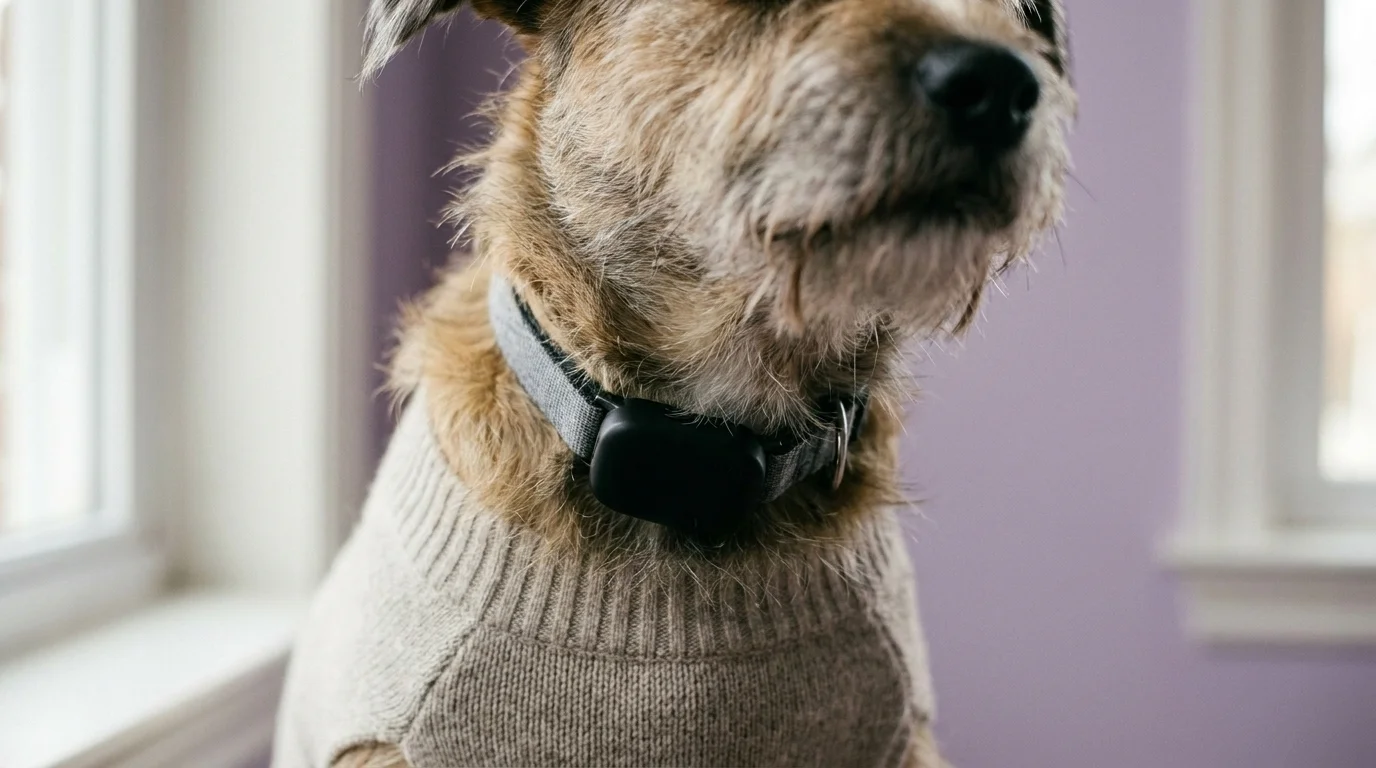
Wearable technology for pets gets folded into fashion coverage often enough that it is worth separating the categories. Smart collars and pet fitness trackers are useful objects — "dog gps collar" alone runs at roughly 27,100 monthly searches in the US — but they are utility, not runway. A well-fitting GPS unit on a Labrador is a piece of safety equipment, the same way a hi-vis collar on a country walk is. It is not a styling choice and probably should not be framed as one.
What this is useful for
The most accurate thing I can say about pet-inspired fashion in 2026 is that the trend has matured. The matching cluster is no longer a Halloween joke, the luxury segment is real money that comes with real cultural costs, the petfluencer economy has thinned out, and the human-runway side has settled into a register the matching cluster itself is now copying. None of this is a story about pets having "never looked more fashionable." It is a story about a category quietly growing up.
If you are reading this in late summer or early autumn, you are reading it at the right time. The matching cluster spikes Q4. Buy the lighter weight, fit the chest properly, keep the wear window short, and remember that the dog in the photograph is the subject, not the backdrop. The photograph is doing the work photographs are for.
Frequently Asked Questions
Brachycephalic (flat-faced) breeds have roughly twice the heatstroke risk of average-muzzle dogs. Avoid full-body costumes, heavy layers, and any garment that restricts panting; lightweight cotton and brief wear windows are safer. Outdoors in warm weather, no clothing is the right call.
Coordinated colour palettes in neutrals (oatmeal, grey, navy), matching knit sweaters or fleece loungewear, and complementary textures rather than identical prints. The 2026 register has shifted away from twinning toward subtle coordination, and Q4 is the peak season for matching pajamas and sweaters.
No. Louis Vuitton makes pet accessories, including collars, leashes, and a €60,000 leather kennel trunk launched in November 2024, but no clothing. Any LV-branded dog hoodie sold online is counterfeit. For luxury dog clothing, look to Gucci's pet collection (launched 2022), Hermès Petit H, or Burberry.
Yes, but the landscape has changed. Instagram's shift to Reels has collapsed organic reach for many pet creators, and a 2024 ACM CHI study documented widespread burnout in the petfluencer community. The 'millions of followers' era of 2020 to 2022 has given way to a smaller, more selective creator economy spread across multiple platforms.
Luxury dog clothes typically refers to apparel from heritage fashion houses (Gucci, Hermès Petit H, Burberry, Ralph Lauren Pet) priced from a few hundred to several thousand euros. Designer dog coats is a broader category covering high-end functional outerwear, including pieces from specialist brands like Ruffwear, which launched a 100%-recycled winter dog jacket in January 2025.
Yes. Cow print has emerged as the key animal print of SS26, snakeskin has held its position as a persistent staple, and AW25 runways at Khaite, Altuzarra, Fendi, Valentino, Saint Laurent, and Dior featured leopard, zebra, cow, and deer prints in sculptural silhouettes and muted palettes. The 2026 animal print is restrained and elevated rather than maximalist.
Not really. Smart collars and pet fitness trackers are useful safety and health objects ('dog gps collar' runs at roughly 27,100 monthly US searches alone), but they are utility, not runway. They belong in the same category as hi-vis collars and well-fitted harnesses — functional gear rather than styling choices.
Search demand for matching dog and owner outfits more than doubles in November and December, climbing from roughly 2,900 monthly searches at baseline to around 6,600 in the Q4 holiday window. If you are shopping for a specific gathering, ordering in late August or September gives you the best selection before stock thins out.