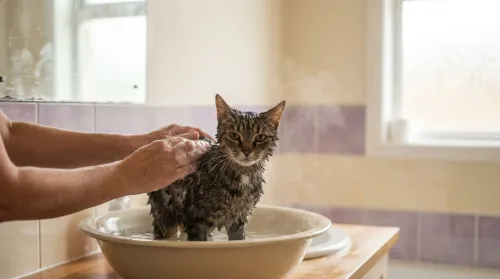
Indoor Vs. Outdoor: Crafting the Perfect Lifestyle for Your Pet's Well-being


The indoor vs outdoor cats question is one I've answered in the exam room more times than I can count, usually framed as a worry: "Am I being cruel keeping her in?" or "He cries at the door — doesn't he need to go out?" It's a fair question, and the honest answer starts with a number that surprises most owners. Indoor cats average 15 to 17 years, with some reaching their twenties. Outdoor-only cats average just 2 to 5. That gap is the heart of the indoor cat vs outdoor cat decision, and the rest of this guide is about understanding why it exists — and what you can do to give your cat the stimulation of the outdoors without paying its price.
Do indoor cats live longer than outdoor cats?
Yes, and the difference is dramatic, not marginal. The 15-to-17-years-versus-2-to-5 figure is attributed to UC Davis research and recurs across veterinary sources. I want to be precise about what that statistic does and does not mean: indoor living doesn't add years through some health benefit of being inside. It adds years by subtracting the things that kill cats young — traffic, predators, territorial fights, poison, and infectious disease.
One nuance that even good articles miss: a part-time "indoor-outdoor" arrangement does not split the difference. Recent veterinary guidance is clear that cats with meaningful outdoor access don't live significantly longer than the 2-to-5-year outdoor figure. The protective effect comes from keeping a cat in, not from rationing the time it spends out. That's an uncomfortable finding for the "let her out for a few hours" compromise, so I'll be honest that it's the direction the evidence points.
| Indoor cat | Outdoor-only cat | |
|---|---|---|
| Average lifespan | 15-17 years | 2-5 years |
| Main risks | Boredom, weight gain if under-enriched | Traffic, predators, disease, fights, poison |
| Wildlife impact | None | Significant (see below) |
| Owner effort | Daily enrichment required | Lower daily effort, far higher risk |
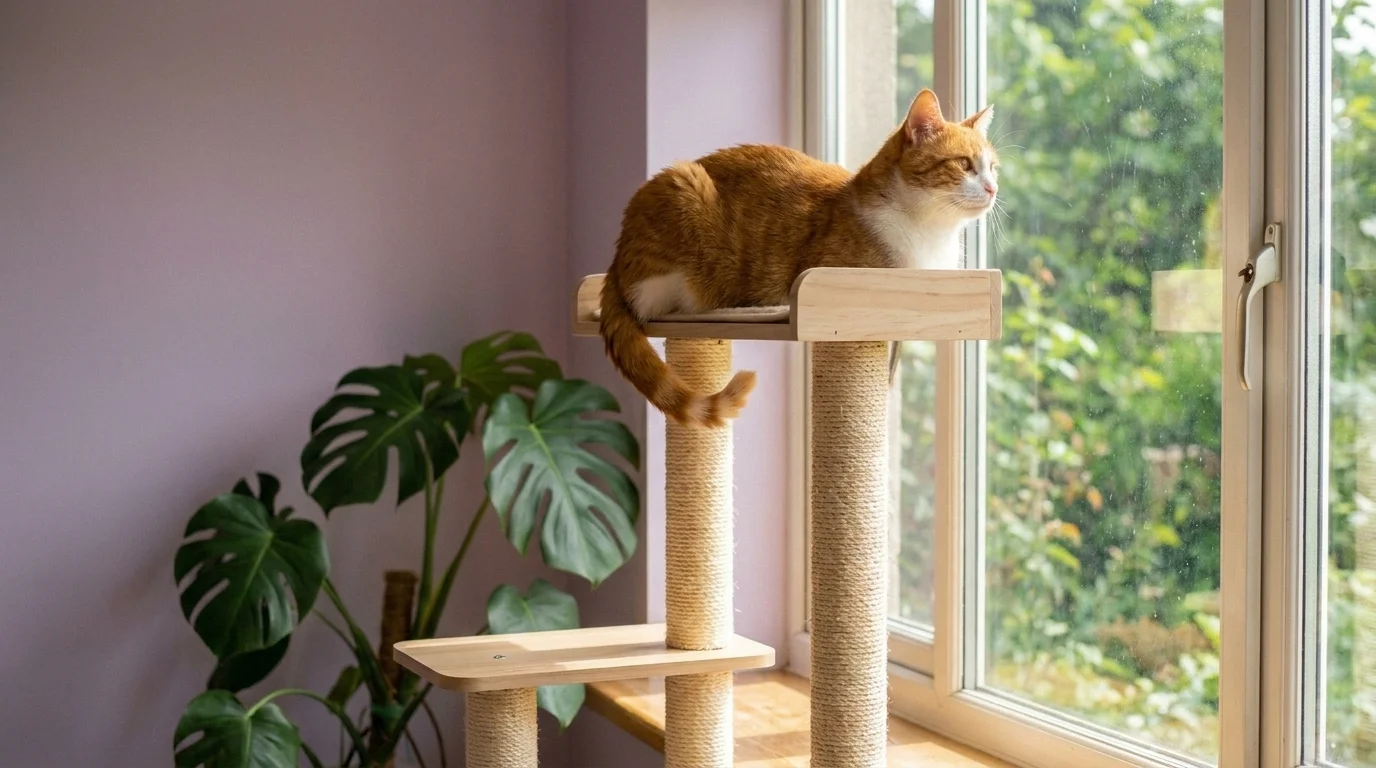
The health risks outdoor cats actually face
When owners picture outdoor risk, they think of cars. Cars are real, but the quieter danger is infectious. A 2019 meta-analysis in the Royal Society's Biology Letters, pooling 21 studies across 19 pathogens, found that cats with outdoor access were 2.77 times more likely to be infected with parasites than indoor-only cats (95% confidence interval 2.10–3.67). That is a well-designed, large meta-analysis, not a single small study — which is why I weight it heavily.
The list of what's out there matters to people as well as cats. Feline immunodeficiency virus (FIV) and feline leukemia (FeLV) spread cat-to-cat through bites and close contact. Rabies is a risk wherever wildlife roams. And two of the most common outdoor parasites — Toxoplasma gondii and Toxocara cati — are zoonotic, meaning they can infect humans, which is why this is a household-health question and not only a cat-welfare one. None of this is a reason to panic about a cat who's already lived outdoors for years. It is a reason to keep core vaccinations current and to talk with your own veterinarian about a parasite-prevention plan suited to your cat's actual exposure.
Is it cruel to keep a cat outside — especially at night?
This is the question I see owners agonize over, often phrased as guilt about keeping a cat in. Let me reframe it: the welfare risk runs the other way. It is not cruel to keep a well-enriched cat indoors. The harder ethical question is whether it's fair to let one out, and at night the answer sharpens.
After dark, the predator-prey relationship can flip. A domestic cat that rules the garden at noon becomes prey to coyotes — which now live in nearly every US town and city — and is far harder for drivers to see. Owls, larger dogs, traffic, and even theft all spike overnight. So the practical guidance most veterinarians give, and the one I give: if a cat has outdoor access at all, bring it in before dark, or give it a secure catio instead. "Outdoor at night" is the highest-risk arrangement on this entire spectrum, with the least to recommend it.
Your cat and the neighborhood wildlife
There's a second party in this decision that owners rarely weigh: the wildlife on the other side of the cat flap. A December 2023 study in Nature Communications from Auburn University compiled more than 150 years of records and documented free-ranging cats consuming 2,084 different species — roughly 9% of the world's birds and 6% of its mammals, with about 17% of those species being of conservation concern. The lead author, Professor Chris Lepczyk, put it plainly: "Cats are generalist predators responsible for significant population declines and several species going extinct."
At the US scale, the older but still-standard 2013 estimate is 1.3 to 4.0 billion birds and 6.3 to 22.3 billion mammals killed by free-ranging cats each year. A bell on the collar, by the way, doesn't reliably fix this — cats are too good at hunting. I raise this not to shame anyone, but because responsible ownership has always included the animal's effect on the world around it, and the indoor cat is, among other things, the wildlife-friendly choice.
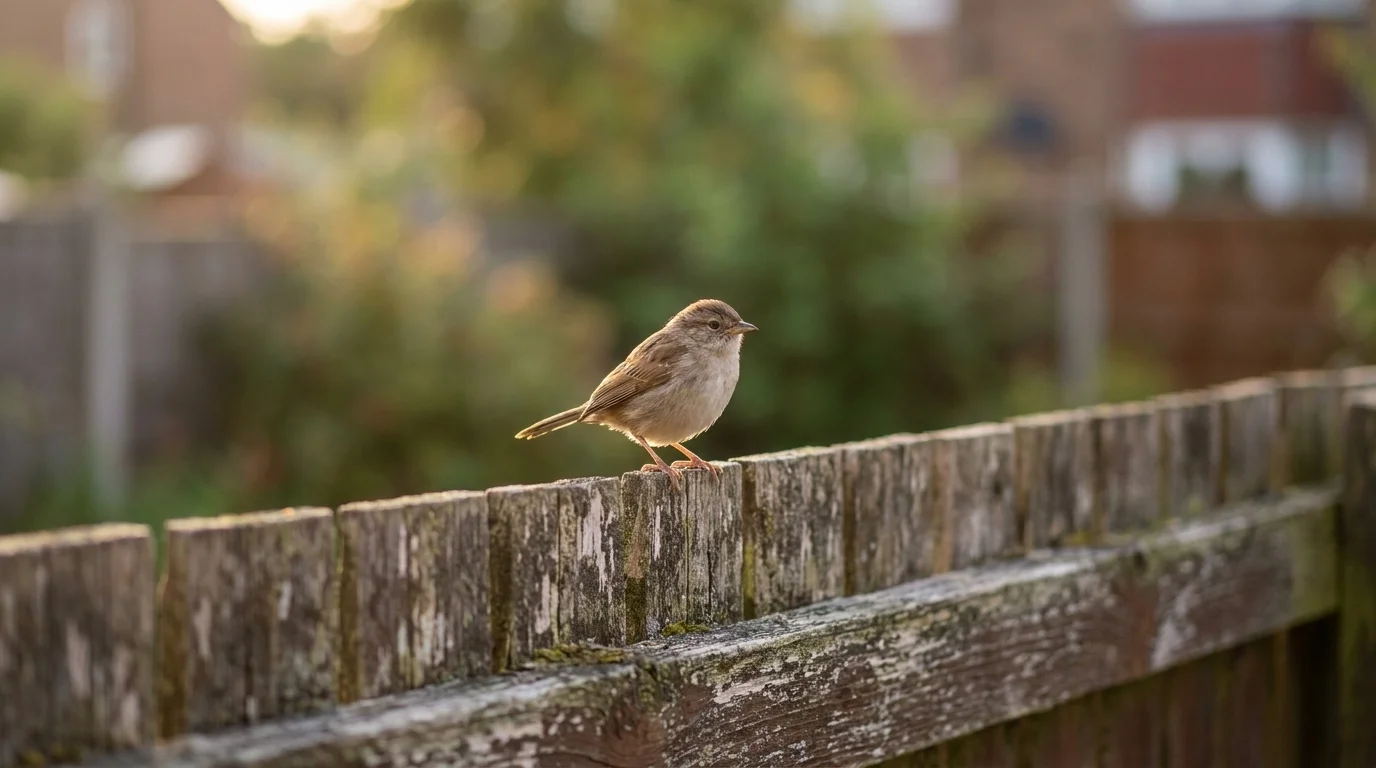
Are indoor cats happy? Enrichment is the real variable
Yes — when their environment gives them somewhere for their instincts to go. The thing to understand is that a cat's drive isn't really "to be outside." It's to hunt, climb, patrol, and watch. An indoor home can satisfy all of that, but it won't happen by accident, and a bored indoor cat is a genuinely unhappy one. That, not indoor living itself, is the source of the litter-box protests, overgrooming, and 3 a.m. zoomies owners blame on "personality."
Current feline-welfare guidance frames enrichment around five environmental needs — physical space, food and foraging, social contact, a clean elimination setup, and outlets for natural behavior — and stresses that the mix should be tailored to the individual cat rather than copied from a checklist. In practice: vertical territory (cat trees, shelves, a window perch); puzzle feeders that make a cat work for food the way hunting would; and crucially, two daily play sessions of about 10 to 15 minutes with a wand toy, ending in a "catch" so the predatory sequence completes. A shy cat and a confident one want different things from that list. Watch which your cat actually uses.
The middle ground: catios, leashes, and supervised time
You don't have to choose between a sealed apartment and an open door. The solution every current veterinary source lands on has a name owners search for constantly — the catio, an enclosed "cat patio." It gives a cat fresh air, sunshine, scent, and a view, with zero exposure to traffic, predators, disease, or the wildlife discussed above. They range from a converted window box to a full screened structure off the back of the house.
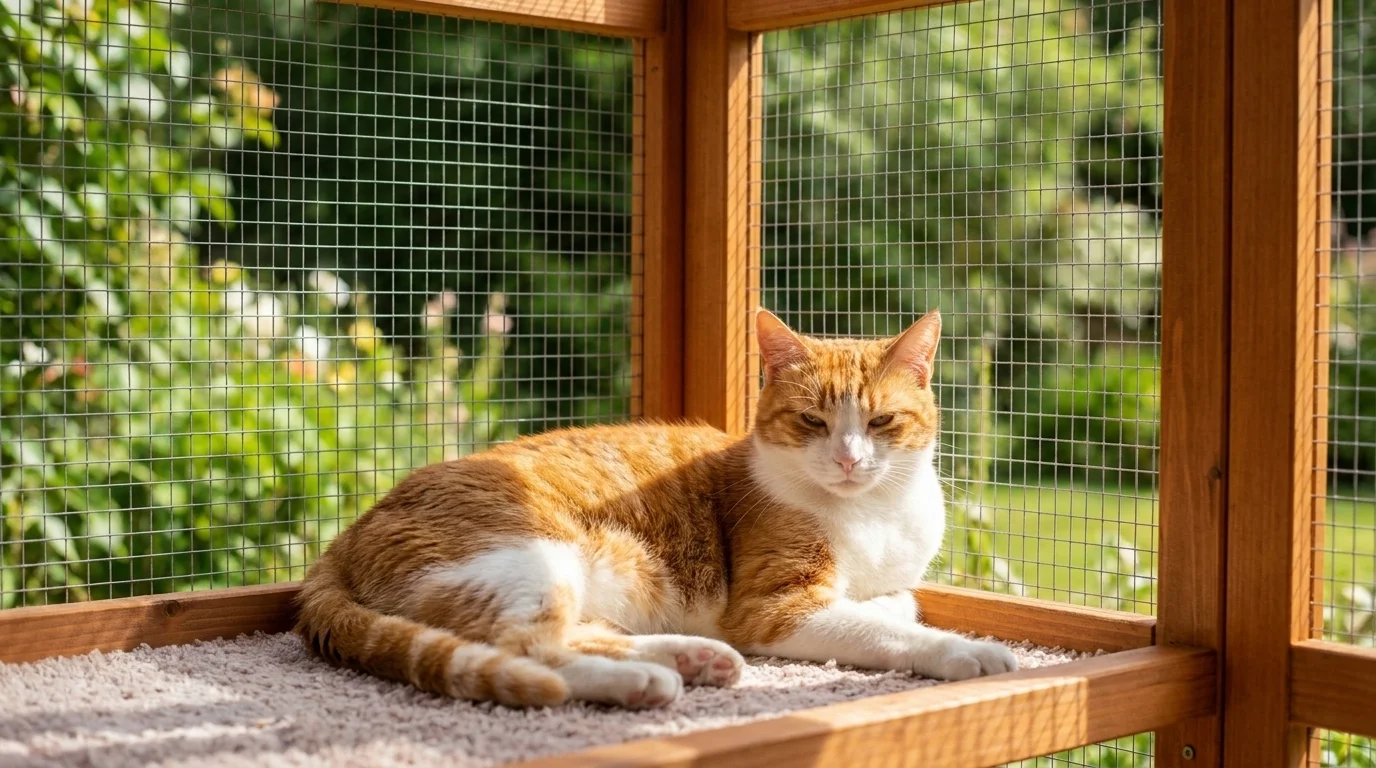
For cats with the temperament for it, harness-and-leash walks are another supervised option, though plenty of cats want nothing to do with a harness and that's fine. Supervised time in a securely fenced yard works for some. The common thread is supervision and containment — capturing the enrichment of outdoors while removing the part of the equation that drives that lifespan gap.
How to transition an outdoor cat to indoor life
If you've decided to bring an indoor-outdoor cat in, do it gradually — an abrupt lockdown usually backfires into door-darting and stress. A workable sequence:
- Shift the schedule first. Move feeding indoors and start bringing the cat in earlier each evening, well before the higher-risk night hours.
- Build the indoor world before you close the door. Add the vertical space, scratching posts, and window perches first, so coming in feels like a gain, not a loss.
- Replace the hunt. Step up interactive play to stand in for the stalking and pouncing the cat used to do outside. This is the single most important substitution.
- Bridge with a catio or supervised time so the transition isn't all-or-nothing.
- Be patient with the protest phase. Expect some vocalizing at the door. It typically fades over a few weeks as the new routine sets in.
One clinical caveat worth flagging: any cat that suddenly stops using the litter box, hides, or stops eating during a transition is telling you something medical, not just emotional. Stress can trigger feline lower urinary tract problems, so that's a reason to call your vet, not just to wait it out.
So, should your cat be indoor or outdoor? On the evidence — the lifespan gap, the 2.77× parasite risk, the wildlife cost — an enriched indoor life with a catio or supervised outdoor access is the arrangement that keeps a cat safe, keeps it stimulated, and spares the wildlife next door. The cat at the door isn't asking for danger. It's asking for something to do. Give it that inside, and the choice gets a lot easier to make.
Frequently Asked Questions
Yes, by a wide margin. Indoor cats average 15-17 years, while outdoor-only cats average just 2-5, according to UC Davis research. The gap comes from avoiding traffic, predators, fights, and infectious disease rather than from anything indoor life adds.
Night sharply raises the risk. After dark a domestic cat can shift from predator to prey, with coyotes present in nearly every US town, plus traffic and trapping hazards. Most veterinarians advise keeping cats in overnight or using a secure catio.
Yes, when their environment is enriched. Indoor cats thrive with daily interactive play, vertical climbing space, and enrichment tailored to the individual cat across the five environmental needs. Boredom, not indoor living itself, is what causes behavior problems.
A catio is an enclosed 'cat patio' that lets a cat enjoy fresh air, sun, and outdoor stimulation with no exposure to traffic, predators, disease, or wildlife. It is the compromise most veterinarians recommend for owners who want their cat to experience the outdoors safely.
Enrichment like puzzle feeders, interactive wand play, and climbing structures lets an indoor cat express natural foraging and hunting behaviors. Current feline-welfare guidance frames this around five environmental needs and recommends two daily play sessions of 10-15 minutes to prevent boredom-related problems.
Outdoor access roughly triples parasite risk: a meta-analysis found cats with outdoor access were 2.77 times more likely to be infected than indoor-only cats. The list includes FIV, feline leukemia, rabies, and the zoonotic parasites Toxoplasma gondii and Toxocara cati, which can spread to people.