


Most owners ask me the same thing — how often should I bathe my dog — half apologetic, half worried they've been doing it wrong. The honest answer is that for most dogs, every four to six weeks is about right — clean enough to manage odor and debris, infrequent enough to leave the skin alone. That figure holds across the major veterinary references, including PetMD. But "most dogs" is doing a lot of work in that sentence. Coat type, lifestyle, skin health, and whether you're bathing a dog at all or a cat all move the number. Here's how I think through it in the exam room.
How often should you bathe your dog?
Start with the four-to-six-week baseline and adjust from there. A short-coated dog who lives indoors and stays out of the mud can comfortably go longer. A dog who rolls in things, swims, or has a skin condition under treatment may need more frequent, sometimes medicated, baths — but those are vet-directed exceptions, not a default to copy.
The instinct I most often have to talk owners out of is the weekly bath. It feels conscientious. It usually isn't. More on why below, but the short version: a healthy dog's skin needs time between baths to do its own work, and you can defeat that work by being too diligent.
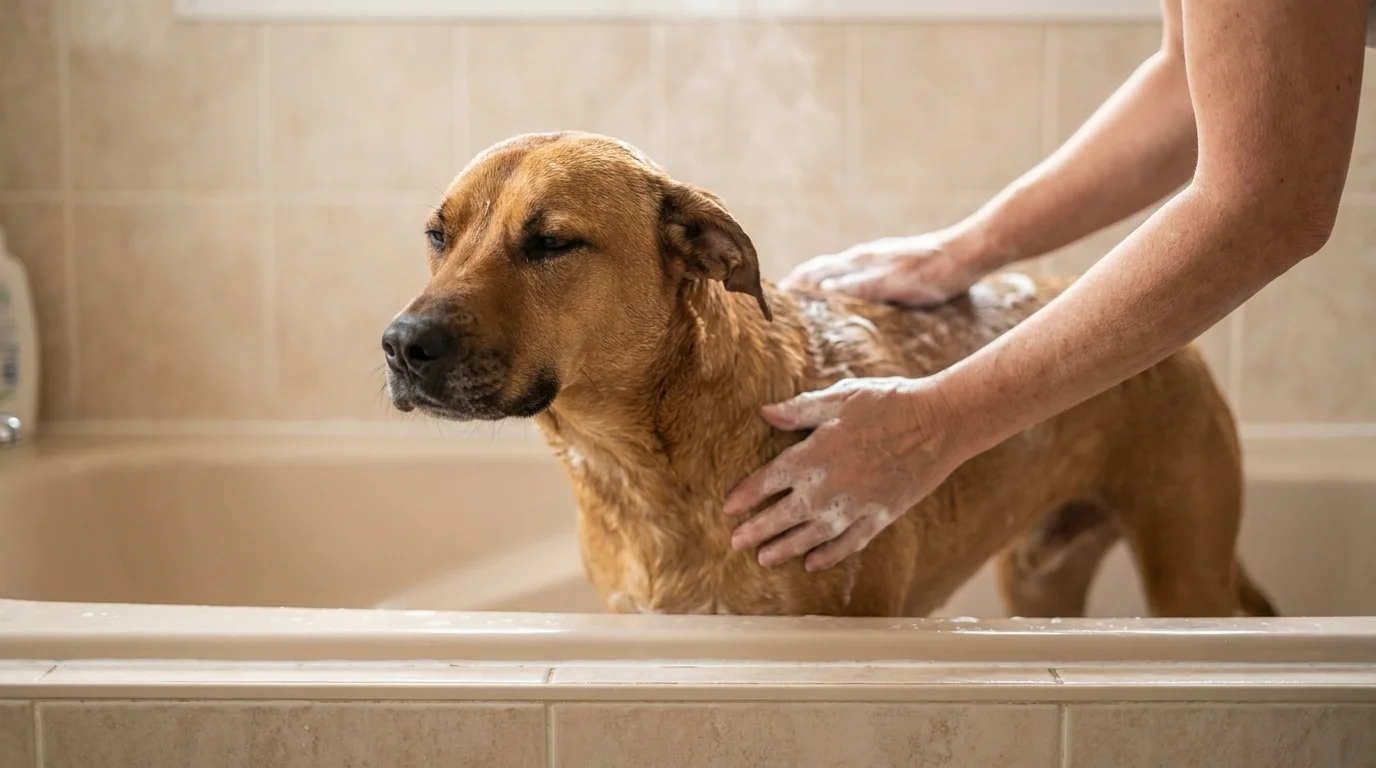
Frequency by coat type and breed
Coat is the single most useful variable, more so than breed name. These ranges reflect current vet and groomer consensus (AKC, Spencer Springs Animal Hospital):
| Coat type | Typical bathing interval | Example breeds |
|---|---|---|
| Short-haired | Every 4–8 weeks | Labrador, Beagle, Boxer |
| Long-haired | Every 3–4 weeks | Yorkshire Terrier, Shih Tzu, Maltese |
| Double-coated | Every 6–12 weeks | Husky, Golden Retriever, German Shepherd |
| Curly-coated | Every 3–4 weeks | Poodle, Bichon Frise |
| Hairless | About weekly | Chinese Crested, Xoloitzcuintli |
Two notes I'd add as a clinician. First, double-coated dogs are bathed less often than their fluffiness suggests — over-bathing a Husky does more harm than letting the coat manage itself between washes, and brushing is the real maintenance tool for that coat. Second, a dog with diagnosed skin allergies is its own category: frequency there is set by the treatment plan, not by a chart. If your dog is itchy enough that you're reaching for more baths, that's a conversation with your vet, not a schedule change.
Puppies are a common question too. Most can have their first bath around eight weeks old, with a mild puppy-specific shampoo and a short, low-stress session (Chewy).
How often should you bathe a cat?
Rarely. This is the part dog-focused guides tend to skip, and it matters: a cat is not a small dog with a different schedule. Healthy cats groom themselves thoroughly, so most need bathing no more than about once a month — and many need it far less, if ever (Catster, Vetericyn).
The exceptions are worth knowing:
- Long-haired cats (Persians, Maine Coons) may need an occasional bath every couple of months to prevent matting.
- Hairless breeds like the Sphynx accumulate skin oils a coat would normally absorb, so they're often bathed about weekly.
- Senior or overweight cats that can no longer reach to groom may need help staying clean.
- Medical reasons — flea treatment, ringworm, contamination with something toxic — call for a bath regardless of routine.
Outside those situations, bathe a cat more often only if your veterinarian directs it.
What over-bathing actually does to the skin
For years the warning was vague — "you'll strip their natural oils." That's true, but it undersells what's happening, and the evidence has gotten more specific. A 2023 study published through PMC found that repeated bathing produced significant, measurable changes to the resident microbiota living on canine skin. The skin isn't just oily or dry; it hosts a community of organisms that help keep it healthy, and frequent washing disrupts that community.
There's also a recovery clock. In a healthy dog, the skin barrier recovers more than half its function within about 24 hours of a bath and restores fully in roughly 72 hours, per guidance from the Virginia Tech Veterinary Teaching Hospital. That's the concrete reason I push back on weekly bathing: if you re-bathe inside that window, you're interrupting the repair before it finishes. Space baths out and the skin does the maintenance for you.
So "what happens if I bathe my dog every day?" has a real answer. Dryness, irritation, and — because you've disturbed the microbial balance and the acid mantle — sometimes the very odor and bacterial overgrowth you were trying to wash away.
Choosing a shampoo: why human products are off the table
Dog skin sits at a roughly neutral pH, while human skin and most human shampoos are more acidic. That mismatch is why a person's shampoo disrupts the canine acid mantle — described in veterinary skin-care writing as the skin's first line of defense against bacterial and fungal overgrowth (The Farmer's Dog).
In practice that means a pet-specific, pH-balanced shampoo, ideally sulfate-free for routine washing. Sensitive-skin and oatmeal-based formulas are reasonable for dogs prone to dryness. Medicated shampoos exist for diagnosed conditions, but those should be chosen with your vet — I won't recommend a specific product or active ingredient here, because the right one depends on the diagnosis.
The oatmeal bath for an itchy dog
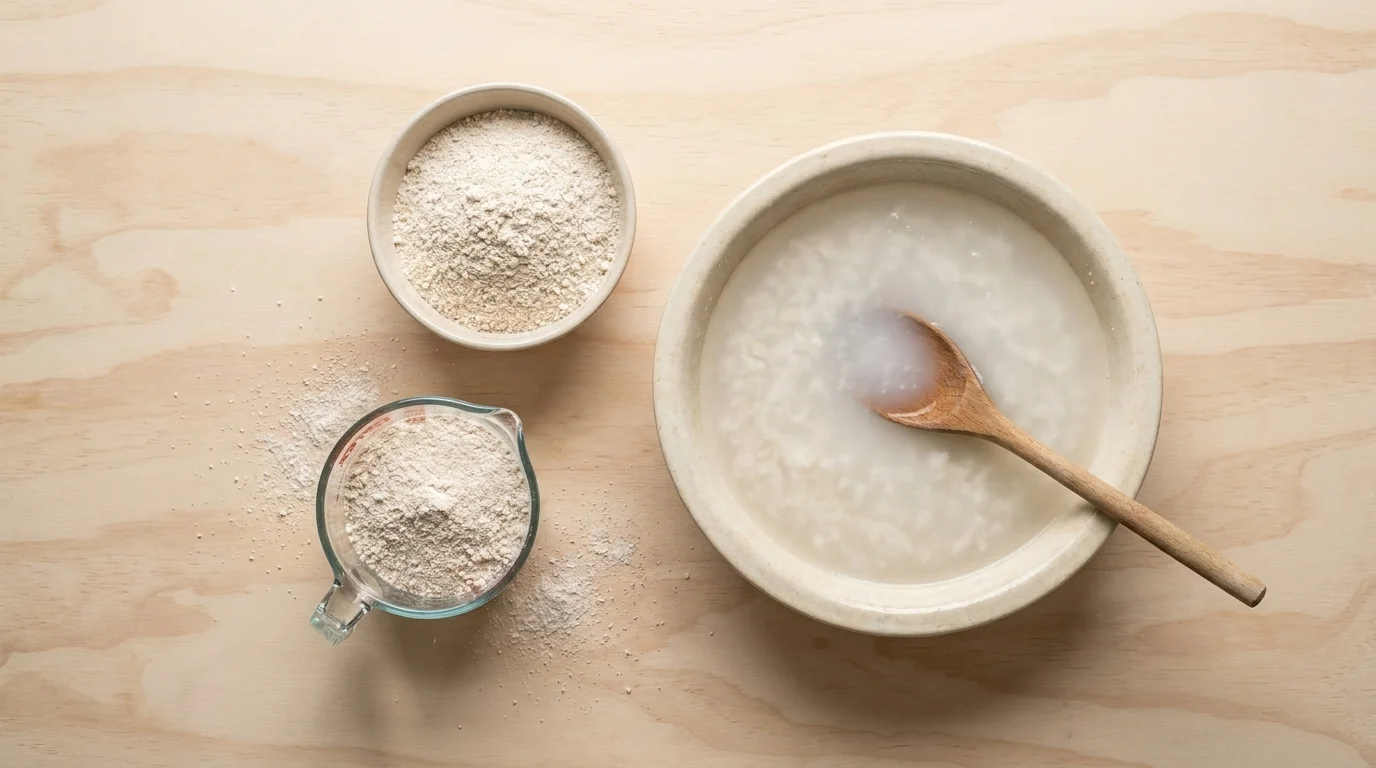
For a dog with mild, occasional itch and no open skin, a colloidal oatmeal bath is a genuinely useful at-home soother, and veterinary sources back it (Whole Dog Journal, VCA Animal Hospitals). The method:
- Grind about 1 cup of plain, unflavored oats into a fine powder — fine enough that a tablespoon stirred into warm water turns the water milky and silky.
- Stir roughly ½ cup of the powder (⅓ cup for a small dog) into a tub of warm water.
- Let your dog soak about 10 minutes, working the water gently over the itchy areas.
- Rinse, then towel-dry — skip the hot dryer.
One firm limit: this is for mild surface itch only. Raw, oozing, or infected skin is not a candidate for an oatmeal soak — that's a same-week vet visit, because the differentials there range from allergy to infection to parasites, and they need different treatments.
A vet's bathing method, start to finish
The mechanics matter as much as the frequency:
- Brush first. Mats tighten when wet; loosen them dry.
- Use lukewarm water — what feels comfortable on your wrist, not hot.
- Lather with a pet-specific shampoo, avoiding the eyes.
- Rinse longer than feels necessary. Leftover residue is a common cause of post-bath itch.
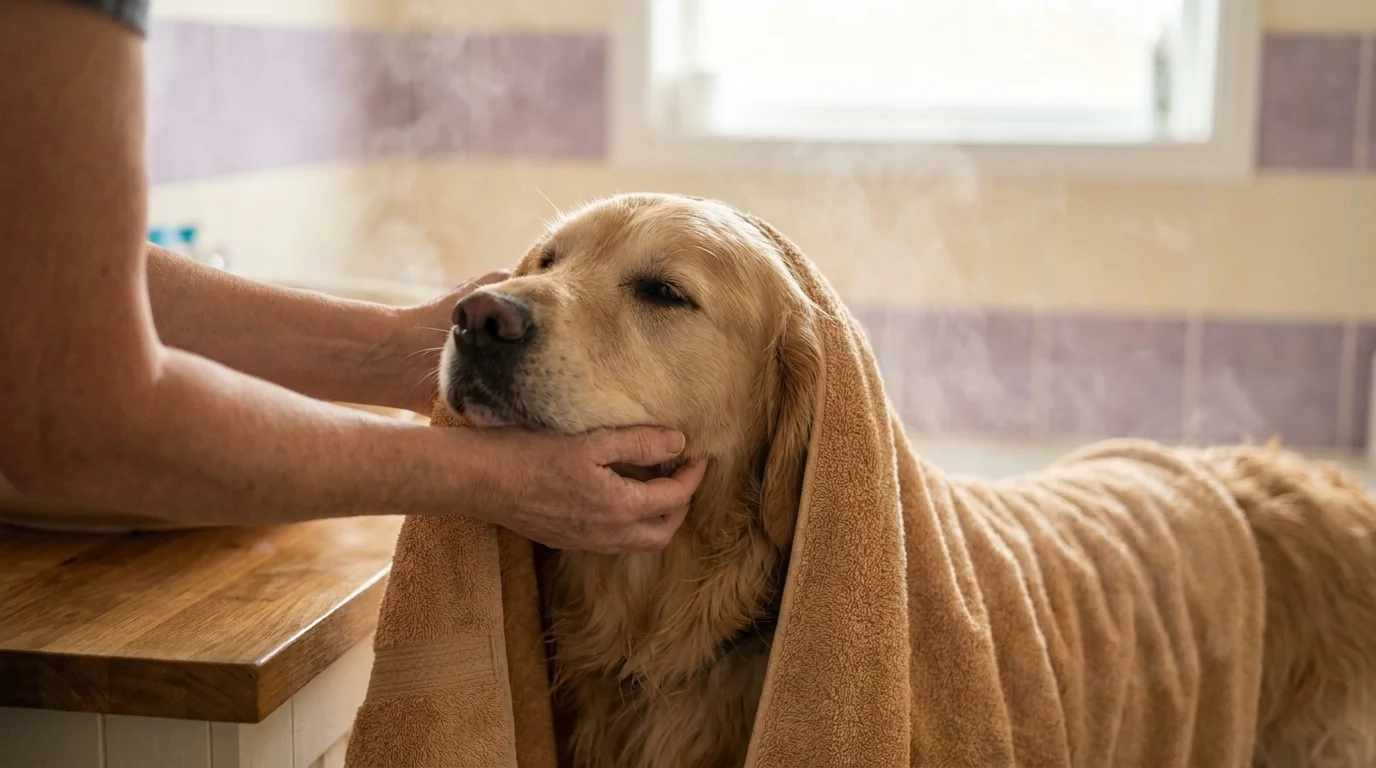
- Dry thoroughly with towels and, if you use a dryer, only a cool or low setting. Damp skin folds invite irritation.
- Check ears and eyes afterward; keep water out of the ear canal.
The most frequent missteps I see are the avoidable ones: human shampoo, an under-rinse, and skipping the dry. None of them require a guide to fix — just the awareness that bath time is skin care, not just a clean coat.
When to involve your vet
Bathing is one of the few areas of pet care where doing less is often doing better. Match the interval to the coat, leave the skin time to recover between washes, use the right products, and reach for the oatmeal soak only for mild itch. Anything beyond that — persistent itching, recurring odor, hot spots, hair loss, or a skin problem that a bath doesn't resolve — belongs with your own veterinarian, who can examine the skin and tell you whether you're looking at a grooming question or a medical one.
Frequently Asked Questions
For most dogs, every 4 to 6 weeks is about right — clean enough to manage odor and debris, infrequent enough to leave the skin alone. Adjust for coat type, lifestyle, and skin health: short-haired indoor dogs can go longer, while dogs who swim, roll in things, or have a treated skin condition may need more frequent, sometimes vet-directed baths.
Rarely. Healthy cats groom themselves, so most need bathing no more than about once a month, and many need it far less. Exceptions: long-haired cats (every couple of months to prevent matting), hairless breeds like the Sphynx (about weekly), and senior or overweight cats that can't groom themselves. Bathe more often only if your vet directs it.
Short-haired dogs every 4–8 weeks, long-haired every 3–4 weeks, double-coated breeds like Huskies and Golden Retrievers every 6–12 weeks, curly coats every 3–4 weeks, and hairless breeds about weekly. Active or outdoor dogs may need bathing more often.
Over-bathing strips the acid mantle and natural oils and can disrupt the skin's microbiome, leading to dryness, irritation, and odor-causing bacterial overgrowth. A healthy dog's skin barrier recovers more than half its function within 24 hours and fully in about 72 hours, so spacing baths gives the skin time to recover.
Grind 1 cup of plain, unflavored oats into a fine colloidal powder, stir about ½ cup (⅓ for small dogs) into warm water, let your dog soak about 10 minutes, rinse, and towel-dry without a hot dryer. Use it for mild, occasional itch only — see a vet for raw, oozing, or infected skin.
Most puppies can have their first bath around 8 weeks old, using a mild puppy-specific shampoo and keeping the session short and positive.