
Breaking Barriers: Solutions for Accessibility Challenges in Pet Care


If you've ever stood at a vet's front desk, looked at the estimate, and quietly decided your pet would have to go without something the vet recommended — you are not failing your animal. You're in the majority. A 2026 PetSmart Charities–Gallup study found that 94% of veterinarians say their clients' finances limit the care they're able to deliver. The cost of veterinary care isn't a personal shortcoming. It's a systemic squeeze, and affordable vet care is something you can actually go looking for — there's far more of it than most owners realize.
What I want to do here is name the real problem, then walk through every channel that exists to get around it: what care actually costs, how to find low-cost and mobile clinics, when telehealth helps (and where it legally stops), the financial-aid programs worth applying to, and the products that keep care reachable for senior and disabled pets. One thing up front, because it matters: I'm a trainer and behavior consultant, not a veterinarian. Which treatments to pursue, delay, or substitute is a medical decision for your vet. What I can do is hand you the map of what's out there.
Start by asking your vet — out loud — about cheaper options
Here's the gap that surprised me most in that same study: 73% of owners who declined care because of cost said they were never offered a less expensive alternative — even though most vets believe they offer one. Only 23% of owners report ever being offered a payment plan. The mismatch is enormous, and it's fixable with one sentence: "What's the most important thing to address first, and is there a lower-cost way to do it?"
This is what veterinary medicine calls a spectrum of care — the recognition that the gold-standard workup isn't the only acceptable plan. Your vet often has a "good, better, best" version of a treatment and won't volunteer the "good" one unless you ask. Ask. It is not rude, and it is not cheaping out on your animal. It's the single most effective free move available to you.

What vet care actually costs in 2026
Sticker shock is worse when you have no frame of reference, so here are real 2025–26 ranges. Costs rose roughly 6.57% from 2024 to 2025, which is part of why this conversation feels more urgent than it did a few years ago.
| Type of care | Typical cost (2025–26) |
|---|---|
| Routine office visit | ~$70–$174 (dogs), ~$53–$124 (cats) |
| Virtual / telehealth consult | ~$65 flat fee |
| Emergency claim (average) | ~$653 (dogs), ~$919 (cats) |
| Full emergency event | commonly $800–$1,500 |
| Overnight hospitalization | ~$222–$567/night (dogs) |
| Low-cost clinic floors | vaccines from ~$10, spay/neuter from ~$50, microchip from ~$10 |
Routine and emergency ranges come from CareCredit and Pumpkin; the low-cost clinic floors from PawCost. The point of the table isn't to frighten you — it's to show how far apart the high and low ends sit. The same vaccine that's $40 at a full-service clinic can be $10 at a community clinic two miles away. Knowing the floor exists is what lets you reach for it.
How to find low-cost or mobile vet care near you
The "near me" searches — low cost vet near me, free veterinary care for low income — are the right instinct, but the results rarely tell you where to actually look. Here's the finding mechanic, in rough order of what to try:
- Veterinary college teaching clinics. Supervised students provide care at reduced rates. If you live within driving distance of a vet school, this is often the best value anywhere.
- Local shelters and humane societies. Many run their own low-cost clinics or keep a referral list for the area.
- Nonprofit clinic networks. Emancipet and LifeLine Animal Project run named, multi-city low-cost clinics; aggregators track 220+ low-cost clinics across 31 states.
- Mobile vets. A mobile practice comes to you — invaluable if transportation or mobility is the barrier. "Low cost vet mobile" is a fast-growing search for a reason; some mobile units are run by the same nonprofits above.
- 211 and findhelp.org. Dialing 211 or searching findhelp.org surfaces local assistance, including pet-related programs, the way it does for human social services. The Humane World resource hub is another good starting directory.

Telehealth: useful, affordable, and legally limited
Online vet services have genuinely matured. A virtual consult runs about $65 as a flat fee, often same-day, through platforms like Vetster, Dutch, Pawp, and Airvet. For triage ("is this an ER situation or can it wait until morning?"), behavior and nutrition questions, and routine follow-ups, it's a real money-saver and a mobility lifeline.
But — and this is the part no competitor explains, so read it carefully — telehealth has a legal ceiling, and it's not the same in every state. Federal law requires an in-person veterinarian-client-patient relationship before a vet can prescribe many medications, and roughly 19 states still prohibit establishing that relationship virtually at all (AVMA; AAHA). A handful of states have loosened this recently — Florida's PETS Act took effect July 1, 2024, and caps virtual prescriptions at about 14 days of most drugs before an in-person visit is required; Maryland and Ohio made similar moves. The practical takeaway: a virtual vet can advise, triage, and follow up, but in most states can't issue a first prescription without an in-person exam — and a webcam is never the right channel for an emergency. If your pet is in distress, go to an in-person ER vet, not an app.
Financial aid: apply to several at once
When the bill is big, the strategy that actually works is stacking. No single grant covers a full emergency, so applicants who succeed apply to three or four programs simultaneously. Worth knowing by name:
- RedRover Relief — grants around $250, decisions typically within two business days, for households earning up to roughly $60,000/year.
- The Pet Fund — assistance for non-basic, non-emergency care.
- Banfield Foundation HOPE Funds — assistance toward urgent care.
- Breed- and disease-specific funds — many breed clubs and condition-focused nonprofits maintain their own assistance pools; Best Friends maintains a 100+ program directory worth scanning.
There are also financing products like CareCredit and ScratchPay. One caution worth flagging plainly: CareCredit's promotional periods are usually deferred-interest, meaning if you don't clear the full balance before the window closes, interest is charged retroactively from day one. It can be a fine tool — just read the terms before you sign, the same way you would any credit product.
Accessibility for senior and disabled pets — and their owners
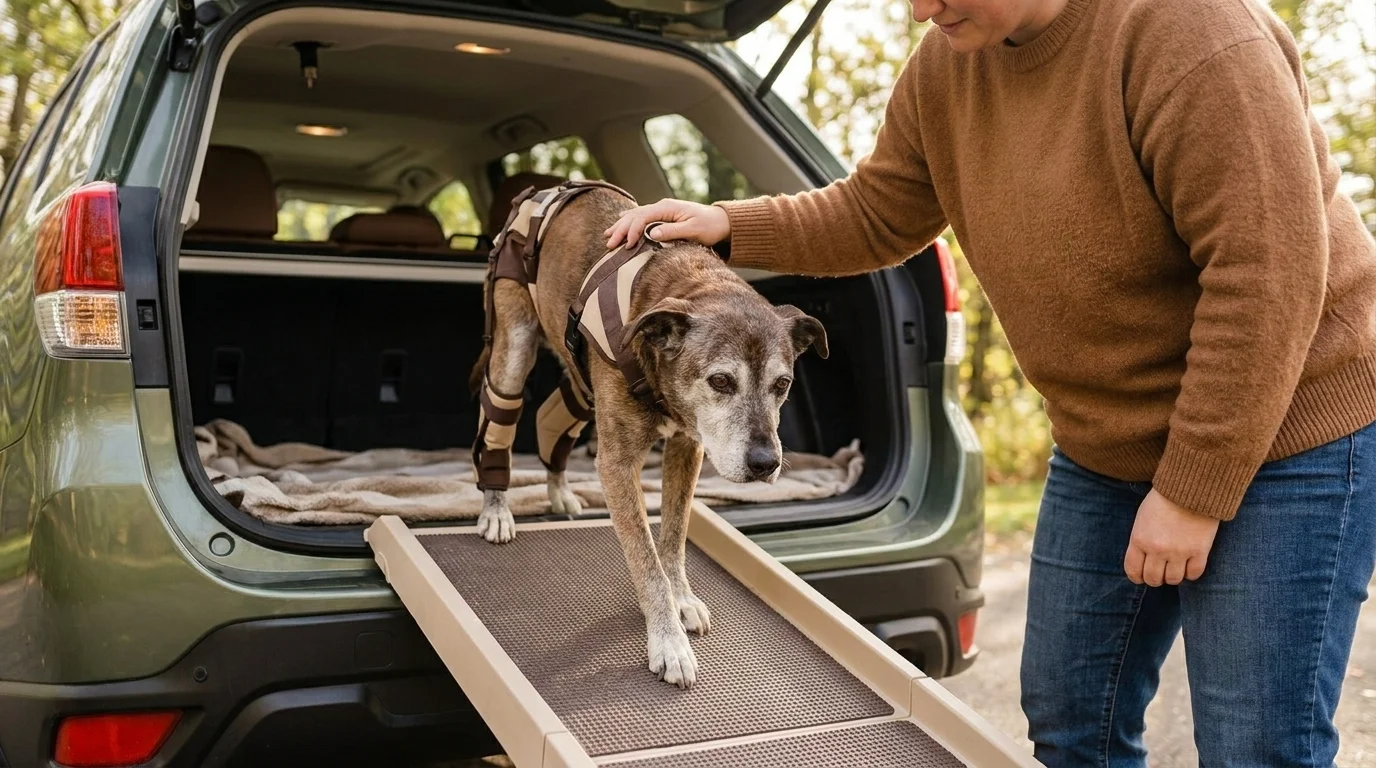
The original promise in this article's title was about breaking barriers, and physical accessibility is a real one that the affordability conversation tends to drown out. Senior and disabled pets benefit from mobility aids — rear-support harnesses, pet wheelchairs, non-slip ramps for cars and couches, and raised feeders that ease strain on aging joints. These range widely in price, and secondhand or shelter-loaner options exist for the expensive items like wheelchairs.
For owners who themselves live with disabilities, accessibility means choosing care channels that fit: mobile vets and telehealth remove the transportation barrier entirely, and many clinics will accommodate handling needs if you tell them in advance what helps. The goal is the same as everything else here — keep good care reachable, not perfect care out of reach.
Where I hand you back to your veterinarian
Affording care and deciding care are two different jobs. This guide is the first one — the map of costs, clinics, programs, and channels that exist to make care reachable. The second job is medical, and it belongs to your veterinarian: which treatment matters most, what's safe to delay, what can be substituted for something cheaper. Bring the map into that conversation. Ask the spectrum-of-care question. The owners who get the most for their animals aren't the ones with the deepest pockets — they're the ones who ask out loud, apply widely, and refuse to believe that going without was their only option.
Frequently Asked Questions
Routine visits run roughly $70–$174 for dogs and $53–$124 for cats; emergency claims average about $653 for dogs and $919 for cats, with full emergency events commonly $800–$1,500. Veterinary prices rose about 6.57% from 2024 to 2025 (CareCredit; Pumpkin; industry data).
It depends on your state. As of 2024–25, states like Florida, Maryland, and Ohio allow a virtual vet-client-patient relationship — Florida caps virtual prescriptions at about 14 days of most drugs before an in-person visit — but roughly 19 states still require an in-person exam first, and federal law mandates an in-person relationship for many prescriptions. A virtual vet can triage and advise, but is not the right channel for an emergency (AAHA; AVMA).
Apply to several programs at once — RedRover Relief (about $250 grants, decisions in roughly 2 business days, household income up to about $60,000), The Pet Fund, Banfield Foundation HOPE Funds, and breed- or disease-specific funds — plus financing like CareCredit or ScratchPay. No single grant covers a full bill, so stacking three or four is the strategy that works. With CareCredit, read the deferred-interest terms before signing (Best Friends; RedRover).
Check veterinary college teaching clinics, local shelters and humane societies, nonprofit networks like Emancipet and LifeLine, and low-cost clinic directories (220+ clinics across 31 states, with vaccines from about $10). Dial 211 or use findhelp.org for local assistance, and look for mobile vet units that come to you (PawCost; Emancipet; Humane World).