I have spent a lot of years watching people fall in love with the wrong assumption. Not the wrong animal — the wrong idea about the animal. Adopting a rescue dog, or a rescue cat, is one of the most rewarding things you will ever do, but most of the advice circulating about it is built on folklore rather than evidence. Roughly 5.8 million dogs enter U.S. shelters each year, and in 2025 about 4.2 million dogs and cats were adopted — most dogs through rescues (32%) and government shelters (31%). Those are millions of decisions made, in large part, on instinct. Instinct is a wonderful thing for a hunting cat. It is a less reliable thing for choosing a shelter dog. So let us take the six assumptions I hear most often and hold each one up to the light.
The first thing I want to say, before the myths: a rescue is not a project, and it is not a charity case you are rescuing from itself. It is a member of a species — its species, not yours — arriving with a history you mostly cannot read. Your job is to meet it on its terms.
Myth 1: Breed Tells You Who the Dog Is
Breed tells you something. It does not tell you everything, and it tells you a good deal less than the internet insists.
Yes, genetics nudge tendencies — herding lines want a job, sighthounds want to run, some lines are wirier-nerved than others. But an individual animal's behavior is shaped far more by early socialization, by what it learned to expect from people, and by its environment than by the label on its kennel card. I have met "aggressive breeds" who were marshmallows and "family breeds" who needed a quiet adults-only home. The breed was a footnote.
Here is where the assumption gets genuinely interesting, because there is a second myth nested inside the first: the famous claim that black dogs and black cats languish in shelters, passed over for their colour. It is repeated everywhere. It is also, on the data, mostly wrong. A 2016 Animal Welfare study found black dogs were in fact more likely to be adopted; a 16,800-dog analysis across two Pacific Northwest shelters found black dogs adopted faster than average; and a 2023 study found neither longer adoption times nor higher euthanasia for them. What that research did find is more useful than the myth it dismantled: age and breed group matter far more than coat colour, and the genuinely disadvantaged animals are the breeds perceived as aggressive — the pit-bull-type dogs — not the dark-coated ones.
So when you stand in front of a kennel, the question is not "what is this breed known for." It is "who is this individual, and what does its body language tell me right now." That is a far more honest place to start.
Myth 2: Older Pets Are Harder to Place — and Harder to Love
This one I take personally, because I spent six years running a shelter cat programme on the west coast of Ireland, and the residents I worried about most were the long-stay, undersocialised, and old. The overlooked animals.
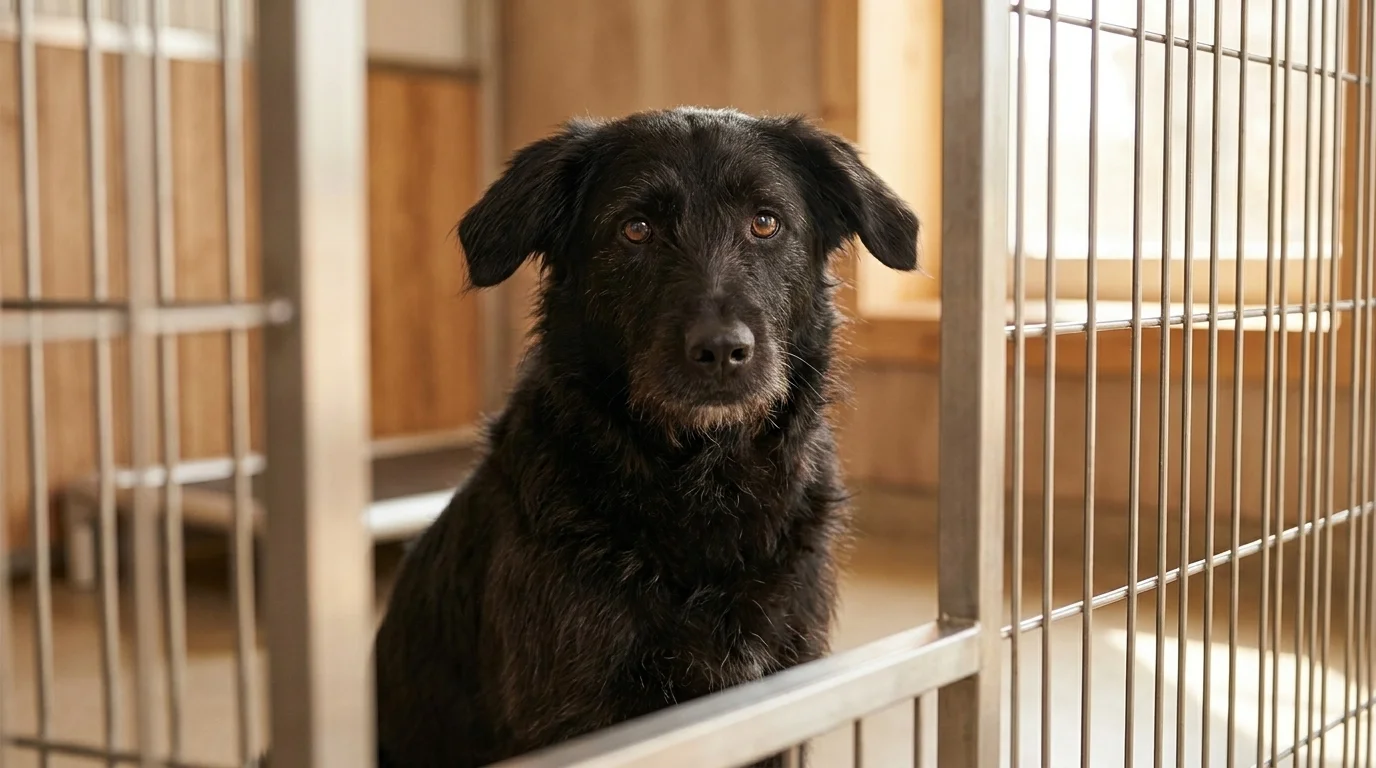
The numbers bear out the worry. Senior dogs are adopted at roughly 25%, against about 60% for younger dogs and puppies — and senior adoptions actually fell around 2% in 2025. We are passing over the easiest animals in the building.
I say easiest deliberately. A puppy or a kitten is a beautiful unknown — you are signing up for months of training, chewing, and a temperament that has not finished arriving. An older animal is already itself. Its personality is fully formed, which means you can actually see whether it suits your life before you commit. It often comes house-trained or litter-reliable. It usually wants less exercise and more company. If you have a calm home and a sofa to share, senior dog adoption — and senior cat adoption — is not the compromise people imagine. It is frequently the better match. Adopting an older dog is choosing certainty over surprise, and a lot of people, if they were honest, would prefer the certainty.
Myth 3: A Rescue Will Settle In Within a Few Days
This is the assumption that breaks the most hearts, and it is the one I most want you to unlearn before you bring anyone home.
A newly adopted animal does not arrive relaxed. It arrives flooded. When a dog — or a cat — enters an unfamiliar environment, stress hormones spike and take several days to normalise, which is precisely why so many new arrivals go off their food, hide, or shut down in the first days. That is not a behaviour problem. That is physiology. Cortisol does not read your adoption paperwork.
The framework shelters now hand out for this is the 3-3-3 rule, and it is no longer folk wisdom — the ASPCA publishes it formally, and it applies to cats every bit as much as dogs:
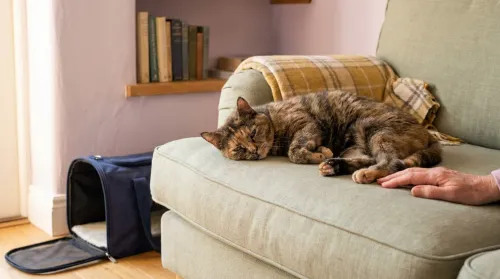
- The first 3 days — decompression. Expect a frightened, quiet, possibly hidden animal. Do not throw a welcome party. A rescue cat may vanish behind the sofa for the better part of three weeks, and that is normal; a dog may simply switch off. Give food, water, a safe corner, and very little else.
- The first 3 weeks — learning the routine. The animal starts to understand when meals come, where the litter box or the garden is, what the household rhythm sounds like. The real personality begins to surface here, not on day one.
- The first 3 months — settling in. Around this point most animals genuinely relax and bond. Some need longer. Longer is fine.
The "Too Much, Too Soon" Mistake
If I could attach one warning to every adoption, it would be this. The single most common mistake new adopters make is over-affection in the first weeks — too much touching, too much talking, too many visitors paraded through to meet the new arrival. It feels like love. To a decompressing animal it reads as pressure.
This is also where dog people and cat people must part ways, and where I will be insistent: a rescue cat is not a small dog, and it does not want to be coaxed, cornered, or carried into confidence. With dogs, gentle invitation works. With cats, you let the cat come to you — you sit on the floor, you offer a slow blink, you wait. The intervention that solves the most early "shyness" in both species is the same: less of you, not more.

Myth 4: A Calm Home Just Happens — You Don't Need to Prepare
You do need to prepare, but the preparation people picture (a basket of toys, a colour-coordinated bed) is not the preparation that matters. What matters is building an environment that lowers the animal's stress before it ever walks in.
For a dog: a defined safe space — a crate or a quiet room — that no one is allowed to disturb, removed access to anything chewable or swallowable, and a baby gate so the world arrives in instalments rather than all at once. For a cat, the principle is resource distribution: not one bowl and one litter box in a busy corridor, but a quiet starter room with its own food, water, a covered hiding spot, and a litter tray it does not have to cross open ground to reach. The "+1 rule" — one more litter box than you have cats, spread through the home — prevents more early problems than any spray or supplement.
And one quiet, non-negotiable line I will repeat for the rest of my career: if a newly settled cat starts urinating outside the box, that is a veterinary question first and a behaviour question second. Feline idiopathic cystitis and early urinary disease present exactly this way. Book the vet before you rearrange the litter trays.
Myth 5: The Commitment Is Mostly Emotional, Not Practical
The adoption fee is the cheapest part of the whole arrangement, and it tells you almost nothing about what you are signing up for. This is the section adoption guides love to wave at abstractly — "it's a big commitment!" — without ever putting numbers to it. So here are the numbers.
The Real Commitment: Time and Money
The daily-time reality is simple and easy to underestimate. A dog needs walking, feeding, training, and genuine company every single day — not when it is convenient, but when the dog needs it. A cat needs less walking and far more enrichment than people expect: an under-stimulated indoor cat is a behaviour case waiting to happen. Either way, you are committing the time, every day, for the animal's whole life — and what to know before adopting a dog starts with whether your week actually has room in it.
The money is more concrete than most people realise. The ASPCA puts routine annual care at roughly $512 for a small dog, $669 for a medium, and $1,040 for a large one, plus around $470–$565 in one-time startup costs. Add the years up and the lifetime cost of a dog lands somewhere between roughly $15,000 and $34,550, depending on size, health, and luck. None of that should talk you out of adopting. All of it should make sure you are adopting with your eyes open rather than your heart racing.

Myth 6: Adopting Is the Same Whatever the Animal Is
It is not, and this is the assumption I will end on because it underpins all the others. A shelter dog and a rescue cat are not two versions of the same project. They are two different species with different sensory worlds, different social structures, and different ideas of what a safe home feels like. Dogs are companionable generalists who read us closely. Cats are solitary hunters who happen to be social feeders, and they negotiate their territory through resources rather than affection.
The good news is that the foundation travels: decompression time, realistic expectations, a prepared environment, and a respect for the animal in front of you instead of the idea in your head. Get those right and you will be the kind of adopter the long-stay residents — the old ones, the dark-coated ones, the misunderstood ones — have been waiting for. Rethink the assumptions, and the rest tends to follow.
Frequently Asked Questions
A guideline for adjustment: about 3 days to decompress (often quiet, may not eat — a normal cortisol-driven stress response), about 3 weeks to learn your routine, and about 3 months to feel fully at home and bond. Some dogs and cats need longer, and that's normal.
The data is mixed-to-debunked. Several studies (2016, 2023, and a 16,800-dog analysis) found black dogs adopted as fast or faster than average. Age and breed group affect adoptability far more than coat colour; pit-bull-type dogs face the strongest bias.
Roughly $15,000 to $34,550 across its life, depending on size and health — about $512 to $1,040 a year for routine care per the ASPCA, plus startup costs and unexpected vet bills. The adoption fee is low, but the lifetime commitment is real.
Giving too much too soon — overwhelming the animal with affection, visitors, and stimulation in the first days. Let them decompress, observe quietly, and with cats especially, let them come to you at their own pace.
Older animals usually arrive with established personalities, so you can see whether they suit your life before committing. They are often house-trained, want less exercise, and offer a calmer presence — yet senior dogs are adopted at roughly 25% versus 60% for younger ones, making them the most overlooked animals in the shelter.
No. Cats are a separate species, not small dogs. The shared foundation — decompression time, a prepared environment, realistic expectations — travels across both, but a rescue cat needs resource distribution (the +1 rule for litter boxes and bowls), a quiet starter room, and to be allowed to approach you rather than be coaxed.