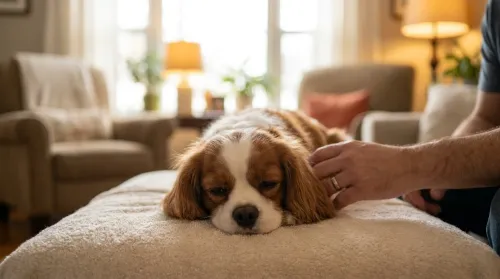
Pet Grooming Mastery: Professional Tips and DIY Techniques for Pet Pampering


Pet grooming at home is mostly a question of doing the right small things often, and avoiding a small number of mistakes that produce real welfare consequences. The right brush at the right cadence prevents the matted coat that requires a salon shave-down. Dog nail trimming every three to four weeks prevents the slow postural damage from overgrown claws. The wrong essential-oil diffuser, the wrong shampoo, or a single shave-down on a Husky in summer can produce a problem that takes months to undo. This is a working guide to home grooming for dogs and cats — what to do, in what order, with what tools, and where the welfare-serious mistakes live.
A note on scope. I am a cat behaviour consultant, so I lean hardest on the cat sections; for the dog sections I draw on the AKC, ASPCA, and Humane World consensus and route breed-specific cuts and complex de-shedding back to a Fear Free Certified Groomer. The framing throughout is welfare-first: every grooming session should leave the animal calmer than it found them, or it is teaching them to fear the next one.
Your Essential Home Grooming Toolkit (Tools, Prices, Purpose)
The original advice "invest in quality equipment" is true and useless. The actual question is which tools and at what price band. The list below covers what you need for the routine work; specialty equipment for breed-specific cuts is its own category.
| Tool | Price band (2026 USD) | What it does | Best for |
|---|---|---|---|
| Slicker brush | $10–25 | Removes loose fur and prevents tangles in medium and long coats | Long-haired and double-coated dogs; long-haired cats |
| Undercoat rake / de-shedding tool | $20–40 | Pulls dead undercoat without damaging topcoat | Double-coated breeds during shed seasons |
| Pin brush | $10–25 | Gentle daily brushing for wool, silky, and fine coats | Poodles, Maltese, Yorkies; long-haired cats |
| Bristle brush | $8–20 | Distributes natural oils; finishing brush | Short-coated dogs and cats |
| Steel comb | $8–20 | Detail work — face, paws, behind ears; mat detection | All coat types, particularly cats |
| Safety dematting tool (rounded blade) | $12–25 | Splits mats into thin ribbons for safe combing out | Long-haired dogs and cats with developing mats |
| Nail clipper (scissor or guillotine style) | $10–25 | Trimming light-coloured nails where the quick is visible | Most dogs; not ideal for dark nails |
| Nail grinder (current quiet generation) | $25–60 | Filing instead of cutting; safer for dark nails and anxious dogs | Dogs with dark nails or needle-prick history; many cats tolerate them better than clippers |
| Pet-formulated shampoo | $8–20 | Cleans without disrupting the species-appropriate skin pH | Never substitute human shampoo; pH differs |
| High-velocity dryer (optional) | $80–250 | Blows water and loose undercoat out of dense coats | Double-coated dogs after baths; reduces hot-spot risk from dampness |
| Styptic powder | $5–10 | Stops bleeding from a cut quick within 30–60 seconds | Mandatory for any home nail-trimming kit |
A few notes from experience. Quiet nail grinders have closed the gap with clippers — current-generation models (Casfuy, Dremel 7760-PGKD multi-speed) operate at roughly 30–45 dB versus the 110 dB legacy models, with multi-speed throttles for stress titration (Canine Journal, 2025). For any dog with dark nails or a history of needle-prick injuries, a grinder is now the safer first choice. For cats, fine scissor-style clippers designed for cats remain the standard — feline nails retract enough that grinder noise is often the bigger limitation.
Skip the pet-store "all-in-one" bundles that include a thinning shears and a rotary kit. Most pet owners do not need either at home, and the bundle pricing usually buys you two tools you'd want and three you'd misuse.
How Often Should You Groom Your Dog? Frequency by Coat Type
The honest answer is that "how often" depends entirely on coat type, and most consumer guidance ducks the table. The consensus across AKC, ASPCA, and Humane World breaks down roughly as follows:
| Coat type | Brush cadence | Bath cadence | Key tool |
|---|---|---|---|
| Smooth / short (Beagle, Lab, Boxer) | Once a week | Every 4–6 weeks | Bristle brush + occasional rubber curry |
| Short / dense (Pug, Bulldog) | 1–2x weekly | Every 4–8 weeks | Slicker + bristle brush |
| Long / silky (Yorkshire Terrier, Maltese) | Daily | Every 4–6 weeks | Pin brush + steel comb |
| Double coat (Husky, Golden, GSD, Bernese) | 2–3x weekly; daily during shed seasons | Every 6–8 weeks | Undercoat rake + slicker; high-velocity dryer for shed-outs |
| Curly / wool (Poodle, Bichon, Doodle mixes) | Daily | Every 4–6 weeks | Pin brush + steel comb; professional cuts every 6–8 weeks |
| Hairless (Chinese Crested, Xolo) | Skin-care wipe-downs 2–3x weekly | Every 1–2 weeks | Cat-soft brush; sun protection; lotion |
Cat coat cadences run shorter for the long-haired breeds and meaningfully looser for short-haired:
| Cat coat type | Brush cadence | Bath cadence | Notes |
|---|---|---|---|
| Domestic Shorthair | 1–2x weekly | Rarely or never | Most short-coated cats self-groom adequately |
| Persian, Maine Coon, Ragdoll | Daily | Rarely; only when self-grooming fails | The mat-prone coats; daily combing prevents the problem |
| Senior cat (any coat) | Daily, gently | As needed | Senior cats often stop fully self-grooming; assistance becomes welfare |
Two principles run through both tables. Brushing is more important than bathing. Daily brushing prevents the mats that necessitate sedated salon shaves; bathing too frequently strips the natural oils and dries the skin. If you can hear nails clicking on hard floors, they are already overdue. A general nail cadence of every three to four weeks holds for most dogs and most cats; some active dogs file their nails enough on pavement to need less.
Brushing and Bathing Your Dog Step-by-Step
The bath itself is straightforward, but a few details prevent the most common errors.
Before the bath: brush the coat out fully. Bathing a matted coat tightens the mats. Place a non-slip mat in the tub. Have the towels, shampoo, dryer, and treats arranged before the dog goes in.
The bath, six steps:
- Wet the coat thoroughly with lukewarm water from collar to tail, avoiding the face. The chest and belly take the longest to soak through.
- Apply pet-formulated shampoo (never human shampoo — the pH is different, and human formulations strip canine skin). Lather from the neck back.
- Rinse, completely. Shampoo residue is the single largest cause of post-bath skin irritation. When you think you're done rinsing, rinse for another minute.
- Wash the face last with a damp cloth — no shampoo to the face, no water in the ear canals. A small cotton ball lightly placed at the entrance of each ear during the bath prevents water ingress and is removed immediately after.
- Towel-dry the coat thoroughly. Damp double-coats develop hot spots within hours; this is not optional.
- Optional: high-velocity dryer at low heat for double-coated breeds. Hold the nozzle several inches off the skin and move continuously — high-velocity dryers can cause burns at close range.
For short-haired dogs the whole process takes 15–25 minutes. For long-haired or double-coated dogs, expect 45–90 minutes including drying.
How to Trim Your Dog's Nails Safely
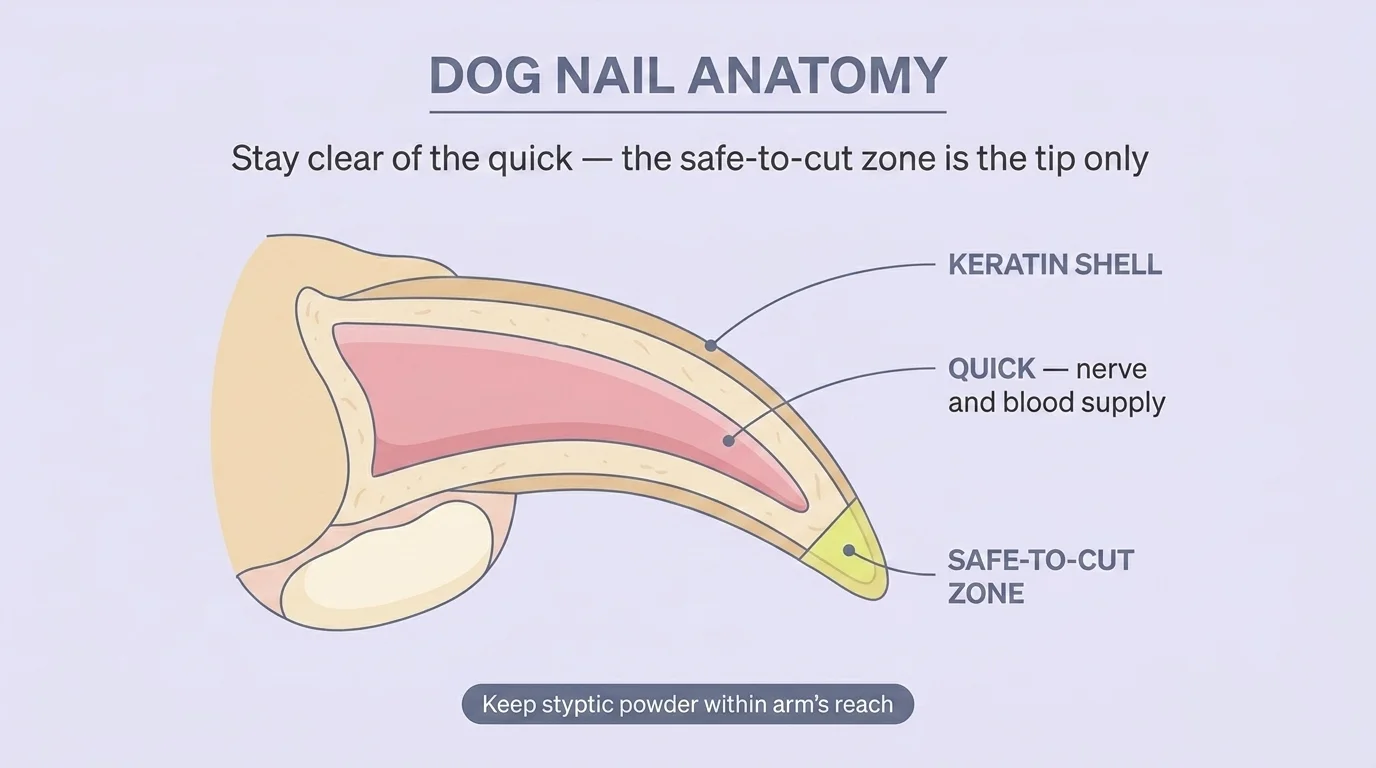
Nail trimming is the home grooming task owners injure their pets doing most often, and the injury — cutting the quick — is preventable with one diagram, one tool, and one bottle of styptic powder.
Quick anatomy. The nail has an outer keratin shell and an inner pink tissue called the quick, which contains the nerve and blood supply. In a light-coloured nail you can see the quick from below as a pink area inside the shell. In a dark nail you cannot — which is the structural reason grinders are the safer tool for dark-nailed dogs. The quick recedes as the nail shortens with regular trims; if you have inherited a dog with badly overgrown nails, frequent small trims (every 5–7 days) will pull the quick back over weeks, where infrequent aggressive trims will not.
Clippers vs grinders.
| Tool | Strength | Limitation |
|---|---|---|
| Scissor or guillotine clipper | Fast, quiet, cheap | Risks cutting the quick — particularly on dark nails |
| Quiet electric grinder (current generation) | Files instead of cuts; safer near the quick; multi-speed for anxious dogs; quieter than legacy models (30–45 dB vs 110 dB) | Heat from continuous grinding; takes longer; dust |
Five-step procedure.
- Have styptic powder open and within arm's reach before you start. Treats too.
- Hold the paw firmly but gently. Steady the dog with your body — most struggle is restraint-driven, not pain-driven.
- For light nails: clip a small slice off the tip; stop when you see a pale chalky centre, which signals you're approaching the quick. For dark nails: grind in short bursts, checking the cut surface — when you see a small dark dot in the centre of the cut, the quick is right there.
- Move to the next nail. Don't try to do all four paws in one session for an anxious dog; multiple short sessions are far better tolerated than one long one.
- Reward generously after each paw, not just at the end.
If you cut the quick. Stay calm — a bleeding nail looks dramatic and is rarely a serious clinical event.
- Apply a pea-sized amount of styptic powder directly to the bleeding nail. Cornstarch, flour, or baking soda work as backups if styptic isn't on hand.
- Hold firm pressure for 30–60 seconds. Most clotting completes in 2–3 minutes (Chewy, Wahl, PetMD).
- Keep the dog calm and discourage licking — saliva interferes with clotting.
- If bleeding has not stopped within 20–30 minutes, call your veterinarian.
The dog will forgive you. Don't quit nail-trimming over one quick-cut — it makes future sessions harder, not easier.
Grooming Cats at Home: Brushing, Bathing, and the Mat Problem
The first thing to know about cat grooming is that most cats do most of the work themselves, and our role is to support what they cannot reach or no longer have the energy to do. The second thing is that cat skin is structurally different from dog skin — it tents up into mats and tears or cuts much more easily — which changes the rules in ways that catch dog-experienced owners off guard.
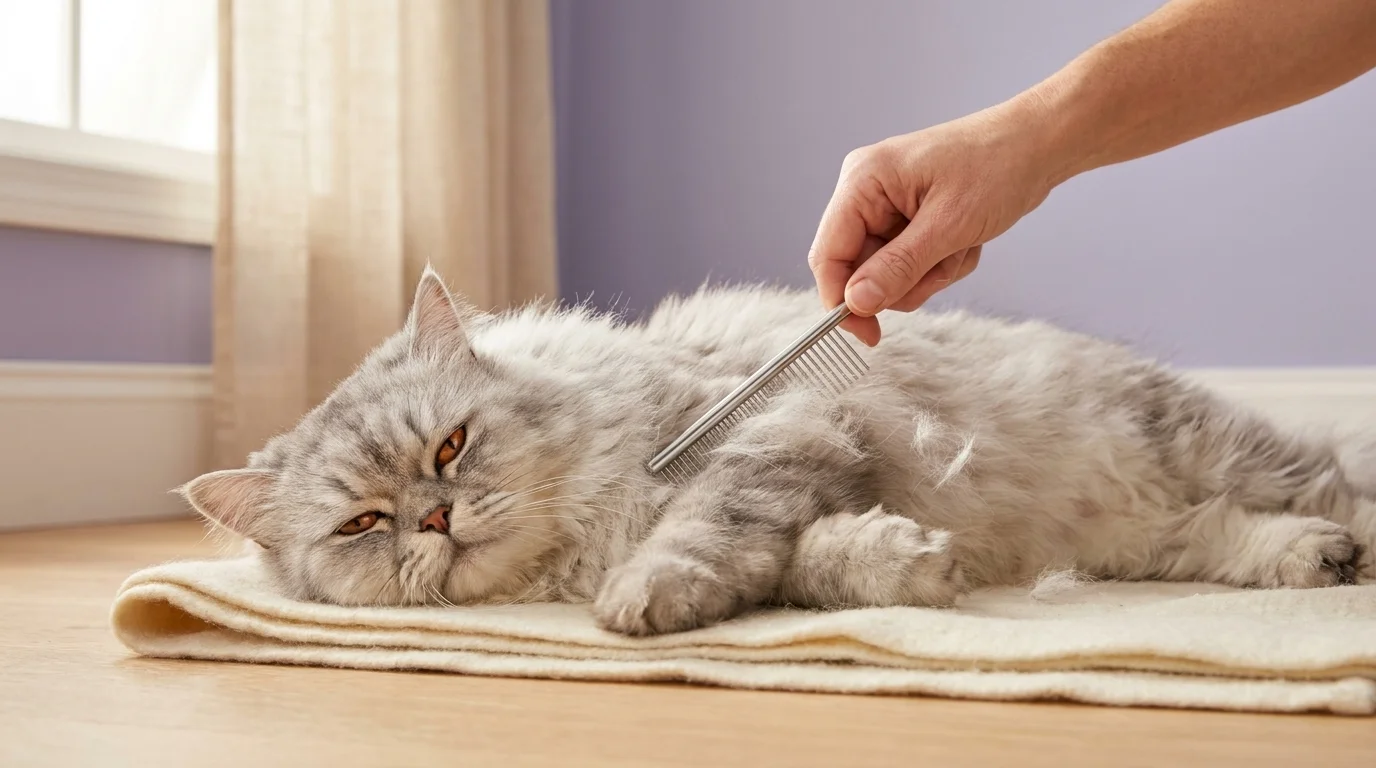
Brushing. A short-haired cat needs a steel-comb-and-bristle pass once or twice a week, primarily to remove loose hair and reduce hairball volume. A long-haired cat — Persian, Maine Coon, Ragdoll, Norwegian Forest — needs daily brushing to prevent the mats that, once formed, are not safely removable at home. Senior cats of any coat often slow down on self-grooming as they age or develop arthritis; daily gentle brushing becomes an act of welfare for them. Watch for excessive grooming or sudden grooming cessation — both are veterinary visit signals before they are grooming questions.
How to Bathe a Cat (When You Actually Have To)
Cats rarely need baths. The exceptions: a cat who has gotten into something they cannot lick off (motor oil, sticky residues), a cat with a flea infestation requiring a medicated bath under veterinary guidance, a senior or obese cat who can no longer reach all of the body, or a cat with a specific dermatological treatment plan. Routine bathing is more often a stressor than a service.
When a bath is unavoidable, six steps:
- Trim the nails first. This is the single most-overlooked step and the one that prevents a great deal of mutual injury.
- Place a non-slip mat in the sink or tub. A rubber mat or a folded towel works.
- Lukewarm water, several inches deep — not a stream from above. Cats' panic response to being sprayed is reliable.
- Pour from a pitcher to wet the coat, working from the neck back. Avoid the face entirely.
- Cat-formulated shampoo only. Lather minimally. Rinse thoroughly with the pitcher — residue is the most common cause of post-bath irritation in cats.
- Towel briskly, then low-heat air-dry in a quiet warm room. Most cats find a high-velocity dryer terrifying; do not use one without prior desensitization.
Two helpful framings. Most cats tolerate a bath best with two people — one to support the cat, one to pour and lather. And the calmer human-set you can manage, the calmer the cat: rushed, anxious humans produce rushed, anxious cats. If a cat is fighting hard from the moment they hit the water, abort. The cat is telling you the welfare cost exceeds the cleaning benefit, and a Fear Free groomer is the right next call.
How to Detangle Matted Cat Fur Safely (No Scissors, Ever)
This is the single most welfare-critical guidance in this article. Never use scissors to remove a mat from a cat. Cat skin tents up into the mat, and the skin and the mat are functionally indistinguishable from above. Owners using scissors on cat mats produce some of the most-stitched lacerations veterinary clinics see in non-emergency presentations.
The replacement protocol (Pawfect Cat Care, Petco, Four Paws):
- Tease the outside edges of the mat with your fingers. Loose strands at the edge come away first, reducing the size of the mat from the perimeter inward.
- Split the mat into thin ribbons with a safety dematting tool — the rounded-blade tools designed for cats are markedly safer than any blade or shear.
- Comb tip-to-base, anchoring the skin with two fingers under the fur to prevent pulling. Work from the outermost tip of each ribbon back toward the body.
- Reward, frequently. A short session of two or three minutes followed by a treat is far better tolerated than a fifteen-minute extraction attempt.
When to stop and call a professional immediately:
- The mat is glued to the skin and will not lift even with gentle finger pressure.
- The underside of the mat is damp, oozing, or smells. This is a skin infection developing under matted fur.
- The cat is in active pain during attempts at removal.
In any of those situations the right tool is a Fear Free groomer with sedation, working in a clinical setting. This is not a failure of home grooming. Severely matted coats sometimes require it.
The "Spa Day" Done Right: Fear Free Handling at Home
The phrase "DIY spa day" appears often in pet content, usually with candles and music. The veterinary-correct version of the same idea is more useful, and starts well before the brush touches the coat.
The Fear Free Groomer Certification Program is the dominant professional standard now, built around no-restraint, no-force, no-stress handling. The home equivalent is a four-step desensitization sequence that you can run before any new tool or new procedure:
- Treat-pair the tool while it sits visible on the floor. Two minutes of high-value treats while the brush, clippers, or grinder is in view, turned off.
- Touch the pet with the tool turned off. Just a brush pass with no bristles engaged, or a clipper held against the paw without trimming.
- Run the tool nearby — three to six feet away, not against the body. This is the desensitization step for the noise.
- One brief contact session paired with high-value treats. Stop before the animal asks you to.
Two weeks of incremental sessions before a real grooming attempt produces a calmer animal for the rest of their life. This is not extravagance; it is the single highest-yield investment in the grooming relationship. Anxious animals teach themselves to fear the tools we use; calm introductions teach them not to.
What to Avoid in a "Pet-Safe" Calming Environment
The original version of this article suggested calming scents and aromatherapy as part of a spa atmosphere. Updating, with apologies for the prior framing: never run essential-oil diffusers in a space where a cat is present. Cats lack the hepatic UDP-glucuronyl transferase enzymes needed to metabolise phenols and many monoterpenes, and the following oils — among others — are documented neurotoxic or hepatotoxic to cats:
- Tea tree (melaleuca), peppermint, wintergreen, pennyroyal
- Citrus oils (d-limonene), pine, eucalyptus, cinnamon, clove
- Ylang-ylang
Sources: PetMD — Are Essential Oils Safe for Cats; Texas A&M VMBS; Hill's Pet. Diffuser exposure happens via inhalation, dermal absorption, and grooming-ingestion when oil settles on the coat.
For dogs specifically, scent enrichment is a different conversation — but a grooming session is not the time. A dog's olfactory system is roughly 10,000 to 100,000 times more sensitive than a human's, and concentrated scent during a stressful procedure compounds the stress rather than reducing it. The "calming environment" you actually want is quiet, predictable, treat-rich, and brief.
Why You Should Never Shave a Double-Coated Dog
This is the single most consequential grooming decision an owner can make wrong, and 2024–2025 saw a coordinated push from veterinary and professional grooming associations to correct it. The myth: shaving a Husky, Golden Retriever, or German Shepherd in summer keeps them cool. The reality: it does the opposite.
A double coat consists of a soft insulating undercoat and a coarser, often longer topcoat. The system insulates in both directions: the undercoat traps a layer of cooler air against the skin in summer and warmer air in winter, while the topcoat provides UV protection and helps shed water. Removing the coat removes both functions in one stroke. Documented consequences include post-clipping alopecia — patchy, slow regrowth, sometimes permanent texture or colour change — in Husky, Chow Chow, German Shepherd, and Golden Retriever populations.
Breeds where this rule applies most strongly:
- Husky, Malamute, Samoyed
- Golden Retriever, Labrador (less severely)
- German Shepherd
- Australian Shepherd, Border Collie
- Chow Chow
- Bernese Mountain Dog, Newfoundland
- Pomeranian, Corgi
What to do instead during shed seasons:
- High-velocity blow-out to lift loose undercoat without touching the topcoat.
- Undercoat rake for daily or every-other-day passes during peak shedding (typically spring and autumn).
- Professional de-shed treatment two to three times a year for high-shedding breeds — significantly cheaper than the long-term welfare cost of a shave-down.
The exception: dogs whose coats are matted to the skin to a degree where dematting is no longer humane. In those cases a full clip-down may be the welfare-correct choice in the moment — but it is a last-resort call coordinated with a Fear Free groomer or veterinarian, not a summer convenience.
DIY vs Professional Grooming: A 2026 Cost and Decision Guide
Pet grooming and boarding industry inflation has averaged 8.4% annualised over the past five years (Kentley Insights, 2025). Mobile groomers, the fastest-growing professional segment (up ~18% in 2025 per MoeGo), command 20–40% over salon prices (Truecore Capital). The DIY-vs-pro question is not abstract. For a routinely groomed dog, building home competence on the routine tasks — brushing, bathing, nail trimming — pays off significantly across a year, and frees your professional grooming budget for the procedures where the value is highest.
A working decision matrix:
| Task | DIY effort | When to call a pro |
|---|---|---|
| Routine brushing and bathing | Low; daily / weekly | Almost never |
| Nail trims | Moderate | First-time anxious dog; heavy needle-prick history |
| Sanitary trim (under-tail, paws) | Moderate; scissor-care required | Long-haired or wriggly dogs; cats |
| Full breed cut (Poodle, Schnauzer, Yorkie) | High; technique-dependent | Almost always — pay the pro |
| Severely matted coat | Not safe at home for severe mats | Always, especially for cats |
| Anxious or aggressive pets | Limited | A Fear Free Certified groomer with sedation when needed |
The combination that delivers the best welfare and the best value: weekly brushing at home, monthly bath at home, three-to-four-week nail trims at home, and a professional appointment every six to eight weeks for breed cuts and de-shed work.
A Brief Closing Note
Home grooming, done well, is not pampering. It is one of the more reliable ways an owner notices a problem — a lump under the fur, a hot spot developing under a damp coat, a cat who has stopped being able to reach a grooming spot — early enough to do something about it. The brush in your hand is a diagnostic tool as much as it is a coat-care tool. Use it weekly, use it gently, and use it as the regular check-in it can be.
For specifics that this guide cannot reach — a breed-particular cut, a complicated coat condition, a cat whose mats have already become a vet visit — the right next step is a Fear Free Certified groomer who treats stress as a clinical concern, and your own veterinarian for any skin or coat finding that does not look right under the brush.
Last reviewed 2026-04-29 by Saoirse Ni Bhriain, CCBC.
Frequently Asked Questions
Every 4–8 weeks for most coats; monthly for short-haired dogs; less frequently for long-coated breeds with active oil glands. Over-bathing strips natural oils and dries the coat. Brushing matters more than bathing — daily or every-other-day brushing for double-coated and long-haired breeds prevents most of the problems frequent bathing is sometimes used to fix.
2–3 times a week minimum; daily for long-haired and double-coated breeds, especially during spring and autumn shed seasons. Brushing distributes the coat's natural oils, removes loose undercoat, and prevents the mats that produce salon shave-downs. Hairless breeds need wipe-downs and skin care rather than brushing.
Trim small slices from the tip; for light nails stop when you see a chalky white centre, for dark nails use a grinder and grind in short bursts watching for a small dark dot in the centre of the cut. The nail's pink quick contains the nerve and blood supply — staying clear of it is the whole goal. Keep styptic powder within arm's reach, and don't try to do all four paws in one anxious session.
Stay calm, apply a pea-sized amount of styptic powder directly to the nail tip, and hold firm pressure for 30–60 seconds. Cornstarch, flour, or baking soda work as backups. Most clotting completes in 2–3 minutes; if bleeding hasn't stopped within 20–30 minutes, call your veterinarian. Discourage licking — saliva interferes with clotting.
Trim nails first; use a non-slip mat in the sink or tub; pour water from a pitcher rather than spraying; use a cat-formulated shampoo only and rinse thoroughly; towel-dry briskly and finish with low-heat air in a quiet warm room. Most cats only need a bath if they've gotten into something they cannot lick off, are on a medicated bath plan, or can no longer reach an area to self-groom. If the cat is fighting hard from the moment they hit the water, abort and call a Fear Free groomer.
Never use scissors. Cat skin tents into the mat and is cut almost instantly — owners using scissors on cat mats produce some of the worst non-emergency lacerations veterinary clinics see. Tease the outer edges of the mat with your fingers first, split dense mats into thin ribbons with a safety dematting tool, then comb tip-to-base with two fingers anchoring the skin. If a mat is glued to skin, the underside is damp or smells, or the cat is in pain, see a Fear Free groomer or vet.
No. Shaving a double-coated breed removes both natural cooling and UV protection, and can trigger post-clipping alopecia (patchy, slow regrowth — sometimes with permanent texture or colour change). The undercoat insulates in both directions: it traps cooler air against the skin in summer. Use a high-velocity blow-out and an undercoat rake during shed seasons, plus a professional de-shed treatment 2–3 times a year.
Not around cats. Cats lack the liver enzymes (UDP-glucuronyl transferase) to metabolise most essential oils — diffusers expose them via inhalation, skin absorption, and grooming-ingestion. Tea tree, peppermint, citrus, pine, cinnamon, wintergreen, ylang-ylang, and pennyroyal are all documented neurotoxic or hepatotoxic. Around dogs, skip strong scents during grooming too — their noses are 10,000–100,000× more sensitive than ours, and concentrated scent compounds rather than reduces stress in a session.
Call a pro for breed-specific cuts (Poodle, Schnauzer, Yorkie), severely matted coats — especially in cats and double-coated dogs — anxious or aggressive pets, anal-gland expression, and any procedure you don't have steady hands for. With pet grooming inflation averaging 8.4% over five years and mobile groomers charging a 20–40% premium over salon pricing, building DIY competence for routine bathing, brushing, and nail trims has real economic and welfare ROI. The combination that delivers best value: weekly brushing and monthly bathing at home, with a professional every 6–8 weeks for cuts and de-shed work.