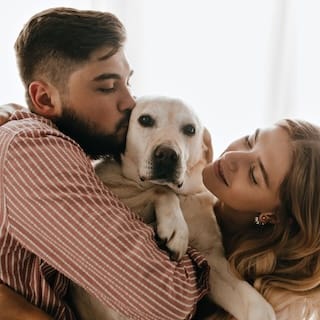
From Struggles to Stardom: Redefining Pet Photography with Creativity and Resilience


There is a kind of photograph almost every pet owner already has. It is slightly out of focus, the light is wrong, and the dog is looking somewhere just off the frame. It is also the picture you would grab if the house were burning down. Pet photography, at its honest center, is the practice of getting more of those pictures and fewer of the misses — and it has quietly become a serious field. Americans spent $158 billion on their animals in 2025, a figure projected to reach $165 billion in 2026, and 71% of U.S. households now live with at least one pet — roughly 68 million dogs and 49 million cats. A lot of people, in other words, are trying to photograph a creature who did not agree to sit still.
This guide is for them. Not the abstraction of an industry, but the actual work: the settings, the patience, the treat held an inch from the lens, the decision of whether to use the phone in your pocket or the camera in the closet.
What pet photography actually is
Strip away the marketing and pet photography is portraiture of a subject who cannot be directed. You cannot tell a terrier to tilt his chin or ask a cat to hold a gaze. What you can do is read the animal, anticipate the moment, and be ready when it arrives — which is closer to wildlife photography than to a studio headshot, even when the wildlife in question is asleep on your couch.
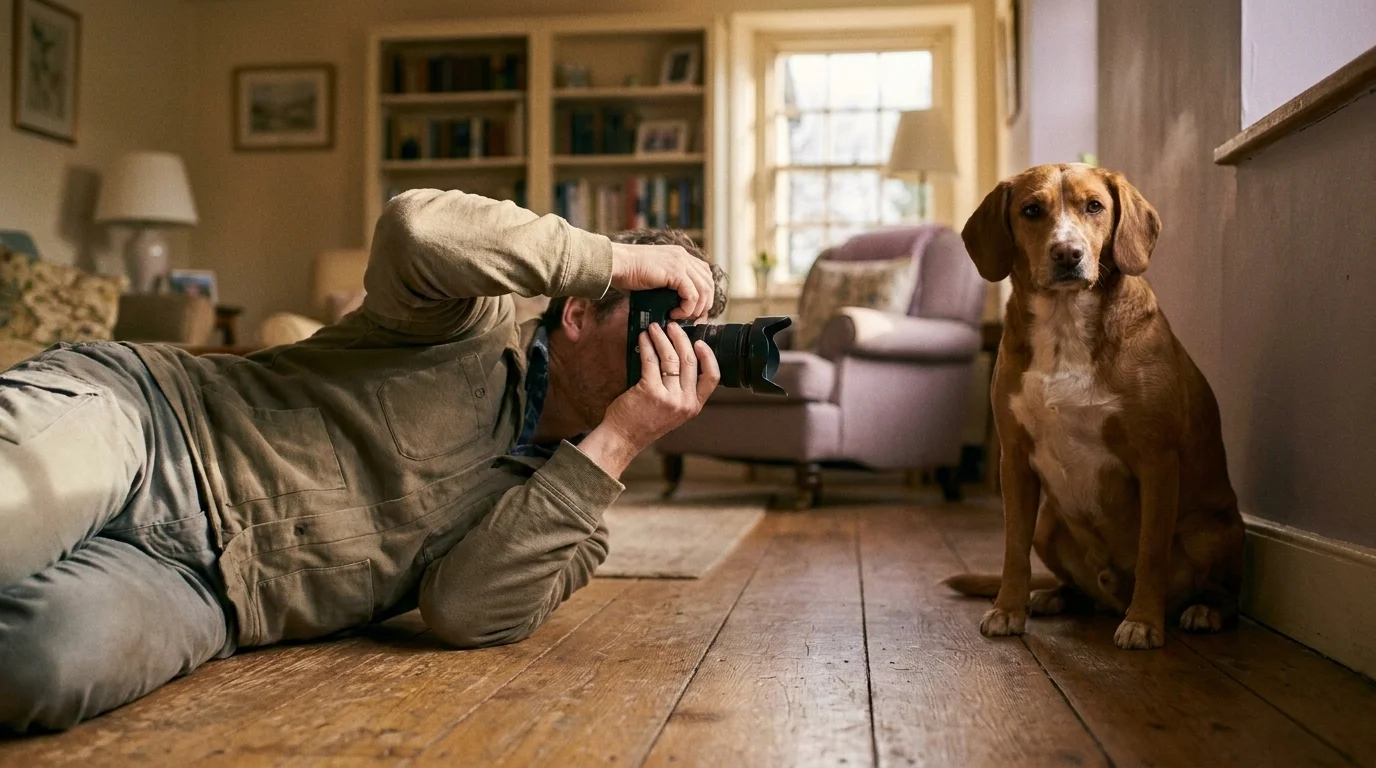
What separates a snapshot from a photograph people keep is rarely the gear. It is three things: light, eye-line, and timing. Honest available light from a window beats a harsh on-camera flash almost every time. Getting down to the animal's eye-line — on the floor, on your stomach if you have to — turns a looming, top-down record of a pet into a portrait of one. And timing is the part no tutorial can hand you: the half-second between a yawn and a settle, the ears coming up at a sound. Everything below is in service of those three.
How to photograph your pet: the settings that matter
Start with the camera you will actually carry. For most people that is a phone, and modern phones are genuinely good at this. Google's own photography team recommends a short, teachable workflow: turn on portrait mode for background blur that lifts the animal off a cluttered room, switch on HDR so a black dog or a white cat doesn't lose all detail, shoot at the pet's eye-line, let eye-detect autofocus do the focusing, and use slow-motion video for anything in motion — then pull a sharp still frame from it later. That last trick alone solves the single hardest problem in pet photography: the blur of a dog mid-zoom.
If you reach for a camera, the starting numbers are not mysterious. Practitioners converge on roughly f/8 for aperture, ISO 100–200 in good light, and a fast shutter — 1/500s or quicker — to freeze movement, with a 70–200mm telephoto and a shallower aperture when you want the pet to float free of the background. These are starting points, not commandments. The point of knowing them is so you can break them on purpose: open the aperture wider for a dreamier portrait, drop the shutter for a deliberate motion blur of a tail.
Phone or camera: which should you use
This is the question I get most, and the honest answer is that it depends on what the photograph is for. A phone wins on the things that decide whether a photo gets taken at all — it is in your pocket, it is fast, and its output is already sized for the place most pet photos live, which is a screen. For the candid morning-light shot of your cat on the windowsill, the best camera is the one you are already holding.
A dedicated camera still earns its weight in specific situations. A larger sensor gathers more light, which matters in a dim apartment at dusk; a real lens gives you the shallow depth of field that melts a background into color; and the autofocus and telephoto reach let you keep a running dog sharp from across a field — the three things a phone still cannot fully match. If you are photographing motion, low light, or anything you intend to print large, the camera is worth the trouble. For everything else, the phone is not a compromise. It is the right tool.
Getting dogs and cats to cooperate
No setting matters if the animal won't engage, and this is where craft becomes patience. The field has converged on a few concrete techniques worth knowing.
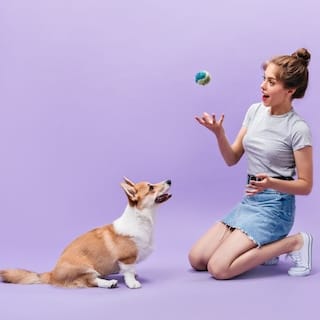
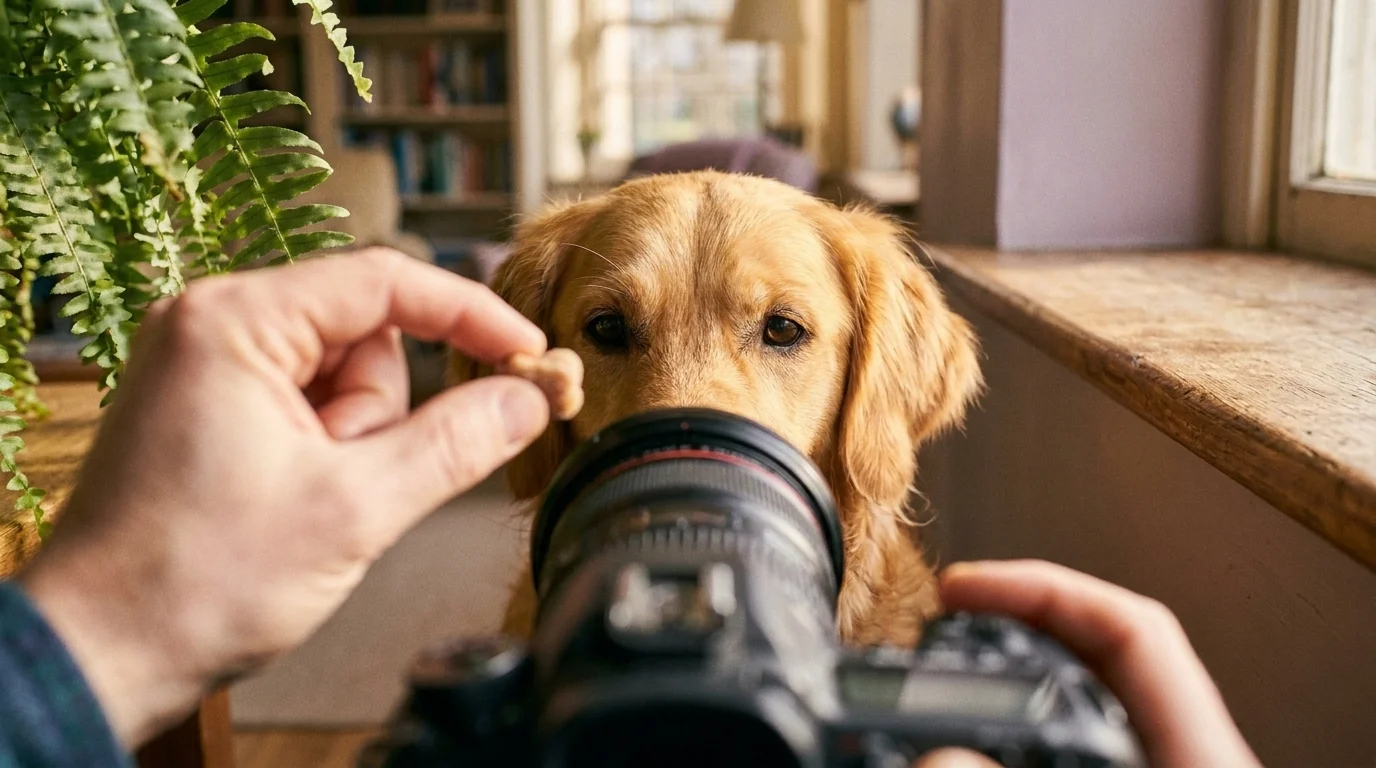
For dogs, the working method is the treat at the lens: hold something smelly and soft — freeze-dried liver, a sliver of cheese, a smear of peanut butter — right next to your lens so the dog's gaze lands where you want it. Break the treats small and reward often, so a long session doesn't turn into an overfed one. Crucially, rotate your attention-getters: a squeak, a whistle, a treat all stop working once the dog learns they lead to nothing, so cycle through them and keep the novelty alive.
Cats are a different animal, in every sense. They cannot be bribed on a schedule and they resent being managed. The consensus advice is patience over coercion: photograph a cat where she already feels safe, wait for her to settle, and use a toy or a tapped food bowl held just above the lens to lift her eyes for the half-second you need. You are not directing a cat. You are waiting for her to do something photogenic and being ready when she does.
Ideas for a session worth keeping
Once the mechanics are handled, the question becomes what to make. The most affecting pet photographs are rarely the most posed. A few directions that consistently produce keepers:
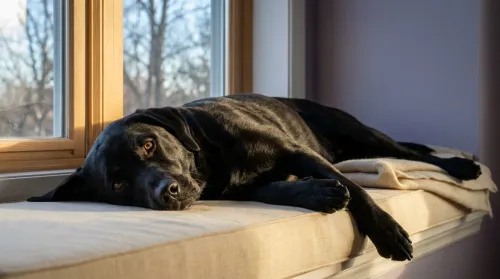
- The lifestyle frame. The dog asleep in his usual spot, the cat in the exact patch of sun she defends every afternoon. These document a relationship, not a pet, and they age better than any studio portrait.
- The action sequence. Fetch, the shake after a bath, the gallop at the dog park — shot as slow-motion video and harvested for stills.
- The detail. Paws, the grey coming in on a muzzle, the specific way one ear folds. Negative space around a single detail can say more than the whole animal.
- The legacy session. This one I want to name plainly, because the studios that do it best treat it as its own discipline: a deliberate set of photographs of a senior or terminally ill animal, made while there is still time. It is the hardest session to book and the one no one regrets. If your animal is old, do not wait for the good light. The good light is now.
What hiring a pro costs in 2026
Plenty of people would rather hand this to someone who does it for a living, and it helps to know the range before you ask. 2025 benchmarks put a typical session at $100–$230, with a comprehensive one-hour shoot running $200–$500 and up. Print and digital packages range from around $150 to $1,000+ depending on what you take home, and high-end commissioned portraiture climbs anywhere from several hundred dollars to a few thousand per animal.
What you are paying for, at the higher end, is rarely just the shutter clicks. It is the photographer's ability to read your specific animal, their patience across an hour that might yield three usable frames, and the editing and printing that turn a card full of files into something on your wall. Ask to see a full session's gallery, not just a portfolio of greatest hits, and ask how they handle a pet who refuses to cooperate. The good ones have a calm answer.
AI pet portraits and the 2026 trends
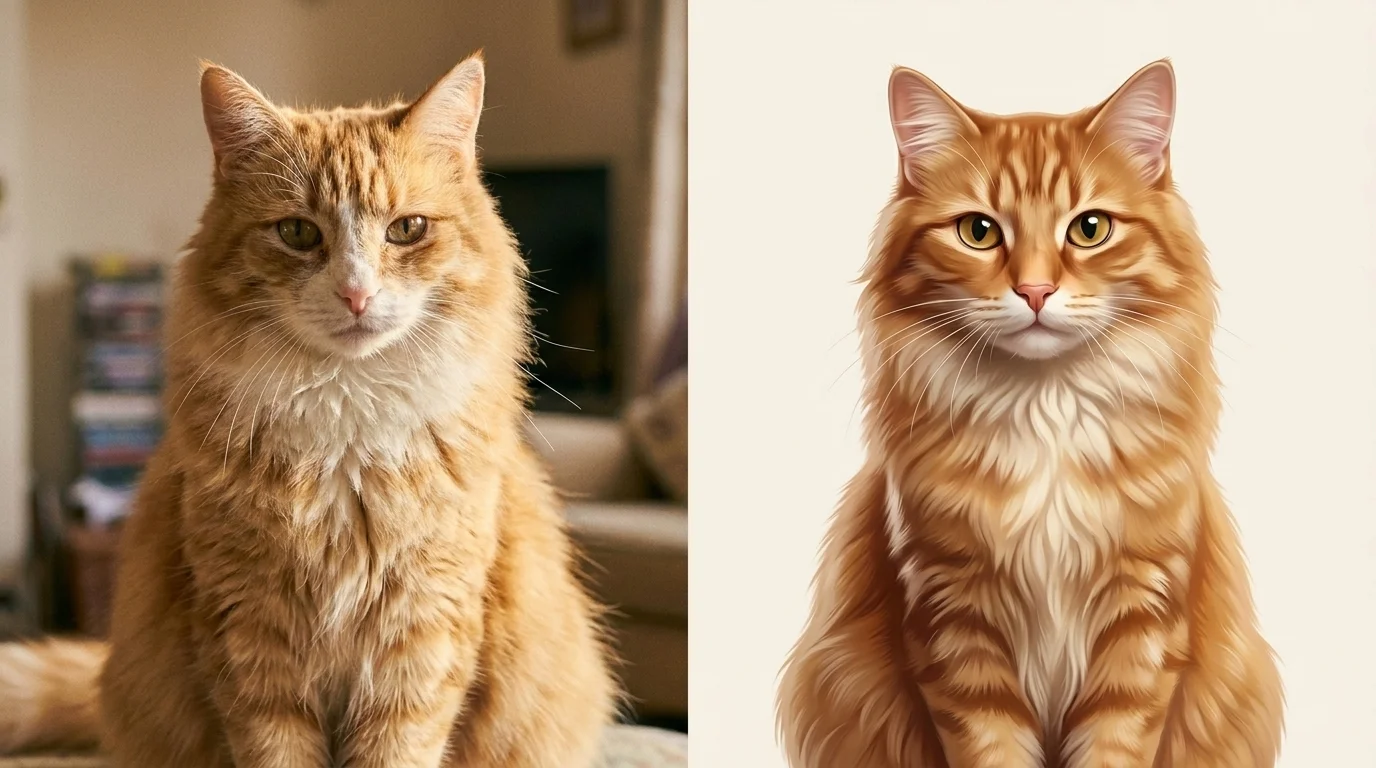
It would be dishonest to write this guide in 2026 and ignore the AI portraits flooding every feed. The "AI puppy" trend, the pet-to-person transformations, the action-figure and Chibi styles — they are everywhere, and the technology has genuinely improved, particularly at the thing it used to fail hardest: rendering the fur of long-haired breeds like Persians and Pomeranians without turning them into a smudge. This matters to a generation already documenting its animals constantly; Gen Z pet ownership grew 43.5% year over year, and 70% of Gen Z owners have multiple pets.
My position is straightforward. AI portraiture is a wonderful toy and a real art form in its own right, and it is not a substitute for a photograph of your actual animal. An AI image renders an idea of your dog. A photograph holds a specific afternoon — the real light, the real expression, the moment that happened once. Use the AI for the fun, shareable, invented stuff. Keep photographing the animal who is actually in the room.
Becoming a pet photographer
A note for the people reading this who want to do it for others, not just for their own animals — because that is where this article began, years ago, as a story about resilience. The field is real and growing: searches for "pet photographers" are up sharply year over year, and the entrepreneurial path is well-worn. But the part worth keeping from any struggle-to-stardom narrative is unglamorous. You build a portfolio by photographing animals before anyone is paying you. You learn to read a frightened rescue dog the way you learn any language — slowly, by being there. And you find the work that is yours: for some it is bright commercial studio shots, for others it is the quiet, hard legacy sessions that ask the most.
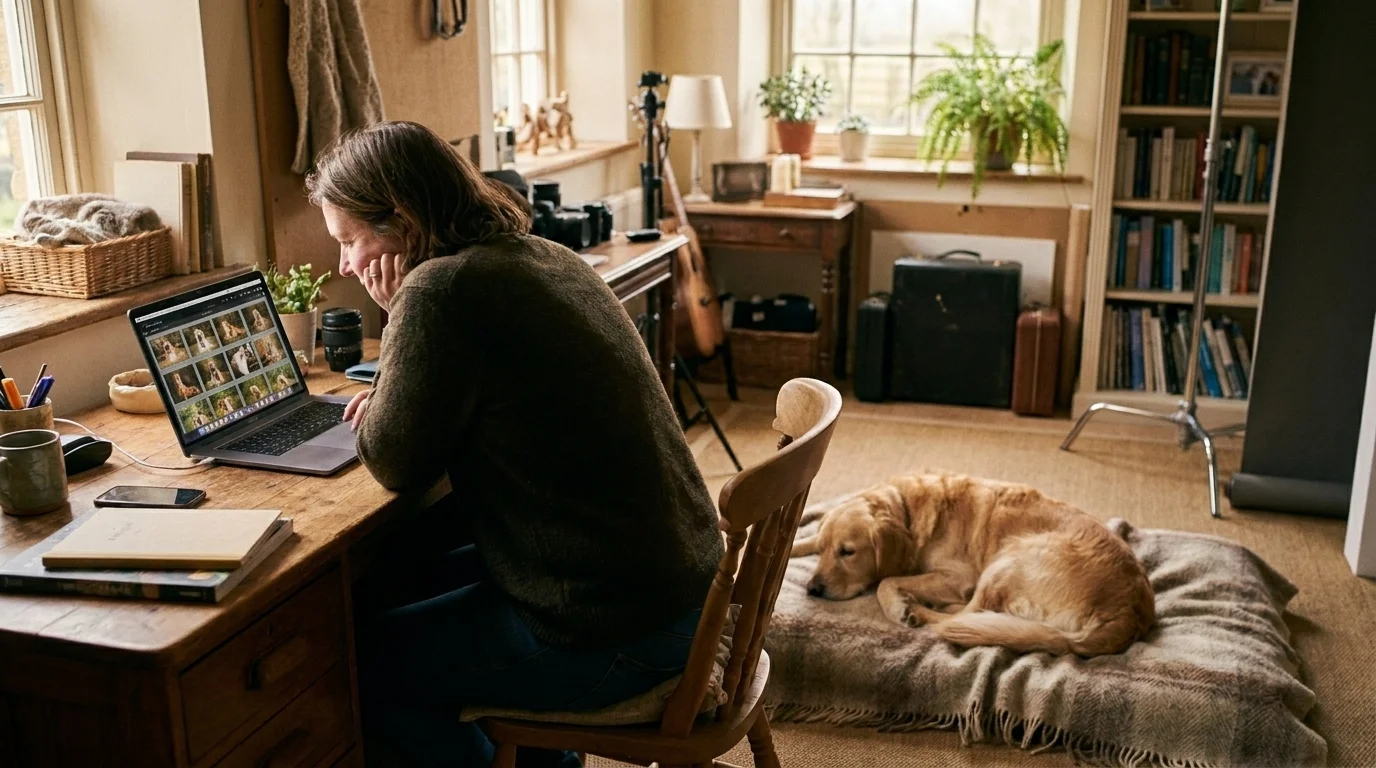
The craft is learnable and the gear keeps getting better. What does not change is the thing underneath all of it: a photograph of an animal, made with care, is one of the few objects that holds a relationship still. That was true when the only camera was a borrowed phone in a Montreal apartment, and it is true now. The technical measures matter, right up until the moment they don't.
Frequently Asked Questions
Use portrait mode for background blur, shoot at your pet's eye-line by holding the phone low, turn on HDR for balanced light on dark or light coats, and let eye-detect autofocus do the work. For action, shoot slow-motion video and pull a sharp still frame from it.
Start around f/8 aperture, ISO 100-200 in good light, and a fast shutter speed of 1/500s or quicker to freeze movement. A 70-200mm telephoto with a wider aperture helps the pet stand out from the background. Treat these as starting points and adjust on purpose.
In 2025 a typical session ran $100-$230, with comprehensive one-hour shoots at $200-$500 and up. Print and digital packages range from about $150 to $1,000+, and high-end commissioned portraits can reach several thousand dollars per animal.
For dogs, hold a small, smelly, soft treat right next to the lens and reward frequently, rotating attention-getters since squeaks and treats lose effect once the dog catches on. Cats respond to patience, not bribery: photograph them where they feel safe and tap a toy or food bowl above the lens.
A phone wins on convenience and social-ready output, and for casual shots it's the right tool. A dedicated camera earns its weight in low light, for shallow depth of field, and for fast autofocus on moving pets, or when you intend to print large.
AI portrait apps have improved sharply, especially at rendering long-haired fur, and they're great for fun, shareable styles. But they complement rather than replace real photos. An AI image renders an idea of your pet; a real photograph holds a specific moment that actually happened.