Leading the Pack: The Stories of Visionary Figures Shaping Pet Care Industry


The U.S. pet industry was worth $158 billion in 2025, up 3.7 percent year over year, with 95 million American households now owning at least one pet — 71 million of them a dog, 53 million a cat. The pet industry founders behind that number are not the pet-care moguls a generic listicle would canonize. The American Pet Products Association projects the market will reach roughly $165 billion in 2026, though about two of those four projected growth points are inflation, not real demand. None of those numbers existed when Jim Dougherty, a former Marine, opened his first pet-food store in a warehouse behind a Las Vegas lumber yard in 1980. They exist because of him, and a small group of other pet industry founders who read the same demographic shift years before anyone built a market-sizing report on it. The decisions they made — what they bet on, what they sold for, and which parent companies own the brands they started — are the story.
Ryan Cohen and the $3.35 Billion Chewy Exit
The most-cited modern pet industry founder is Ryan Cohen, who co-founded Chewy in 2011 and sold it to PetSmart in 2017 for $3.35 billion — at the time the largest e-commerce acquisition on record. The detail business reporters keep returning to is operational, not financial: Chewy's customer-service team sent handwritten condolence notes and flowers to customers whose pets had died, an unscalable practice that the company scaled anyway because Cohen insisted on it. That kind of receipt — a documented practice, not a slogan — is what separates the founders who actually built this market from the executives who arrived after.
Cohen left Chewy in 2018 and is now chairman and CEO of GameStop. His net worth is reported at roughly $4.76 billion, almost all of it traceable to the pet category. He has not returned to it. The post-Chewy GameStop years are instructive in the opposite direction: the customer-obsession playbook that worked in pet food has proved harder to transplant. The visionary tag survives the second act; the operational record does not always travel with it.

Jim Dougherty, Phil Francis, and the PetSmart Story
The petsmart founder query is one of the steadier informational searches in the category, and the answer is not one person but two generations of operators. Jim and Janice Dougherty opened Petfood Supermart in 1980 in that Las Vegas warehouse, then incorporated Pacific Coast Distributing in 1986 with backing from Phillips-Van Heusen — the apparel conglomerate — and opened the first two PetFood Warehouse stores in Phoenix in 1987. The chain became PetSmart in 1989 through an associate-and-customer naming contest. Dougherty, a Marine veteran from San Diego, wrote up the founding story himself in a 2023 book called Pet Project, which is the closest thing the category has to a primary source on big-box pet-retail origins.
The second-generation operator is Phil Francis, who became PetSmart's third CEO in 1998 and re-tooled the chain around in-store training services, the "one-stop pet shop" positioning, and an overhauled store visual design. That repositioning is what turned PetSmart from a discount warehouse into a destination retailer — and what made it acquisitive enough to buy Chewy seventeen years later. PetSmart itself was taken private by BC Partners in 2015 for $8.7 billion, which set up the Chewy deal two years after that. The 2017 PetSmart-Chewy transaction is therefore not a startup-meets-incumbent story; it is one private-equity-backed retailer absorbing one venture-backed e-commerce player in a single consolidated capital structure. That distinction matters when consumers try to figure out who actually owns the brands on their pet-store shelves.
Related Article: Regulatory Navigation: Harmonizing International Pet Care Standards and Regulations
The Two Aarons: How Rover and DogVacay Became One Company
Two founders named Aaron, competing on the same idea, ended up running it together. Aaron Easterly joined Rover in 2011 from Madrona Venture Group; the company itself started at a June 2011 Seattle Startup Weekend hackathon with co-founders Greg Gottesman and Philip Kimmey, and launched in December of that year. Aaron Hirschhorn and Karine Nissim launched DogVacay in March 2012 as a near-identical pet-sitter marketplace. In March 2017, Rover acquired DogVacay in an all-stock deal — Easterly stayed as CEO, Hirschhorn became an advisor, and the combined network claimed more than 100,000 five-star sitters across every U.S. state.
The structural fact almost no consumer-facing piece reports: the merger eliminated Rover's biggest direct competitor in the online pet-sitting marketplace category. Rover went public in 2021 via a SPAC and was taken private again in 2024 by Blackstone. The pet-sitter side of the gig economy is now effectively a single platform with private-equity ownership behind it — a one-company market where the competition got bought out, named publicly by both founders, and then dissolved.

The Next Generation: Pet Founders to Watch in 2026
The legacy founders solved a logistics problem — getting pet food and basic services to a humanizing customer base. The current generation is solving narrower vertical problems and getting institutional recognition for it. Purina's 2025 Pet Care Innovation Prize awarded five U.S. startups $25,000 each plus mentorship, selected from a 150-applicant pool — the kind of funnel that did not exist when Cohen was running Chewy out of a New Jersey office.
The Inc. 2025 Female Founders 500 named two pet-category entrepreneurs worth tracking: Jessica Vogel, founder of Scenthound, a membership-based grooming-and-wellness franchise that has built out the recurring-revenue model the legacy retailers never quite cracked; and Christie Horvath, founder of Wagmo, a pet insurance and wellness-plan platform that nearly tripled its B2B annual recurring revenue in 2024. Jeremy Petersen of Identity Pet Nutrition is the third name surfacing in the same recognition cycle, on the food-formulation side.
The honest qualifier on this list: search demand for any individual next-generation founder is sub-10 per month. The cluster matters; the names do not yet move traffic on their own. That tracks with the legacy cohort's arc — Cohen, Dougherty, and Easterly each spent years invisible to anyone outside the trade press before the search volume found them.
Related Article: A Partnership for Paws: How Veterinary Clinics and Pet Food Brands Collaborate for Canine Health
Founder Comparison: What Each One Actually Built
| Founder | Company | Founded | Signature innovation | Current status |
|---|---|---|---|---|
| Ryan Cohen | Chewy | 2011 | Auto-ship subscriptions, handwritten condolence notes, 24/7 phone support | Sold to PetSmart 2017 for $3.35B; now Chairman/CEO of GameStop |
| Jim & Janice Dougherty | PetSmart (origin) | 1980 | Warehouse-format pet-food retail, naming-contest brand | Sold to PetSmart corporate; Dougherty wrote Pet Project (2023) |
| Phil Francis | PetSmart (operator) | 1998 | In-store training services, "one-stop pet shop" positioning, visual-design rebrand | Took PetSmart private with BC Partners (2015, $8.7B); acquired Chewy (2017) |
| Aaron Easterly + Gottesman + Kimmey | Rover | 2011 | Peer-to-peer pet-sitter marketplace, five-star sitter network | Acquired DogVacay 2017; SPAC public 2021; taken private by Blackstone 2024 |
| Aaron Hirschhorn + Karine Nissim | DogVacay | 2012 | Direct-competitor pet-sitter marketplace, "Airbnb for dogs" framing | Merged into Rover March 2017 (all-stock deal) |
| Jessica Vogel | Scenthound | 2015 | Membership-based grooming-and-wellness franchise model | Named Inc. 2025 Female Founders 500 |
| Christie Horvath | Wagmo | 2018 | Pet insurance + wellness-plan product, B2B distribution | Inc. 2025 Female Founders 500; nearly tripled B2B ARR in 2024 |
How the $158 Billion Got Built
The line from Dougherty's 1980 Las Vegas warehouse to the APPA's 2025 $158 billion figure is forty-five years of one demographic bet paying off: that Americans would treat pets as family members and pay accordingly. The 2026 functional pet food market is now $8.2 billion — joint-health, digestive, anxiety, cognitive, and skin-and-coat formulations. The pet tech market — GPS trackers, biometric monitors, smart feeders — is $3.5 billion. Refrigerated and frozen dog food grew 13.4 percent year over year. These categories did not exist as line items when Chewy launched. They exist because the customers Cohen, Dougherty, and Easterly were already serving aged into a different willingness-to-pay.
The growth engine in 2025 is not Millennials anymore. It is Gen X: up 12 percent year over year in overall pet ownership, plus 25 percent in birds, 20 percent in reptiles, and 17 percent in freshwater fish. That is the cohort the legacy founders quietly built for in their forties; the cohort is now in their fifties and spending. The caveat APPA itself flags is also documented: 22 percent of pet owners reported spending less in 2025 — a ten-point jump from 2024. The $158 billion is real, the 4.4 percent projected growth is real, and the price-sensitivity headwind underneath it is real too. The next set of pet industry founders will be the ones who solve for it.
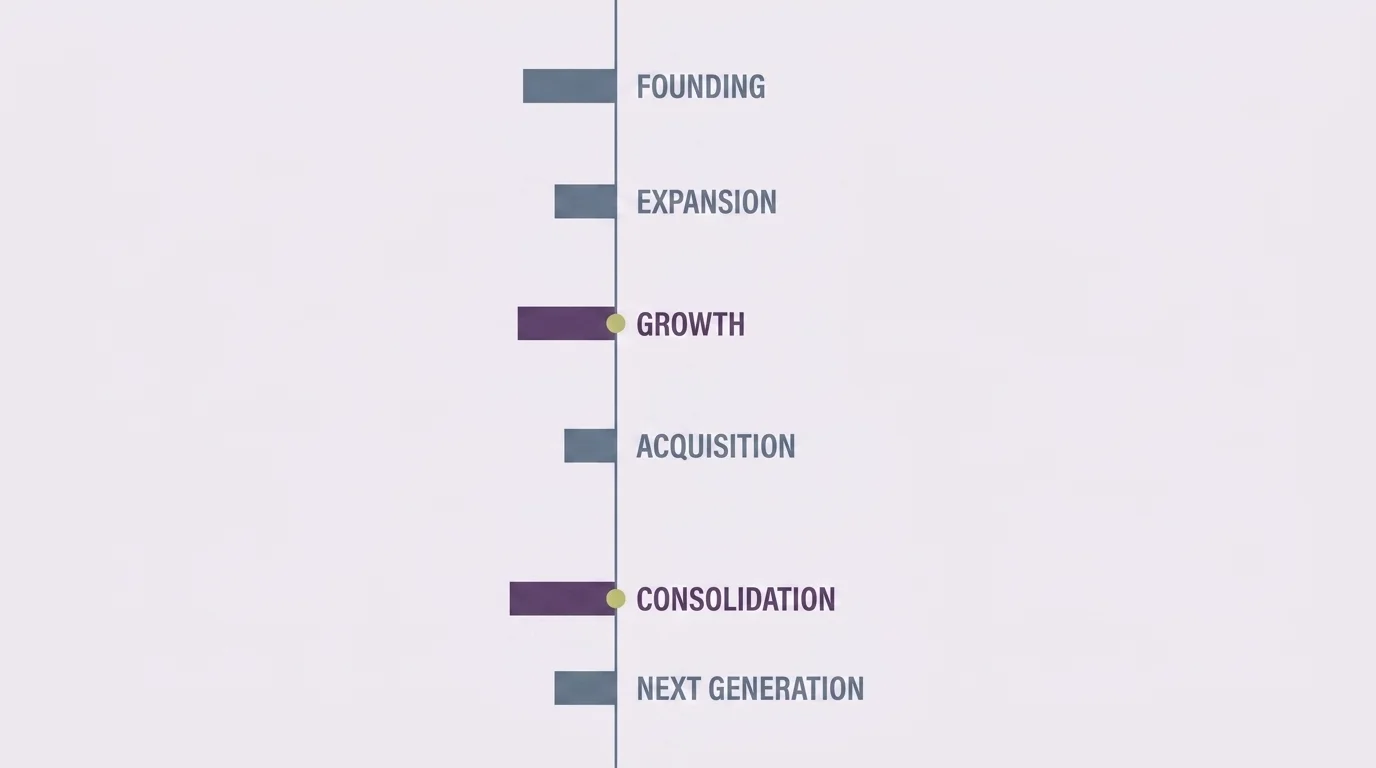
The story this article was originally framed to tell — "visionary figures shaping the pet care industry" — turns out to be a story about a small number of named founders, a much larger number of consolidating private-equity owners, and a 95-million-household customer base that decided pets were family. The visionaries were right about that one thing. Everything else is the receipt.
Frequently Asked Questions
Ryan Cohen co-founded Chewy in 2011 and sold it to PetSmart for $3.35 billion in 2017 — at the time the largest e-commerce acquisition on record. He left Chewy in 2018 and is now Chairman and CEO of GameStop.
Jim and Janice Dougherty opened Petfood Supermart in a warehouse behind a Las Vegas lumber yard in 1980 and incorporated Pacific Coast Distributing in 1986, opening the first two PetFood Warehouse stores in Phoenix in 1987. The chain was renamed PetSmart in 1989 via an associate-and-customer naming contest. Phil Francis became the third CEO in 1998 and re-tooled the company around in-store training, store visual design, and the one-stop-shop concept.
Rover was co-founded in 2011 by Greg Gottesman, Philip Kimmey, and Aaron Easterly, who became CEO. The company acquired its biggest competitor DogVacay — founded by Aaron Hirschhorn and Karine Nissim in 2012 — in March 2017, creating a combined network of more than 100,000 five-star sitters across every U.S. state.
The U.S. pet industry reached $158 billion in 2025 and is projected to hit roughly $165 billion in 2026 according to the American Pet Products Association, with 95 million U.S. households now owning at least one pet.
Recent recognitions include Jessica Vogel of Scenthound (a membership grooming franchise), Christie Horvath of Wagmo (a pet insurance platform that nearly tripled its B2B annual recurring revenue in 2024), and Jeremy Petersen of Identity Pet Nutrition — all named on the Inc. 2025 Female Founders 500 list or among the winners of Purina's 2025 Pet Care Innovation Prize.