


Pet tech stopped being a novelty corner this year. At CES 2026 it was a headline category, and the analysts have followed the attention: GMInsights puts the global pet tech market at USD 19.1 billion in 2026, on track for USD 52.9 billion by 2035. I spent eleven years in general practice before I started writing full-time, and I'll be honest about what that money is buying. Some of these pet gadgets genuinely help me and owners catch problems sooner. Some are a well-marketed app subscription wrapped around a plastic bowl. This guide walks the main categories of smart pet devices the way I'd talk an owner through them in the exam room — what each one actually does, which 2026 products are worth naming, and the two questions almost nobody asks before they buy.
GPS trackers and health collars: the category doing the most real work
The owner question here is simple: "Will this find my dog if she gets out, and will it tell me if something's wrong?" On the first count, 2026 trackers are genuinely good. The better ones pair multi-satellite GPS with Ultra-Wideband for precise on-property location, and low-power cellular radios have stretched battery life from days to weeks. A gps pet tracker is the single highest-demand piece of pet tech for a reason — for a dog who bolts, it earns its place.
The health-monitoring side deserves more care. Smart collars are now the leading wearable segment, taking 63.55% of pet-wearable revenue in 2025, and the newest ones go further than counting steps. According to TechTimes, the latest AI collars analyze movement and physiology so that, "by analyzing thousands of data points, the collar can distinguish between excitement, stress, or discomfort, turning previously inaccessible cues into actionable insights."
That is a real capability, and it's also where I put on the brakes. These collars are screening aids, not diagnostic instruments. The published evidence on how accurately a consumer collar distinguishes "anxious" from "in pain" is still thin — the marketing is well ahead of the peer-reviewed literature. Used well, a collar's heart-rate or activity trend gives you and your vet an earlier reason to look. It does not replace the exam.
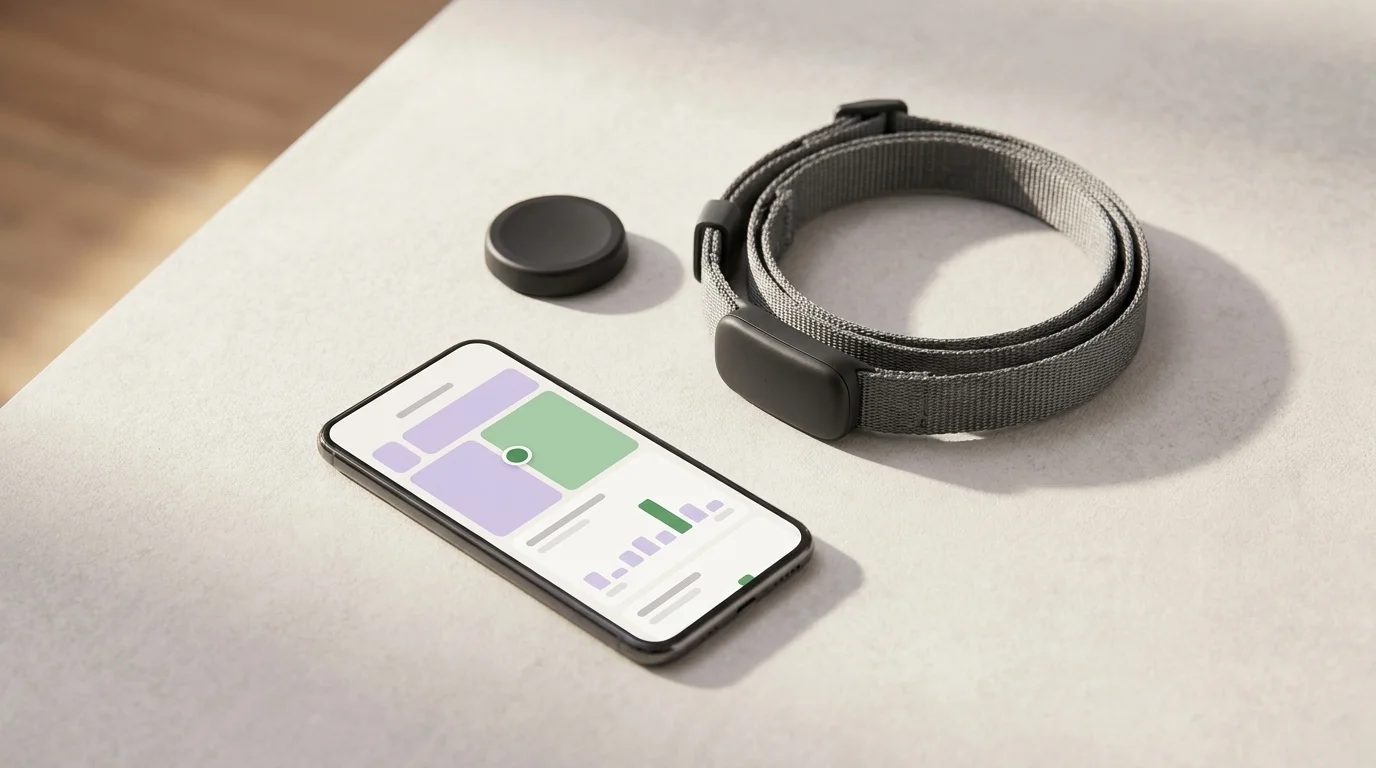
If you want named starting points, the Satellai Collar Go and PetPace-class health collars sit at the health-monitoring end, while a Life360 tracker runs about $49.99 for the location-first owner. Note which is which before you buy — a tracker that's brilliant at location may do little for health, and vice versa.
Smart feeders: portion control that finally solves the multi-pet problem
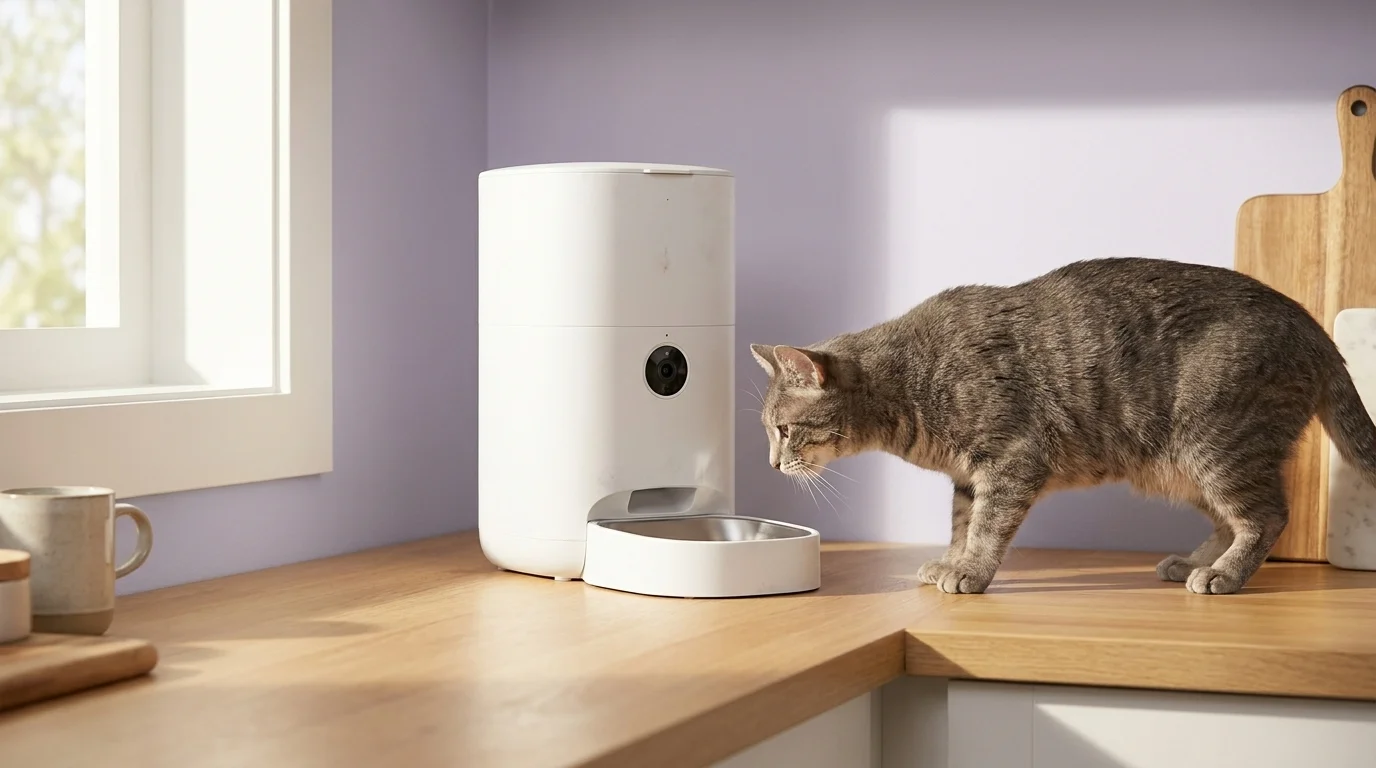
Smart feeders have moved from "scheduled kibble dispenser" to something more useful, and demand for a smart pet feeder has risen sharply into 2026. The genuinely new capability is per-pet feeding: 2026 facial-recognition feeders identify each animal by facial contours and coat pattern, then dispense the right portion per pet and log eating, water intake, and body temperature individually.
For a multi-cat or mixed household, that solves a problem I've watched owners struggle with for years — the food thief, and worse, the quiet eater whose drop in appetite goes unnoticed because someone else cleans the bowl. A feeder that flags "this pet ate nothing today" is doing real clinical work, because reduced appetite is one of the earliest and most reliable signs that something is wrong. Wet-food owners have options too; the Petlibro Polar wet-food feeder runs about $149.99. The one habit I'd ask of any feeder owner: read the per-pet eating log weekly. The data is only useful if someone looks at it.
Interactive cameras: stay connected, but know what you're connecting
Two-way cameras let you check in, talk to, and sometimes toss a treat to a pet while you're out. The Petlibro Scout AI camera, around $99.99, is a representative 2026 option, and the category's pitch has shifted from "watch your pet" toward "catch problems early" — AI cameras and collars are increasingly marketed as a way to flag a health crisis before the owner sees it. For separation-anxiety cases especially, the footage is genuinely diagnostic: it shows you what the pacing, vocalizing, or destruction actually looks like when you're gone.
A camera is also a microphone and a lens pointed at the inside of your home, on someone else's servers. Hold that thought — the privacy section below is where it matters.
Automatic litter boxes: the newest health sensor in the house
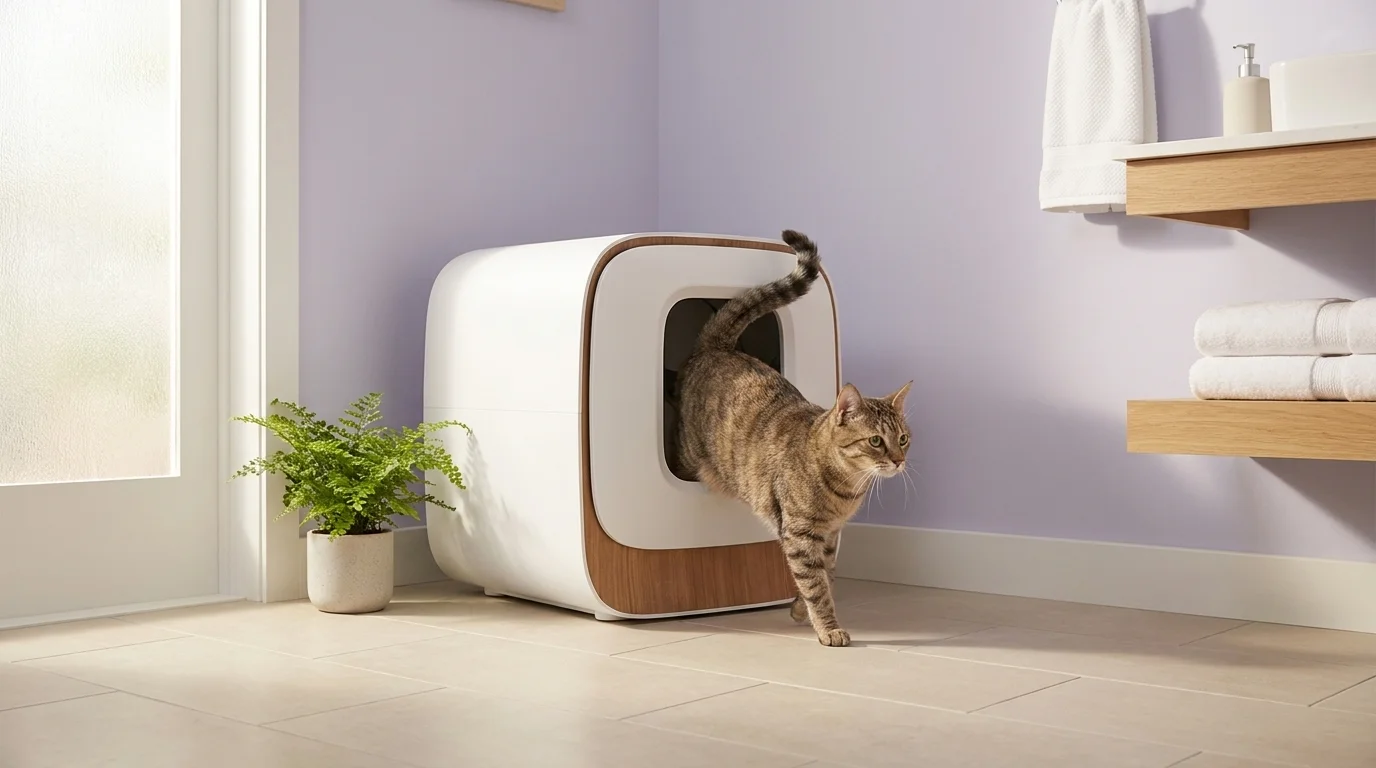
This is a category the old version of this article missed entirely, and it's one of the more interesting 2026 developments for cat owners specifically. Beyond the self-cleaning convenience of a Whisker Litter-Robot 4 (around $700) or a PetKit PuraMax 2 (about $499.99), some units now act as health sensors. SiiPet's LitterLens, for instance, runs automated urine and stool analysis with blood detection, at $59 plus $5.90/month, aimed at catching urinary or digestive disease early.
The clinical promise here is real — feline lower urinary tract disease and early kidney issues often show up first as subtle changes in urination that owners genuinely cannot see. But this is exactly where I label the strength of the evidence: these are consumer screening tools with very little published accuracy data behind their detection claims. Treat a litter-box alert the way you'd treat a smoke-detector chirp — as a reason to investigate, not a diagnosis. A flagged result means book the vet visit, not panic about a specific disease.
Smart homes, doors, toys, and grooming: the convenience tier
Pet tech is joining the broader smart-home ecosystem rather than living in siloed apps — feeders and devices began shipping with Matter-compatible hooks in early 2026, so they can sit alongside your other connected gear. The standout in this tier is the smart pet door: the Pawport door (around $699) uses Ultra-Wideband to sense your pet's distance and open as they approach, which closes the security gap of a permanently open flap.
AI-driven toys that adapt to a pet's play style are a pleasant enrichment tool — useful for keeping an indoor pet stimulated, but they're entertainment, not health hardware, so I'd weight them last. The same honesty applies to two categories the original version of this guide leaned on: "eco-friendly" pet tech and high-tech grooming tools. Low-noise, self-cleaning grooming devices are a fair convenience if your pet tolerates handling. And the eco-friendly label is worth a skeptical read — the evidence that a given "sustainable" gadget delivers a net environmental benefit over a simpler product is genuinely thin, and I'd buy on durability and need before the green marketing on the box.
What it really costs — and is it safe?
Here are the two questions almost no roundup answers, and they're the two I'd actually ask at the counter.
What does it cost per year? The sticker price is the down payment. Live GPS tracking, cloud video, and health reports almost always sit behind a $12–$25/month subscription. A Life360 tracker at $49.99 plus its monthly plan lands near $230 in year one; a Petlibro Scout at $99.99 plus its cloud plan lands near $244. Before you buy any pet tech, total the device price plus a full year of subscription. That's the real number.
Is it safe? This is the part the glossy reviews skip. A peer-reviewed audit of 20 pet-tech apps found that 14 contacted trackers before the user consented and 2 transmitted login and account details in unencrypted traffic, and security researchers have separately documented the theft of personal data from smart pet feeders. The risk is documented, not hypothetical. A short checklist before you connect a device:
- Prefer end-to-end encryption or local storage over cloud-only.
- Change the default password immediately.
- Cover the camera lens when you're home.
- Keep the firmware updated.
- Check what the app does with your data before you grant permissions.
None of this means skip the gadget. It means buy the one that respects the answer to both questions.
So, two things to do before you check out: add up the device plus a year of subscription, and run the five-point safety check. And for any device making a health claim — the collar, the feeder log, the litter monitor — remember its real job is to get you to your vet sooner, not to replace the visit. That's the standard of care worth holding the technology to.
Frequently Asked Questions
Activity and sleep trackers log how much your pet moves, rests, and burns through the day, which makes it easier to spot the gradual slowdown that often signals pain, weight gain, or early illness before it becomes obvious. Treat the numbers as a trend to discuss with your vet, not a diagnosis — a tracker tells you something changed, not why.
The strongest 2026 trackers pair multi-satellite GPS with Ultra-Wideband for precise on-property location and use low-power cellular radios that stretch battery life from days to weeks. Look for live tracking, geofencing, and health alerts, and budget for the monthly subscription that live tracking usually requires (e.g., Satellai Collar Go, Life360 tracker).
The sticker price is only part of it. Most GPS trackers and cameras carry $12–$25/month subscriptions for live tracking, cloud video, or health reports — often $150–$300 a year on top of the hardware. Always total the device plus a year of subscription before you buy.
They can be. An audit of 20 pet-tech apps found 14 contacted trackers before users consented and 2 transmitted login and account data in unencrypted traffic, and researchers have documented data theft from smart pet feeders. Choose devices with end-to-end encryption or local storage, change the default password, cover the lens when not in use, and keep firmware updated.
Yes. 2026 facial-recognition feeders identify each animal by facial contours and coat pattern, then dispense the right portion per pet and log eating, water intake, and body temperature individually — which stops one pet from eating another's food and quietly flags a pet who suddenly stops eating.
Some 2026 litter monitors run automated urine and stool analysis, including blood detection, to flag possible urinary or digestive disease early. That is a useful screening prompt, not a diagnosis — these consumer tools have little published accuracy data, so treat an alert as a reason to book a vet visit, not a verdict.
Check Out These Related Articles

The Rise of AI-Powered Emotional Support: Tailored Companionship for Mental Health Enhancements in Pets

Navigating the Digital Ecosystem: The Revolution of Pet Blockchain for Identity and Health Records