Next-Generation Therapies: A Deep Dive Into Gene Editing for Pet Health


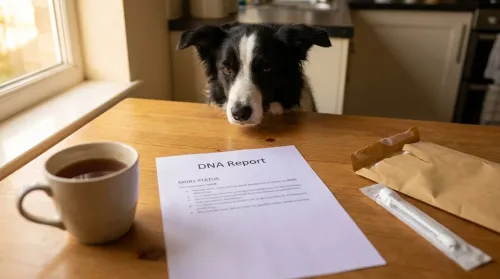
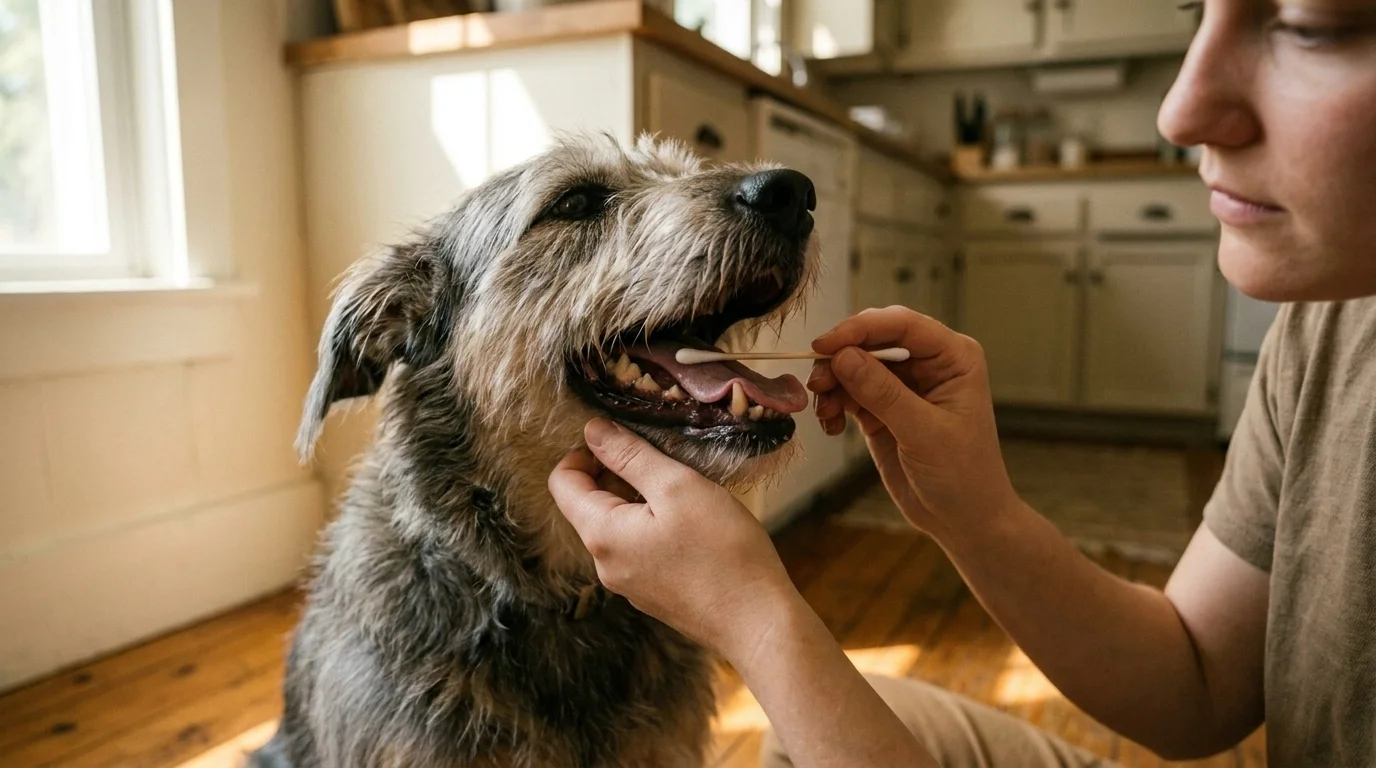
You ordered a dog DNA test, swabbed your dog's cheek, and three weeks later got back a result that included a marker for "degenerative myelopathy risk" or "hypertrophic cardiomyopathy risk" or something else you had to Google twice. Now what?
This is the question genetic testing for dogs and cats actually lands the average pet owner in — not the philosophical "what is CRISPR" question the marketing copy starts with, but the very concrete "I have a result, what do I do with it, and is there a treatment for this thing." The honest answer has two parts. The screening part is mature, useful, and worth doing for most dogs and many cats. The therapy part — the gene-editing and gene-therapy frontier that the same headlines promise — is real, moving fast, and almost entirely still in the research stage as of 2026.
This article walks both parts. We will look at what consumer DNA tests like Embark, Wisdom Panel, Paw Print Genetics, and Basepaws actually screen for, how to read the result your vet hasn't seen yet, which hereditary conditions have the most evidence behind them, and where gene therapy stands today — including the 2026 trial that gave the first credible therapeutic signal for degenerative myelopathy in dogs.
I am going to be careful with what the literature shows versus what is being sold. That is the job.
What genetic testing for dogs actually does
A genetic test for a dog or cat is a screening tool, not a diagnosis. That distinction matters, and it is where most owner-vet conversations go sideways.
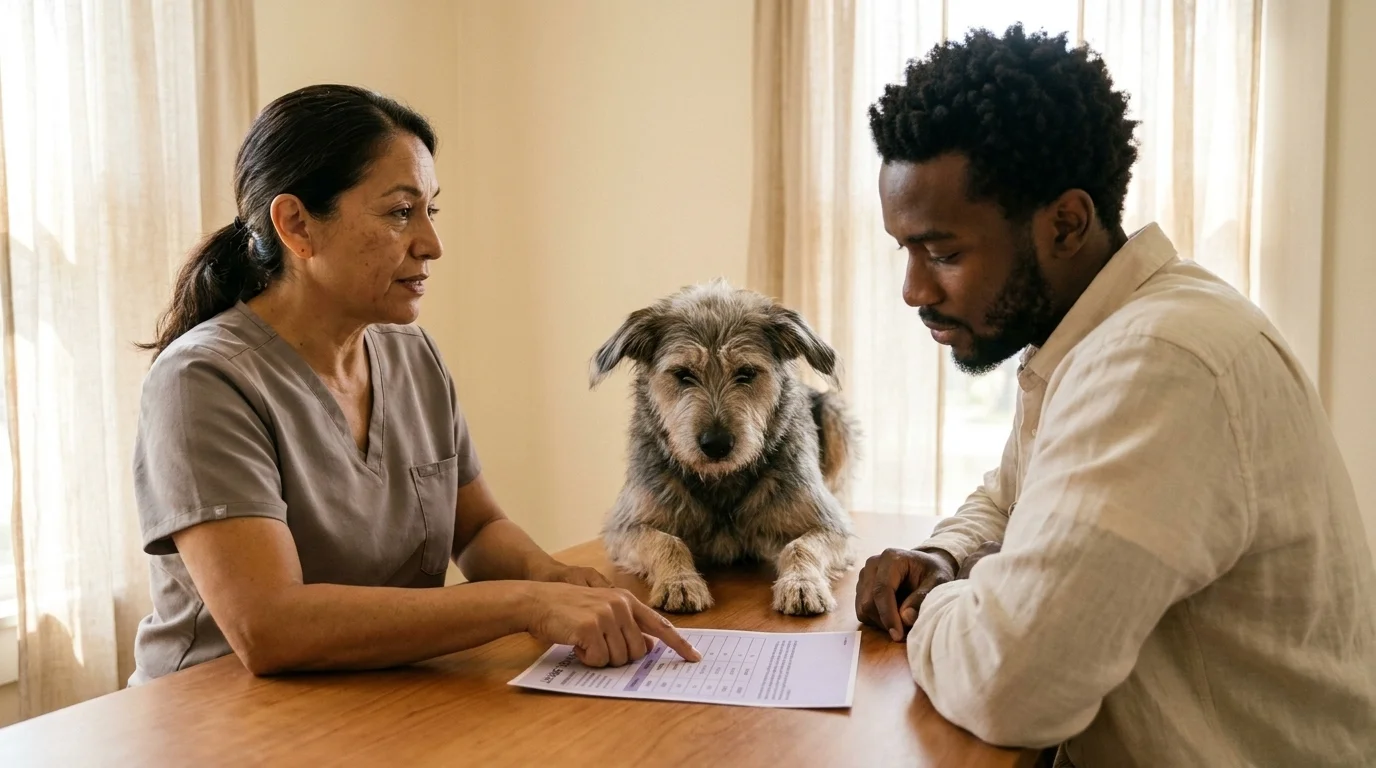
What the test does well: it sequences known mutations associated with hereditary disease risk and reports whether your animal carries zero, one, or two copies of each variant. For some conditions — degenerative myelopathy in dogs (SOD1), progressive retinal atrophy in certain breeds, MDR1 drug sensitivity in herding breeds, hypertrophic cardiomyopathy in Maine Coons (MYBPC3) — the science behind the marker is strong, and a result will reasonably change how your veterinarian monitors your animal. For other conditions on the same panel, the underlying evidence is much weaker, the penetrance is partial, or the marker is one of several contributing variants in a polygenic disease.
What the test does not do: tell you your dog has, or will develop, a specific disease. A positive marker is a probability statement. A negative marker for a polygenic disease like feline HCM does not rule the disease out. This is the single most important sentence in the article, and I will repeat it later because owners are routinely sent into a tailspin by a screening result that should have prompted a calm vet appointment instead of a 2 a.m. internet search.
The peer-reviewed veterinary literature — and groups like the American Animal Hospital Association and the Riney Canine Health Center at Cornell — increasingly treat genetic testing as a wellness-conversation prompt: a structured way for an owner and a veterinarian to discuss breed-specific risks, monitoring schedules, and breeding decisions, not as a stand-alone diagnostic tool.
Comparing the major dog and cat DNA tests
The consumer DNA-test market has consolidated around a handful of providers, each with slightly different strengths. The numbers below are 2026 figures.
| Test | Species | Conditions screened | Breed coverage | Distinctive feature | Typical price (2026) |
|---|---|---|---|---|---|
| Embark Breed + Health | Dogs | 270+ | 350+ breeds | Cornell partnership; broad health screen | $130–$200; promotions to $100 |
| Wisdom Panel Premium | Dogs | ~200 | Broad | Strong breed database; lower entry price | $100–$160 |
| Paw Print Genetics | Dogs | Single-disease panels | Breed-specific | Clinical-validation language; preferred by breeders | Varies by panel |
| DogCheck 4.0 | Dogs | 220 diseases and traits | Broad | Single comprehensive panel | Varies by region |
| Basepaws | Cats | Health markers + breed | Common feline breeds | Only major consumer cat test; 5-star evidence rating | $100–$200 |
(Sources: Embark 2026 vet-approved review, Embark cost resource, MetLife pet insurance cost overview, DogCheck 4.0, Basepaws updated report.)
A few honest notes from the exam-room side. Embark's health panel is generally considered the most comprehensive for dogs, but "more conditions screened" is not the same as "more conditions where the science is strong." Paw Print Genetics is the preferred provider when a breeder needs a clinical-grade single-disease panel — for example, before breeding a dog with a known DM-positive lineage. For most pet owners, the combined breed + health Embark or Wisdom Panel test is the appropriate starting point. Basepaws is, in 2026, effectively the only consumer cat test with a comparable feature set; we will come back to it in the cat section.
Related Article: Pet Care through Different Lenses: A Neurodiversity Discussion
The conditions worth knowing about
A 200-plus-condition panel is a long list. In practical exam-room conversations, a small handful of conditions drive most of the meaningful decisions. Here are the ones I find owners benefit most from understanding before the result lands.
Degenerative myelopathy (DM) — and the first credible therapy signal
Degenerative myelopathy is a progressive spinal-cord disease that causes hind-limb weakness and, eventually, paralysis in affected dogs. It is most commonly associated with the SOD1 gene mutation, screened on essentially every major dog DNA test. Cornell's degenerative myelopathy page — currently the standard owner-facing explainer — describes it as untreatable, with management limited to supportive care.
That description is on the verge of needing an update. In 2026, the Journal of Veterinary Internal Medicine published a pilot trial of U1 Adaptor therapy targeting SOD1 in dogs with naturally occurring DM. Monthly intrathecal injections of U1cSOD1 were safe and decreased spinal cord SOD1 expression by more than 50% in DM-affected dogs treated for up to ten months. This is a small pilot — not a phase 3 trial, not a commercially available therapy — but it is the first credible therapeutic signal for a disease the textbook still calls incurable. I would call it "a well-designed pilot that earns the next study," not "a cure." That is the level of confidence the data supports today.
For an owner whose dog comes back DM at-risk on a screening test: the result does not mean your dog will develop DM. Many SOD1-homozygous dogs never develop clinical signs. The right next step is a conversation with your veterinarian about monitoring, gait assessment, and — if your dog is a candidate — eligibility for research participation at a university teaching hospital.
Related Article: CBD for Pets: The Comprehensive Guide to Uses, Benefits, and Risks
Duchenne-type muscular dystrophy and what the canine model has told us
Canine X-linked muscular dystrophy (sometimes called Golden Retriever Muscular Dystrophy, GRMD) is the closest large-animal model of human Duchenne Muscular Dystrophy. Decades of work in this model produced the AAV-microdystrophin platforms that became, in humans, Sarepta's Elevidys and Solid Biosciences' SLB101.
In dogs, systemic AAV-microdystrophin delivery in GRMD dogs (published in Science Translational Medicine) produced sustained microdystrophin expression for over two years without immunosuppression. CRISPR-edited Beagle DMD models have reached more than 50% dystrophin expression in legs and over 90% in heart muscle, per an overview of the canine CRISPR DMD work. These are remarkable preclinical results.
The honest follow-up: this is preclinical research in dogs, not a treatment available for pets. The therapies derived from this work were licensed for human use, and we will look at their safety history in the ethics section. Companion-animal DMD remains, as of 2026, untreated outside of supportive care.
Progressive retinal atrophy (PRA) and Luxturna's canine origin story
I am going to deal with PRA in its own H2 below, because the canine RPE65 story is the cleanest example we have of the "research dog → FDA-approved human therapy → returning to dogs" pipeline. It deserves the space.
Hypertrophic cardiomyopathy in cats (MYBPC3)
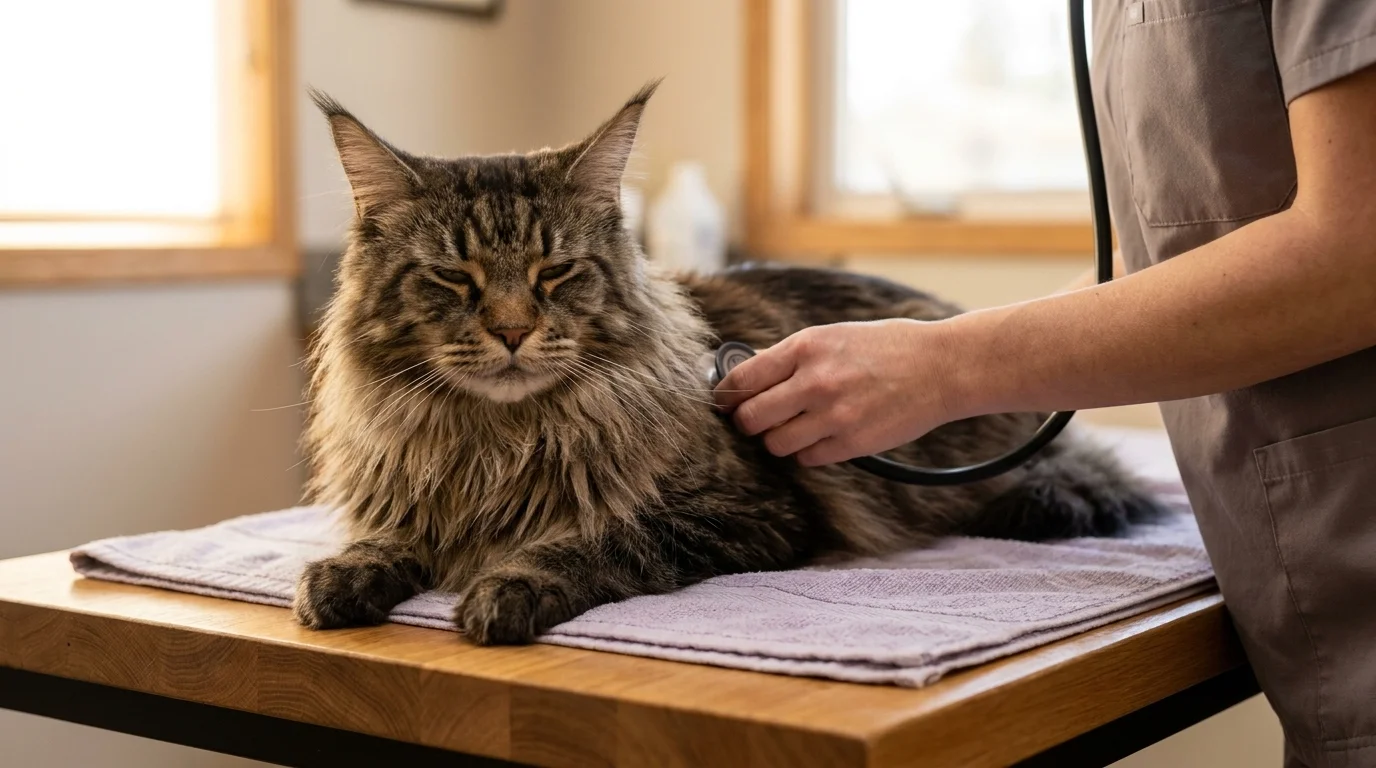
Feline HCM is the most common heart disease in cats. The MYBPC3 mutation carries the strongest evidence as a risk variant — strong enough that Basepaws assigns it a 5-star rating on its evidence-grading scale, and approximately 30% of Maine Coons carry the known risk mutations.
It is also the cleanest example we have of why a negative DNA result does not rule a disease out. A 2025 multiomics study of 138 cats, published in Scientific Reports, confirmed that no single variant or combination of known variants explains all HCM cases. The companion G3 paper underlines the same point: HCM is more polygenic than the early genetic literature suggested. A cat with a clean MYBPC3 result can still develop HCM; a cat with the MYBPC3 mutation may not. The clinical workup — echocardiogram, often paired with cardiac biomarkers like NT-proBNP — remains the gold standard for actually diagnosing HCM. The DNA test is a screening prompt that tells you when to be on the lookout sooner.
Other markers on the panel
Beyond DM, DMD, PRA, and HCM, the same panels typically screen for MDR1 drug sensitivity (relevant for ivermectin and several other drugs in herding breeds — clinically important), dilated cardiomyopathy markers in certain breeds (evidence is mixed and the diet question complicates interpretation), cystinuria and urate-stone risk, and various breed-specific neurological and metabolic conditions. The pattern holds: strong markers earn a real change in monitoring; weak markers earn a conversation.
From a Briard's eye to an FDA-approved therapy
If you want to understand why genetic testing in pets and gene therapy in pets are connected at all — and why the gene-therapy hype is closer to grounded than it sounds — the cleanest example is the RPE65 pipeline.
In the early 2000s, researchers at the University of Pennsylvania, working with a colony of Briard dogs that carried an RPE65 mutation causing inherited blindness, ran the proof-of-concept gene-therapy experiment that would eventually transform a human disease. A dog named Lancelot, born blind, gained sight after subretinal injection of an adeno-associated virus carrying a functional RPE65 gene. The Penn group later showed that dogs with more than 63% of their photoreceptors still surviving but nonfunctional at the time of treatment experienced lifelong arrest of degeneration — a timing window with direct clinical implications.
That canine work became Spark Therapeutics' voretigene neparvovec, which the FDA approved in 2017 as Luxturna for the human RPE65 form of inherited retinal dystrophy. The FDA's Luxturna listing is the official record. The Penn and Children's Hospital of Philadelphia team received the 2024 Breakthrough Prize in Life Sciences for the underlying work.
The follow-up that matters for pet owners: the same delivery platform is now being applied back to dogs for canine retinal diseases. Subretinal injection of CRISPR-Cas9 components in dogs (published in Eye, 2025) achieved preservation of retinal structure and measurable improvement in retinal function. Because canine and human eyes are similar in size, dogs are a true translational model — and increasingly, the "translation" is running in both directions. The University of Cambridge in 2024–2025 identified a new mutation behind a form of inherited blindness in English Shepherd Dogs and converted that finding into a commercial breed-specific test — the same research-lab-to-DNA-test pipeline that produced the SOD1 test for DM.
For an owner whose dog or cat has a hereditary retinal condition flagged on a DNA test, the clinical reality in 2026 is that no companion-animal gene therapy for retinal disease is FDA-approved or commercially available. Research is active. Some university programs accept candidates for trials. The conversation belongs in front of a veterinary ophthalmologist.
What about cats?
The dog side of the consumer genetic-testing market is mature. The cat side is younger, smaller, and — in 2026 — concentrated almost entirely on Basepaws. That is not a knock; it is a description.
Basepaws covers breed background, genetic traits, and disease-risk markers, with the MYBPC3 HCM marker discussed above as its strongest signal. The updated Basepaws report added two additional HCM-associated markers and assigns a 5-star evidence rating to each marker — a structure I appreciate because it is transparent about which findings are clinically actionable and which are emerging.
The 2025 polygenic finding for feline HCM means cat owners should treat a clean MYBPC3 result the way they should treat a clean DM result in a dog: useful, reassuring as a single data point, not a guarantee. Maine Coon, Ragdoll, Persian, and Sphinx owners in particular benefit from a baseline echocardiogram somewhere in adulthood, regardless of DNA result.
On the gene-therapy side for cats, work is earlier-stage than in dogs. The most interesting recent development is not a hereditary-disease therapy but an infectious-disease one: a 2025 yeast-based CRISPR genome-editing system for feline coronavirus, published in Frontiers in Microbiology, opens a research path toward therapeutic targets for feline infectious peritonitis (FIP). FIP, until very recently, was uniformly fatal; antiviral therapy with GS-441524 and remdesivir has changed that survival picture dramatically in the last few years. A CRISPR angle would be additional, not yet clinical.
Related Article: The Rise of Exotic Pets: Care Tips for Unconventional Companions
What this costs — and what's not available yet
A useful piece of cost-transparency you will not get from a product page:
- A consumer DNA test for a dog or cat in 2026 costs roughly $80 to $200 depending on provider and how comprehensive the health screen is. (Embark cost resource, MetLife pet insurance cost overview.)
- There are no gene therapies for companion animals that are FDA-approved or commercially available in 2026. All canine and feline gene-therapy work cited in this article is preclinical, pilot, or research-stage.
- For human comparison: Luxturna — the FDA-approved RPE65 therapy that originated in canine research — is priced at approximately $425,000 per eye. Veterinary pricing models for future companion-animal gene therapies have not been established.
I include the human price because owners ask me what gene therapy will cost when it arrives, and the truthful answer is "we do not know, and the human reference number is sobering." Health-insurance coverage, university-research subsidies, and veterinary-school trial enrollment will all shape what eventually reaches general practice.
The ethics and safety conversation, with the parts the marketing leaves out
Most discussions of gene-therapy ethics in pet articles stay at the level of "with great power comes great responsibility." I am going to take it one step further into the literature.
No FDA-approved gene therapies for companion animals exist as of 2026. The U.S. FDA's Center for Veterinary Medicine, the USDA, and equivalent international bodies have not approved any veterinary gene-therapy product for dogs or cats. The lines that matter most for veterinary policy are (a) somatic edits, which affect only the treated animal, versus germline edits, which can be passed to offspring — a far more restricted category in companion-animal contexts, and (b) edits performed for welfare and disease versus edits performed for aesthetic or performance traits. Reputable veterinary geneticists and the major academic centers draw a hard line at the second.
Gene therapies derived from canine research have had safety setbacks in humans, and pet owners should know about them. Elevidys (delandistrogene moxeparvovec), the AAV-microdystrophin therapy for human DMD that traces its preclinical roots to canine GRMD work, was associated with the deaths of two non-ambulatory patients from acute liver failure in March and June 2025. A PMC paper on the mechanisms and mitigation and a Lancet European-perspective commentary cover the events; the Nature Medicine phase 3 EMBARK trial paper is the underlying efficacy publication. Sarepta suspended non-ambulatory shipments and paused the ENVISION trial. Solid Biosciences' competing SLB101 program reported in November 2025 that, of 23 patients dosed, none developed drug-induced liver injury, and a three-month biopsy from ten patients showed microdystrophin expression above 50%.
What this means for pet owners watching the field: the canine-derived AAV platforms work. They also carry real, sometimes fatal, immune and hepatic risks that the field is still learning to manage. Anyone selling pet gene therapy as imminent and risk-free is selling something. The path from a research result to a safe, approved veterinary therapy runs through years of dose-finding, vector engineering, and post-marketing surveillance. That is appropriate. It is also slow.
Related Article: Exploring CBD for Pets: The Latest Research and Usage Guidelines
What to do with your DNA test results
This is the section every consumer DNA-test landing page should have and almost none do. Here is the practical version.
- Read the result with your veterinarian, not the internet. A printed report from Embark or Basepaws is a screening conversation, not a diagnosis. The peer-reviewed veterinary literature behind specific markers varies enormously in quality, and your vet is the person best positioned to tell you whether a given finding deserves a workup, a monitoring schedule change, or no action at all.
- Take the genuine high-evidence findings seriously. MDR1 in herding breeds, MYBPC3 in at-risk feline breeds, SOD1 in DM-prone breeds, breed-specific PRA mutations — these change clinical practice. Make sure the result lands in your animal's medical record.
- Use breed-specific findings to plan monitoring, not panic. A Maine Coon with an MYBPC3 risk mutation does not need a treatment today. It probably benefits from an echocardiogram somewhere in early adulthood and a repeat every one to three years.
- For breeders specifically, route serious findings through breed-club guidance and through Paw Print Genetics or an equivalent clinically validated panel before making breeding decisions. Consumer tests are good enough for individual-pet screening; for breeding-program decisions, clinical-grade panels and breed-club protocols are the standard.
- Treat gene-therapy news with measured optimism. The 2026 U1 Adaptor DM trial is the most exciting therapeutic signal in this space in years. It is also a pilot trial. The right thing to do for a DM at-risk dog is to keep the relationship with your veterinarian active and to keep an eye on whether university teaching hospitals are recruiting for trial expansion.
If you read only one sentence in this article, read this one: a DNA-test marker is a screening signal, not a diagnosis, and the decisions that follow it should be made with your animal's own veterinarian, who has actually examined the animal. Anything else is the internet making decisions about your pet's care, which is a job none of us should outsource.
This article is not medical advice for your specific animal. It is the field, and it is the literature. The exam-room conversation is yours.
Frequently Asked Questions
For most pet owners, yes — particularly if your dog is a mixed breed, a purebred at risk for breed-specific hereditary conditions, or you want guidance for monitoring conditions like degenerative myelopathy or cardiomyopathy. Tests like Embark (270+ conditions) and Wisdom Panel screen for both breed identification and genetic disease risk. Costs run roughly $100-$200 in 2026. Interpret health results with your veterinarian rather than acting on a positive marker alone — a DNA marker is a screening signal, not a diagnosis.
Commercial dog DNA tests screen for genetic markers associated with 200+ hereditary conditions, including degenerative myelopathy (SOD1), progressive retinal atrophy, hypertrophic cardiomyopathy, dilated cardiomyopathy, MDR1 drug sensitivity, cystinuria, urate stones, and Duchenne-type muscular dystrophy. Coverage varies by provider — DogCheck 4.0 covers 220 conditions, Embark 270+, and Paw Print Genetics offers breeder-grade single-disease panels.
Not yet, but a 2026 Journal of Veterinary Internal Medicine pilot trial of U1 Adaptor therapy showed monthly intrathecal injections reduced spinal-cord SOD1 expression by over 50% in DM-affected dogs over ten months. This is the first SOD1-targeted treatment tested in dogs with naturally occurring DM. It is research-stage, not commercially available — but it is the first credible therapeutic signal for a previously untreatable disease.
In research contexts, yes. CRISPR-Cas9 has been used to edit the dystrophin gene in Beagle models of Duchenne Muscular Dystrophy, achieving more than 50% dystrophin expression in legs and 90% in heart muscle. CRISPR work in canine retinal disease has shown preserved retinal structure and improved function. A 2025 yeast-based CRISPR system targets feline coronavirus as a potential FIP research direction. None of these are commercially available consumer treatments — all are research programs.
There are no commercially available gene therapies for companion animals as of 2026 — all canine and feline gene-therapy work is in research or clinical-trial stages. For human comparison, Luxturna (the RPE65 gene therapy that originated in canine research at Penn) costs approximately $425,000 per eye. Veterinary pricing models for future companion-animal gene therapies have not been established. By contrast, DNA testing — the screening step that identifies candidates for future therapy — costs $100-$200.
Both screen for breed identification and genetic disease risk, with overlapping but not identical condition panels. Embark partners with Cornell University, advertises 270+ health conditions and 350+ breeds, and tends to price at the premium end. Wisdom Panel runs $100-$160 and emphasizes breed coverage. Embark's health screen is typically considered more comprehensive; Wisdom Panel's breed database is comparably strong. Both are accepted by most veterinarians for screening conversations.
Yes. Basepaws is the leading consumer test for cats, covering breed background, genetic traits, and disease risk markers including the MYBPC3 mutation associated with hypertrophic cardiomyopathy — the most common feline heart condition, present in approximately 30% of Maine Coons. Basepaws uses a 5-star evidence-grading scale; MYBPC3 carries the maximum 5-star rating. A 2025 multiomics study found feline HCM is more polygenic than previously believed, so a negative MYBPC3 result does not fully rule out HCM risk. Plan an echocardiogram in adulthood for at-risk breeds regardless of result.